

Believing This Common Smoking Myth Will Completely Ruin Your Barbecued Meat
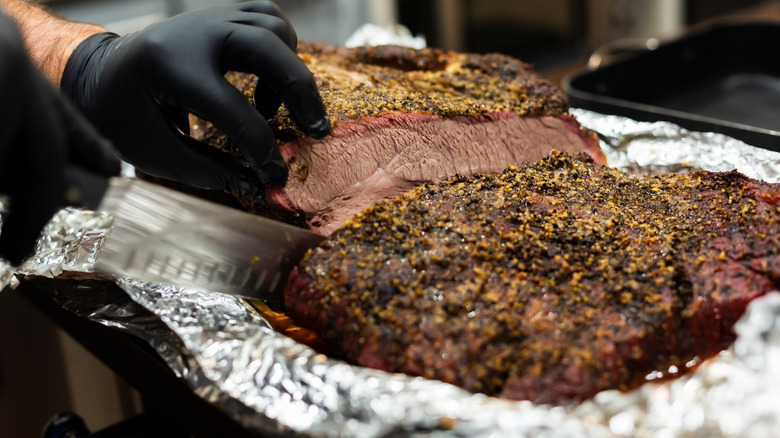
Barbecuing seems simple enough: toss some marinated meat on the grill, wait a bit, and you've got a smoky feast for the whole family. But without the correct cooking technique, your backyard barbecue can go sideways fast. And probably one of the most damaging myths out there that might've ruined quite a few parties is the idea that smoking meat longer automatically makes it smokier. If you've fallen for this one, you're not alone, and we aren't pointing any fingers, but it's time to set the record straight.
While on the surface, it sounds pretty logical that the longer a piece of meat stays on the grill, the more smoke it'd take. But as it turns out, however, there's a hard limit on how much smoke a slab of meat can take. We spoke to world barbecue champion Melissa Cookston, who provided us with some valuable insight. "Once meat reaches an internal temperature of around 100 degrees Fahrenheit, it really doesn't take much more smoke — those pores close up," Cookston said. This means your brisket, ribs, or pork shoulder won't taste any smokier, no matter how many extra hours you leave them on the grill.
Without knowing this limit exists, lots of grill masters have a habit of leaving their BBQ projects on the smoker a bit longer than necessary. But instead of an extra-smoky slab of brisket, they'd be setting themselves up for bitter disappointment. Quite literally!
Dealing with an over-smoked cut of meat
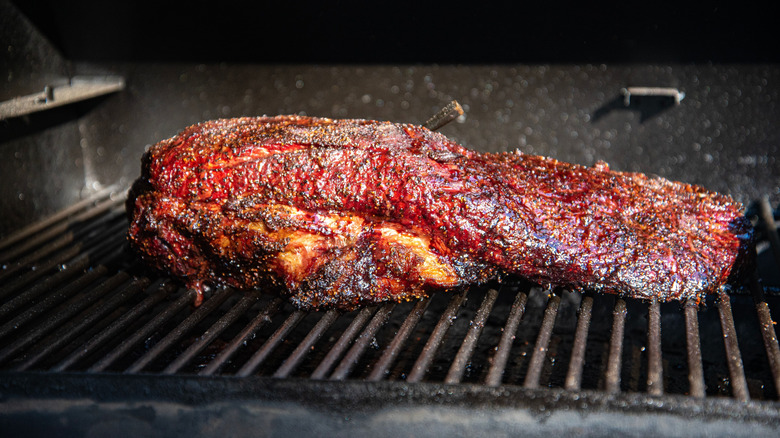
While your meat stops taking on smoke early in the cooking process, it's still getting marinated in smoke compounds for the next couple of hours that it's on the grill. All that excess smoke doesn't just disappear. Instead, it builds up on the outside of the meat and becomes a thick layer popularly known as the "bark." Some barks are flavorful thanks to seasoning and a nice and light coat of smoke, but unfortunately, that doesn't apply to this one. The bark on an over-smoked cut of meat is thick and sooty, tasting bitter and incredibly harsh when you bite into it due to all the creosote (a tar-like byproduct of the wood-burning process).
The good news is that if this is a problem you've been having (or are currently having), your BBQ party can still be saved. The smoke particles can't penetrate too deeply into the meat, and most of the bitter, awful-tasting smoke particles are just sitting on the exterior of the meat. Use a sharp knife and run the blade along the skin, and you can shave off the creosote (shave out as thin a slice of the meat as possible, you don't want to waste the cooked meat inside). Alternatively, a flavorful sauce like this sweet and tangy BBQ sauce can be a quick fix you can use to mask the bitter taste of the over-smoked meat. Odds are good that the sauce can make the dish tastier as a whole, too!