

The Antique Tomato 'Salad' That We Don't See Anyone Eating Anymore

Tomato aspic might sound like a dare today, but for decades it was a prized centerpiece on mid-century American tables. This savory Jell-O mold — yes, really — is made from tomato juice, gelatin, and seasonings like Worcestershire sauce, vinegar, and celery salt. Often studded with olives, chopped vegetables, or even shrimp, it was served cold as a salad or side dish at luncheons, potlucks, and ladies' club meetings.
This wobbly, tangy dish had its heyday in the 1950s and early '60s, when molded gelatin creations were the height of domestic sophistication. Tomato aspic was considered an elegant way to present vegetables. Its popularity even inspired one of the most unusual Jell-O flavors of all time: seasoned tomato — a real product introduced by Jell-O in the 1960s.
Aspic has European roots, but the tomato version was an American spin that suited the era's fascination with processed convenience and culinary showmanship. But as tastes shifted and fresh, simpler salads took over, tomato aspic quietly slid out of fashion, along with many other foods from the '50s that aren't around anymore.
How to make tomato aspic at home
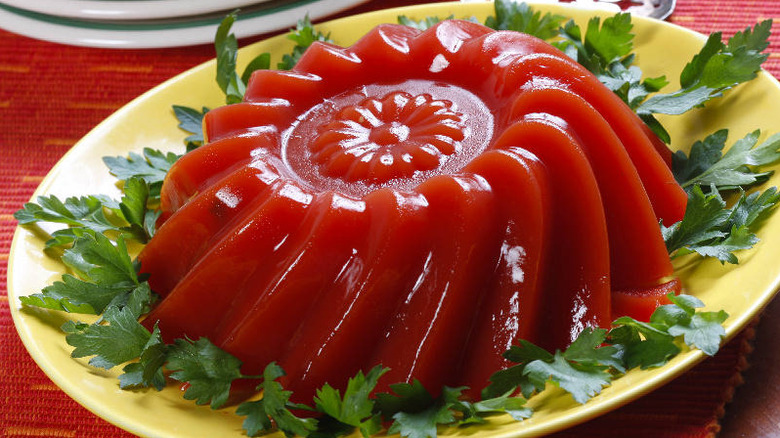
If you're curious enough to bring this vintage dish back to life, tomato aspic isn't hard to make — just a little unconventional by today's standards. Start with about two cups of tomato juice and heat it gently with a bit of sugar, salt, and acid like lemon juice or vinegar. Dissolve unflavored gelatin (about one envelope per cup of liquid) into the warm juice, then stir in chopped celery, onions, or pimento if you're feeling authentic.
Pour the mixture into a mold or dish and chill it until firm, usually a few hours. You can follow tradition and unmold it onto a plate lined with lettuce leaves (try this quick trick for getting Jell-O out of a mold) or serve slices alongside cold roast beef, deviled eggs, or cottage cheese. Some versions even add mayonnaise or sour cream for contrast.
Tomato aspic is one of those dishes that used to be everywhere. Like a lot of things that came out of 1950s kitchens, it was bold, a little odd, and strangely proud. And while it's mostly vanished from modern menus, it still lingers in old cookbooks, passed-down index cards, and, occasionally, the more adventurous potluck tables. For more, here's everything you need to know about aspic.