

7 Of The Most Controversial Food Network Chef Departures Of All Time

Food Network has spent decades turning chefs into celebrities and home kitchens into stages. From the flair of Emeril Lagasse's "Bam!" to Giada De Laurentiis' poise in the kitchen and in life, the network essentially helped to shape modern food media as we have come to know it today. But behind the camera and beneath the sizzle, not all stories ended with applause. For every long-running success, there were also chefs whose tenures ended in scandal, silence, or both.
De Laurentiis quietly ended her two-decade run with Food Network. Her departure was calm and uncontroversial, although some that we have featured on this list appeared that way when they first happened, too. That was the case, for instance, for Sara Moulton, who only spoke up about the issues she perceived in her exit process years later.
Mario Batali's fall was far more dramatic. Once hailed for his mastery and larger-than-life persona, Batali saw his career implode after multiple women accused him of sexual misconduct. The same year, Southern chef John Besh saw his "Iron Chef Showdown" cameo edited out after 25 women came forward with claims of workplace harassment under his restaurant group (via the LA Times).
The list goes on. Paula Deen's empire crumbled after a deposition revealed her use of racial slurs and problematic fantasies about plantation-themed weddings. Anne Thornton, Robert Irvine and even the legend that is Lagasse all came to find out just how rough it can be walking away from a gig on Food Network. Let's dive in!
Mario Batali left the network amid a myriad of allegations against him (2017)
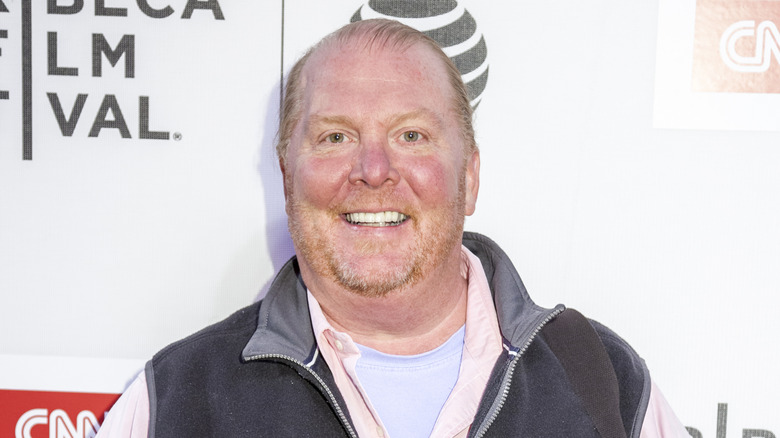
In December 2017, Mario Batali was left to watch a legacy that he had built for decades come crashing down. The once towering figure of food television was now embroiled in a scandal incriminating him in multiple sexual misconduct allegations, as reported by Eater. Batali had helped define the Food Network's early success with his hit show "Molto Mario", which debuted in 1996. The Washington-born chef was known for his bold Italian cuisine, signature orange Crocs, and affable on-screen persona. At his peak, he was even named GQ's "Man of the Year" and racked up numerous James Beard awards.
But only weeks after the Food Network announced a "Molto Mario" reboot, multiple women accused him of sexual harassment and misconduct, with incidents spanning over two decades. The allegations described a pattern of inappropriate touching and abusive behavior in professional settings, including restaurants he owned or operated. Batali responded with an apology — shockingly paired with a cinnamon roll recipe in his newsletter, a move that was widely condemned as tone-deaf.
The fallout was swift and decisive. ABC immediately removed Batali from "The Chew" and later terminated any relationship with him. The Food Network scrapped the "Molto Mario" reboot — despite already having completed filming — and pulled reruns from circulation. Though a 2022 Boston trial found him not guilty of indecent assault due to concerns about the accuser's credibility, the damage was irreversible.
John Besh's Iron Chef Showdown cameo was edited out following sexual misconduct allegations (2017)
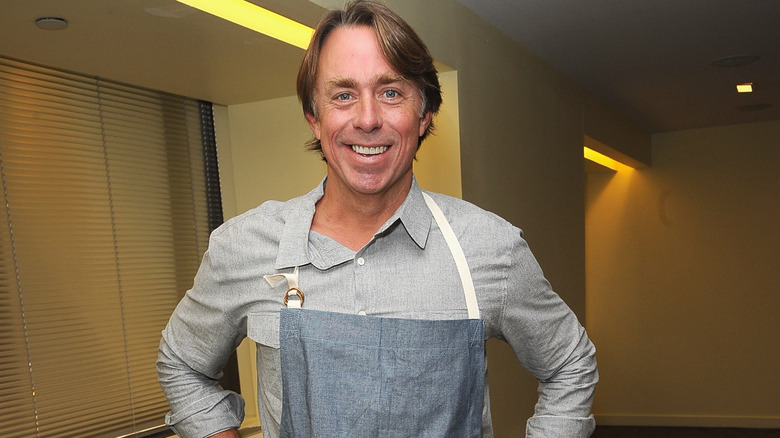
For years, John Besh was considered one of the South's shining lights in the culinary world. A Marine Corps veteran turned chef, Besh rose to fame in the early 2000s with his refined takes on the cuisine in Louisiana and New Orleans in particular, especially in the aftermath of Hurricane Katrina. He won a James Beard Award in 2006, authored several cookbooks, and became a go-to personality on food television; his repertoire included appearances on "Top Chef Masters," "Iron Chef America," and various Food Network specials.
In 2017, though, an explosive investigative report by The Times-Picayune (NOLA.com) revealed that 25 employees had accused the Besh Restaurant Group of enabling a workplace culture rampant with sexual harassment. The fallout extended to his work on Food Network. Although Besh had already filmed a guest appearance as a judge on "Iron Chef Showdown," the episode was at first quietly delayed.
When it finally aired in January 2018, Besh had been digitally scrubbed. Giada De Laurentiis appeared as the lone judge, although noticeable edits made it appear that a second person had been seated beside her. It was one of the first visible signs that the food media world was starting to reckon with its own #MeToo moment. And for Besh, it marked a swift and nearly complete fall from grace.
Food Network refused to renew Paula Deen's contract after she admitted her use of racial slurs (2013)
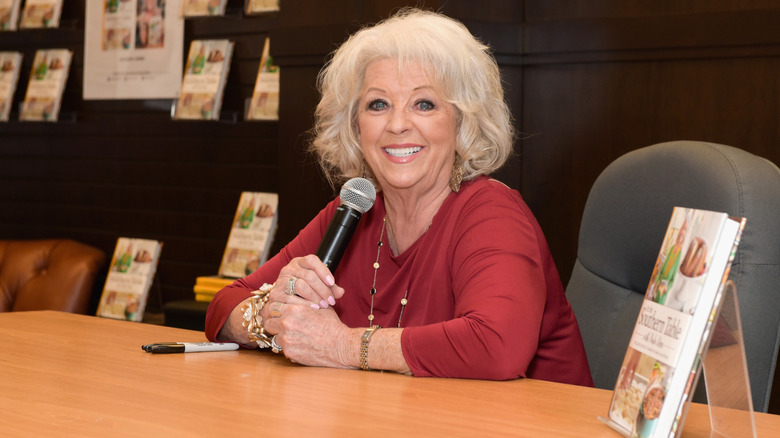
By the time 2013 rolled around, Paula Deen had reached the peak of celebrity chef stardom. One admission in a legal deposition sent it all crashing down. Deen is another chef known for her Southern charm and recipes. Per reporting from CNN, Deen was being deposed in 2013 as part of a workplace discrimination lawsuit filed by a former manager of one of her restaurants when, during questioning, she confirmed that she had used the N-word in the past, citing a traumatic robbery decades earlier (via E! News). But that wasn't all — the deposition also included claims that Deen had entertained the idea of hosting a "plantation-style" wedding with Black waitstaff in period costumes, according to reporting from the New Yorker.
The revelations ignited a media firestorm. Although Deen insisted she had not used the slur in recent years and denied the allegations of racism, her public image was irrevocably shaken. The Food Network swiftly announced that it would not renew her contract when it expired at the end of June 2013. From there, the exodus was relentless: Walmart, Target, Smithfield, Home Depot, Caesars, and others severed ties. In a matter of weeks, Deen had gone from daytime TV queen to persona non grata in mainstream media. It was a stunning reversal for someone who, not long before, had multiple Food Network shows, a best-selling memoir, endorsement deals galore, and a loyal fanbase.
Anne Thornton was accused of stealing recipes and consequently fired from Food Network (2012)

At first glance, Anne Thornton's departure from the Food Network looked pretty routine: a show with modest ratings canceled without much fanfare. But soon after, headlines began to circulate — and the controversy brewing behind the scenes turned out to be far more serious: The pastry chef with a finance and philosophy background had been accused of plagiarizing other chefs' recipes on her show, "Dessert First with Anne Thornton." She had seemed to hit the jackpot when Food Network gave her the series in 2010. But by the time Season 2 was aired the following year, murmurs had started. According to reports from the New York Post, network staff began noticing striking similarities between Thornton's recipes and those of culinary titans like Martha Stewart and Ina Garten.
While the Food Network officially denied that plagiarism played a role in canceling "Dessert First," insiders claimed the recipe overlaps raised some serious internal alarms. The show was not renewed for a third season, and Thornton quietly faded from the Food Network roster — a rare move, given the channel's tendency to keep personalities around for years, even after show cancellations.
Thornton, for her part, maintained she had never expressly copied anyone else's recipe, but insisted she had predictably drawn inspiration from various people she admired. "I get inspiration from all my heroes," she told the NY Post. "You take what you learn from them and then you riff on that."
Robert Irvine's early run on Food Network ended following discovery of spiced up details of his past career (2008)
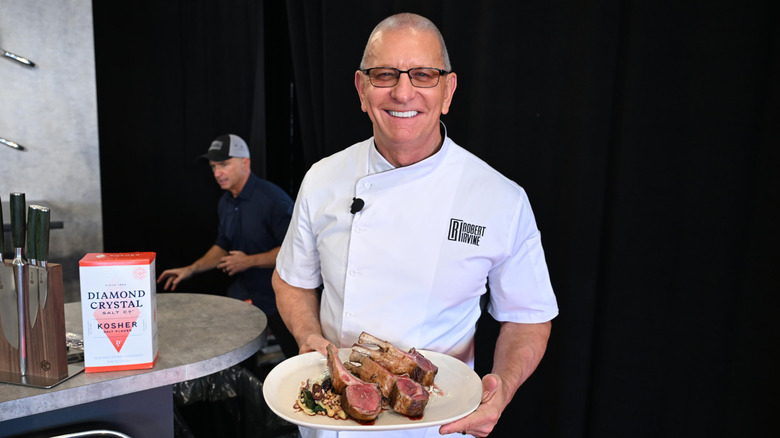
In the earliest days of his career on Food Network, Robert Irvine was already demonstrating all the makings of the TV star you know today. As the muscle-bound host of "Dinner: Impossible," he brought an intensity to the world of culinary challenges that was unique to his larger-than-life personality on screen. For the future restaurateur, though, it might very well have been a case of "fake it till you make it," as it soon began to emerge that his résumé was less ironclad than it first appeared.
In 2008, the St. Petersburg Times (now Tampa Bay Times) published a bombshell investigation into the chef's background, revealing that several claims he had made about his credentials and past were, at best, exaggerated — and at worst, outright fabrications. Among the discredited feathers on Irvine's cap was the assertion that he crafted the cake for Prince Charles and Princess Diana's royal wedding. He also claimed to have served as a White House chef and cooked for two U.S. presidents.
Following this damning rebuttal of his false claims, Food Network removed him from "Dinner: Impossible" and replaced him with Michael Symon. Irvine admitted to embellishing his background, chalking it up to "trying to keep up with the Joneses" during a period of growing fame. But in a rare second act, he eventually returned to the network with Restaurant: Impossible.
Pioneering chef Emeril Lagasse was phased out amid budget concerns (2007)
Long before Food Network turned chefs into celebrities, Emeril Lagasse was already one. His influence had helped to define the broadcaster's early identity, thanks to his Cajun-rooted cooking and signature catchphrases... Fans of Lagasse will remember his characteristic slogan, "Bam!" His shows "Essence of Emeril" and "Emeril Live" were appointment TV in the late '90s and early 2000s, combining food, music, and showmanship in a way no one else had before. Lagasse and his shows would all but become the face of the network.
So when "Emeril Live" was canceled in 2007 after 11 seasons, fans were stunned — and the silence surrounding the decision only deepened the mystery. There was no explosive scandal, no dramatic press release. Just a quiet, sudden end to the network's relationship with one of its founding stars. The New York Times speculated that the cancellation was as a result of declining ratings. But some in the industry suspected something deeper. Doing television Lagasse-style had once been groundbreaking and highly profitable, but had now reportedly started to cost too much for Food Network.
Lagasse had previously become the first ever star within the universe of food TV to earn a seven-figure contract. As ratings dropped, however, such budgetary concerns would see Food Network begin to shift toward lower-cost programming like Diners, Drive-Ins and Dives and Chopped.
Sara Moulton believes her exit from Food Network was to shift focus to a male audience (2006)

Sara Moulton does not hold back whenever she is asked her opinion about the circumstances that led to her exit from Food Network. In 2006, after ten years and well over 1,000 episodes, her shows disappeared from Food Network. There was little to no fanfare around the transition, and the decision could have very easily been chalked off as a simple business resolution. Years later, however, Moulton opened up on her side of the story. In her view, she was actually forced out ... because the network wanted to pivot towards a younger, mostly male audience. Speaking to Eater in 2010, she said, "I didn't move, they dumped me ... I'll say it."
Once that switch happened, she said in the interview that her fate had essentially been sealed. The '50s-born cookbook author insisted that after that, the network was on the lookout for younger hosts with flashier vibes. "They changed [the target audience] to 15-35 year old males," Moulton recalled. "That explains a lot of what happened [after]. They were more interested in really good looking people with really big personalities." By the end, she didn't even have a working oven on set. Meanwhile, newer male hosts like Emeril Lagasse and Bobby Flay were given more support and bigger production budgets.