

You'll Find The Cheapest Eggs Worldwide In This Country
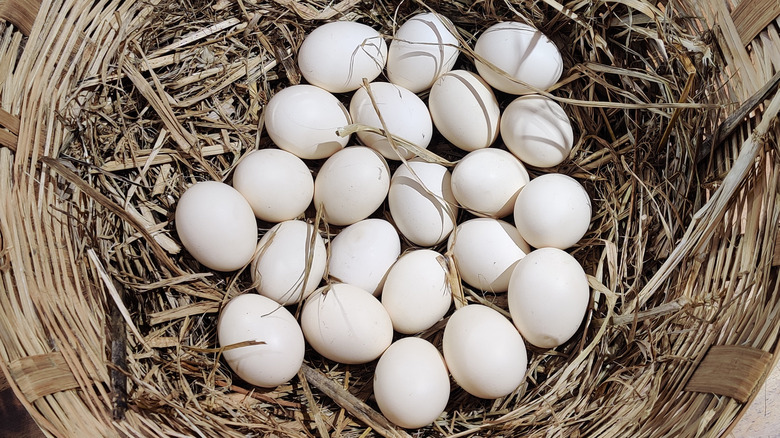
Remember the "egg-pocalypse" from earlier this year? Eggs shot up to $6 a dozen when they used to cost just $2, and in some areas, stores couldn't keep them on shelves at all. For millions of Americans, this was a real headache that hit both wallets and meal plans hard. But while we were panicking over our pricey eggs, elsewhere in the world, you can buy a dozen for cents — not even a dollar. That place is India, not just the home of many delicious egg dishes like masala omelet, apparently, it's also the one country with the cheapest eggs in the world.
According to data from India's National Egg Coordination Committee (NECC) on July 29th, 2025, a single egg in India costs just 4.30 rupees, which works out to about five cents in U.S. dollars. That means you could buy an entire dozen eggs for about 66 cents — far less than what many Americans pay for a single egg at the grocery store (in fact, that's not even enough for an off-brand pack of chips in the U.S!).
Hard to imagine, but the numbers are no joke. Eggs in India really are that cheap, thanks to the power of economies of scale. With a massive poultry industry, affordable chicken feed, and low labor costs all working together, India has cracked the code on keeping egg prices at rock-bottom.
A look inside India's massive egg production industry
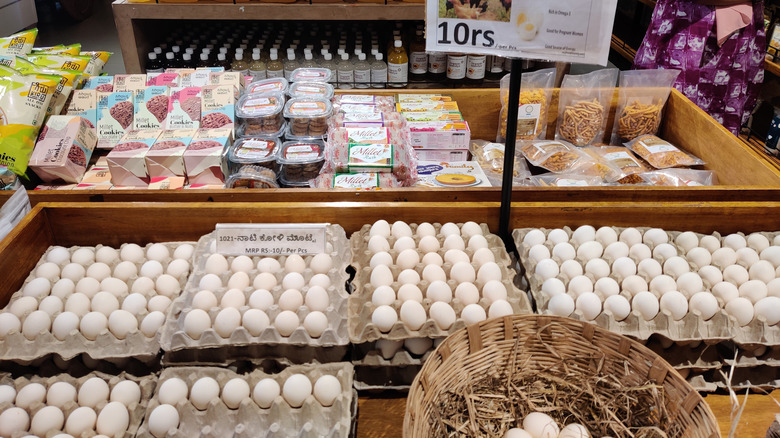
When you look at data on the top egg producers in the world, India sits proudly right up there in second place, just behind China (via HelgiLibrary). In 2023 alone, according to Our World In Data, the country churned out an impressive 7.85 million tons of eggs from operations of every size imaginable — from tiny backyard coops where families tend to a few hens, all the way up to massive industrialized and partly-automated farms. The sheer diversity and scale of India's poultry industry can honestly be pretty mind-boggling.
With so many producers in the market, one thing naturally emerges: competition. Since all eggs are virtually identical (except for some special varieties produced in limited quantities), everyone has to compete purely on price. If one sells their eggs at a premium, consumers would just buy from someone else. This creates a perfect cycle where cheap eggs stay cheap because producers are constantly battling for customers.
But the competition is just one piece of the puzzle. With over a billion people to feed, you'd think India would barely have eggs to spare. But here's the kicker — they produce so many eggs that India is actually a net exporter too, exporting $82.4 million worth in 2023 (via OEC). With all that excess supply sloshing around the market, prices simply can't get very high.
India also has plenty of cheap feed and labor
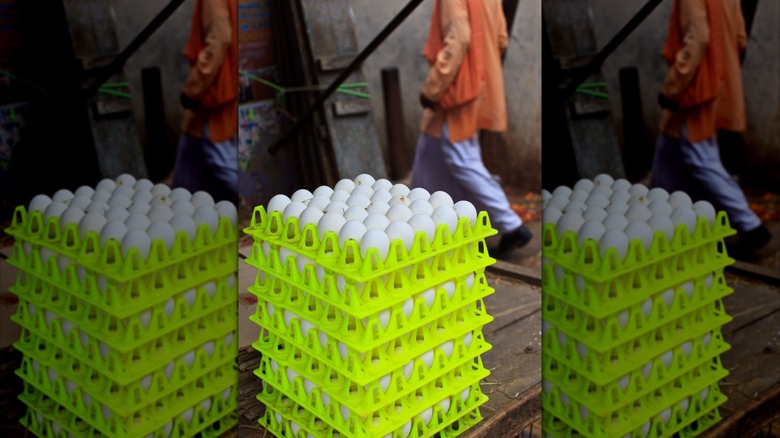
Eggs don't magically appear — they come from chickens, and those chickens need to eat well to lay consistently. India grows a massive amount of soybeans, measured in trillions of tons, to cater to the appetite of all the chickens. By not having to import expensive corn from, say, Iowa or wheat from Kansas, Indian farmers can keep their flocks well-fed without breaking the bank, and the savings get passed down to the consumer (feed accounts for roughly 79% of an egg's production cost). Well-fed chickens are productive chickens, which means even more eggs heading to the market and driving prices down further.
But the real game-changer is labor costs. The Indian poultry industry employs about six million people to take care of the birds, collect eggs, package, and ship them off. A stark reality is that an American poultry worker doing the same job could earn around $36,000 a year. Meanwhile, their Indian counterpart makes closer to $3,300. This enormous wage gap is precisely why you'll never see eggs this cheap stateside, and a big reason why the eggs in India can be produced and sold for so cheap.
Still, you don't have to resign to paying extra to stock your fridge with fresh eggs. You can stretch your egg dollars by being a smart shopper and getting your eggs in bulk from Costco. While you probably can't buy eggs for literally a dime a dozen as in India, it'll hurt your budget less!