

Why Your Water Tastes Different Depending On The Water Bottle Material
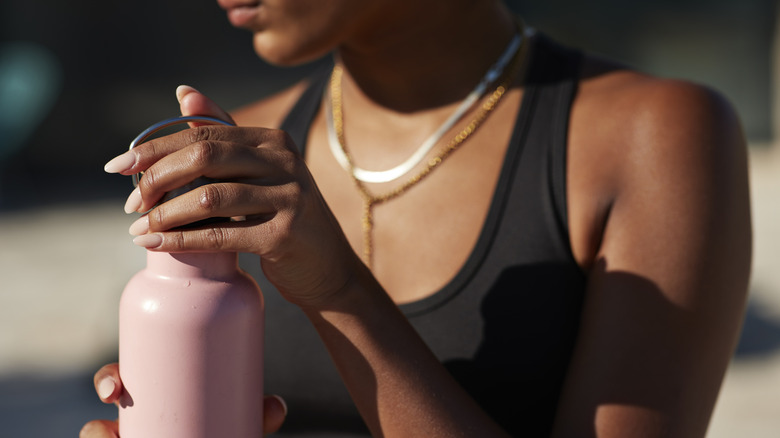
Take a sip, then take another. No, you're not losing the plot; water tastes different in a revered Stanley versus an already-warping plastic bottle. The answer boils down to a few factors, but there's an overarching explanation: water reacts.
Assuming the source is the same — that's an immediate game-changer — the culprit behind taste discrepancies is likely the bottle's material. These containers are active vessels; the water interacts with their materials, potentially impacting the quality (and taste) of the drink. Cue the horror stories around leaching, where trusted H2O becomes dangerously contaminated by chemicals from its container. Hence the reason that, no, plastic bottled water is not safe to drink after being left in the sun. The more reactive the material, the higher the likelihood it tastes ... off.
Leaching isn't the only villain, though; a material's ability to retain temperature matters. In a non-thermal container, the drink rises or falls at the mercy of its environment. It's often the reason why water tastes different after sitting out for a long time, as temperature changes alter our perception of taste. When kept cold, those crisp alkaline qualities shine through. But if it's warm, expect less masking and a larger focus on acidic components, like calcium and sodium. If water tastes drastically different, evaluate the bottle's thermal properties; eliminating unwanted temperature fluctuations enhances taste control.
Which water bottle material is best?
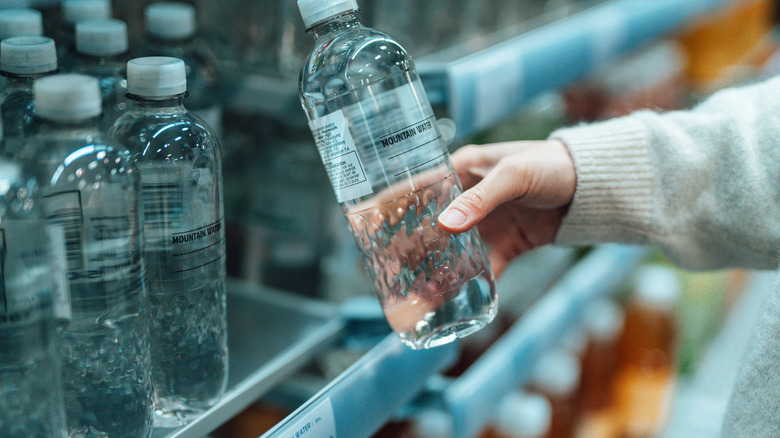
Hearing that a favorite bottle falls short is hardly music to your ears. Still, education is key, and potentially the secret to achieving better-tasting water. It's time for a cupboard clear-out: all bottles aren't made equally.
Avoid flimsy containers crafted from reactive materials. The worst offender for leaching? That single-use plastic bottle that somehow has nine lives. Always purchase purpose-made bottles that are designed to be safely reusable. A glance at labels will suffice; look for BPA-free water bottles that don't contain lead.
Second-in-command is glass. This is a fantastically non-reactive material, promising high levels of water purity. The only drawback is the fragility; glass isn't made for day-to-day life in a tote bag. This brings us to the winning choice: metal. Incidentally, Stanley tumblers, the global sweethearts, are crafted from trusty stainless steel. This material has high corrosive resistance (which might seem like overkill when purely storing H2O, but actually limits reactivity and keeps it pure). Expect freshness — at least when investing in quality products; cheaper items, like aluminium, can deteriorate quickly with age. Pick bottle materials like your taste buds depend on it. Newsflash: they really do.