

The Perfect Cream Cheese Frosting Hinges On This Key Component

Tangy and sweet, the best cream cheese frostings are seamlessly soft, spreadable, and velvety. But if you've used the correct ratio of cream cheese, sugar, and butter, and found that your frosting is coming out unexpectedly grainy you might be missing one key detail: Using room temperature ingredients.
Combine fridge-cold cream cheese and butter and you'll find that your frosting simply doesn't come together easily into a soft and spreadable mass. Instead, small nuggets of butter and specks of sugar might run through the mixture, leaving it grainy and gritty rather than silky smooth. To eliminate this problem, set your ingredients out on the counter for 30 minutes to take the chill off. You'll know they've reached the perfect consistency when you can press a finger into them and it leaves an indentation on the surface. Another way to quickly soften a block of cream cheese is to submerge the foil-wrapped ingredient in a bag of lukewarm water. While you could also microwave cream cheese in quick 10 second bursts, this is riskier and can melt it rather than soften it.
Room temperature cream cheese will blend together effortlessly with powdered sugar, producing a frosting that's thick, sleek, and full of body. Moreover, selecting a high-quality, full-fat cream cheese, versus a cheaper low-fat brand, is a surefire way to make frosting that's lusciously rich. Low-fat cream cheese has a thinner consistency than full fat, which creates a runnier end product.
Cream cheese frosting is balanced and characterful
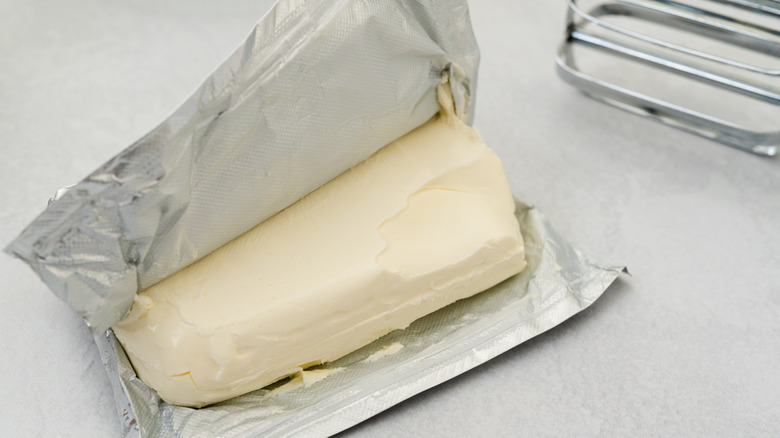
Frostings, like buttercream and Swiss meringue, are awesome for coating cakes, topping cupcakes, and sandwiching whoopie pies together. However, their intensely sweet flavor can be too saccharine for some. This is where the balancing tang of cream cheese frosting comes into its own. While cream cheese isn't particularly sharp, it does have a subtle twang that counteracts the sweetness of the high ratio of powdered sugar used in common frosting recipes. Unlike buttercream, which will keep at room temperature for up to two days, classic cream cheese frosting must be refrigerated unless you're using it immediately. As it contains milk, there's a risk that leaving it out on the countertop could encourage bacterial growth. Refrigerating your mixed frosting is also important if you want to pipe it into rosettes or swirls; a quick spell in a chilled environment will firm it up. Once you've iced and served your cake, any leftovers should be refrigerated in an airtight container according to the FDA, likewise if you're not serving it for a few hours after making it.
Simple ways to upgrade your cream cheese frosting include swirling in fruity jams and warming spices, or adding the zest and juice of a lemon to lend it a brighter and zingier flavor. You could also switch the butter for brown butter to imbue your frosting with a nutty quality and caramelized depth.