

Is Ketchup A Sauce Or A Condiment?

Ketchup is rarely questioned. It's ubiquitous, part of the American flavor lexicon. For many, it's the first "sauce" ever tasted, dipped into with greasy fingers and squeezed from single-serve packets. It's tangy and sweet, seemingly uncontroversial, almost elemental. A fast-food worker will ask if you want fries with that, but the ketchup comes unbidden. It's a cultural reflex, but beneath ketchup's unperturbed, glossy surface lurks a core identity crisis: Is it a sauce? Or a condiment?
In culinary terms, sauces are cooked or blended preparations meant to complement other foods. In French cuisine, they're foundational: velouté, béchamel, espagnole, tomate, hollandaise. In Vietnamese cooking, fish sauce or nước chấm is central to wok-fired dishes and dipping culture. In West Africa, thick, tomato-based sauces form the foundation of many meals. Sauce can be built into a dish or added before serving, but it's usually integrated before the food reaches the table. Condiments function differently. They're applied at the table, according to individual taste. They live in jars, bottles, and ramekins. Some are raw, such as relish or chutneys, while others, like mustard or hot sauce, may be cooked but are still meant to be added after the dish is plated. Ketchup, in modern American use, fits this profile. Except for burgers, meatloaf, and the occasional fast-food sandwich, most foods don't arrive pre-ketchuped.
By most technical definitions, ketchup is a condiment. It's added after cooking, tailored to taste, and served on the side. Still, ketchup is made like a sauce. Simmered and preserved, it finds its way into some surprising recipes, like Jacques Pépin's spicy chicken feet. Its identity lives in the tension between method and function, shaped more by how we use it than what it contains. Ketchup's ambiguity is partly explained by its history of adaptation.
History of ketchup, from fermented funk to tangy tomatoes
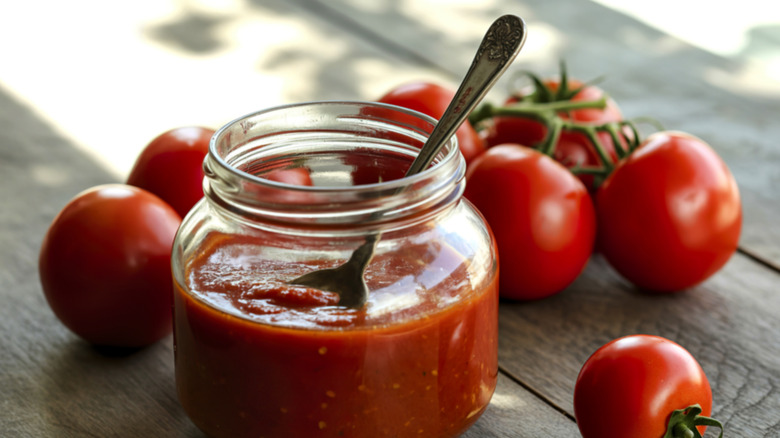
It didn't start with tomatoes. According to the Oxford English Dictionary, the earliest English usage of the word appeared in 1682 and was referred to in other documents of the time as "Catchup: a high East-India sauce." Most food historians trace it to kê-tsiap, a fermented fish or soy-based sauce from coastal China. Working with whatever was rolling around in their ship's larders, British cooks incorporated ingredients like mushrooms, walnuts, and anchovies into savory, deeply funky sauces. These early ketchups, brewed and aged, tasted closer to Worcestershire sauce, a far cry from the sugary tomato ketchup on today's tables.
Tomato didn't even enter the picture until the early 1800s, when American home cooks began preserving summer harvests with vinegar, salt, and sugar. During their brief season, tomatoes are abundant, acidic, and won't last the winter in a root cellar; the perfect "can-didate" for the popular preservation method of the time. This was the turning point where ketchup shifted from a savory, salty liquid to something thicker and sweeter. Vinegar and brown sugar became common, along with warm spices such as cloves, allspice, and nutmeg. The result was a tomato preserve bold enough to stand up to meats, fries, and anything that needed a little brightness.
Ketchup didn't arrive fully formed; its recipe evolved in home kitchens and cellars long before it hit the supermarket shelf. It's a story of preservation, trade, and cultural remixing, but mostly, it's a story about what people like to eat. Today's ketchup is cheerful and sweetly acidic, familiar and always within reach. You can eat fries plain, but most people don't. Call it a sauce or a condiment, but if you're eating, ketchup is there, ready to help.