

How To Adjust The Taste Of A Dish Like A Pro

If you're learning how to cook or are just unsure of yourself in the kitchen, one of the more intimidating things is adjusting the taste of a dish on the fly. Most people can't just start cooking recipe-free right off the bat. They tend to trust the experts and their carefully crafted recipes for what ingredient levels a dish needs, which is a totally reasonable and logical instinct. Really learning how to cook means learning how to adjust a dish. That's why we reached out to an expert, Dan Pelosi, the author of the cookbooks "Let's Eat" and "Let's Party," to ask for his tips on adjusting the flavors of your recipes like a true pro.
Pelosi's first tip is maybe the most important. "Trust your palate!" he tells us. "Don't second-guess yourself!" As you expand your palate, you'll realize that there is no exact "right" way for a dish to taste, as your preferences are going to be different than someone else's. Cooking is an art as much as a science, and not only do the flavor and intensity of ingredients not always directly translate from someone's test recipes to yours, but everyone has their own personal preferences for ideal flavors. "That first reaction is your most useful information," Pelosi explains. "Your tongue and nose will know before your brain does. Try to describe what you are tasting or experiencing, and then start to ask what could help improve (unless it's PERFECT)."
Trust your palate and learn how acids, fats, and salts balance each other out in a dish
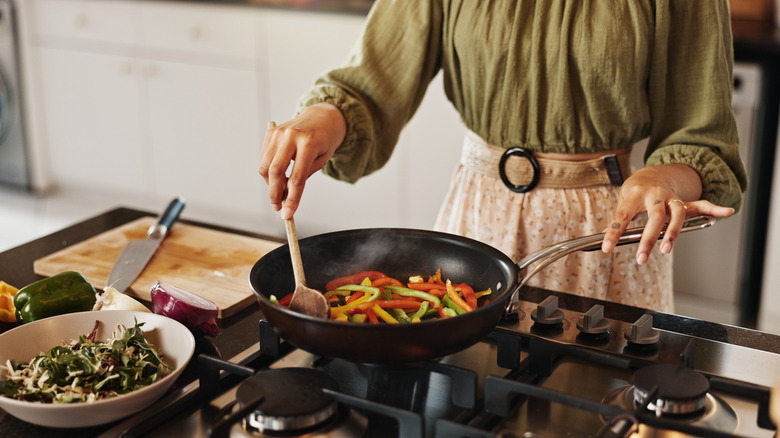
Once you have an idea of what your dish is missing or has too much of, you can fix it. To do that, Pelosi says, "I tend to rely mostly on knowing that my acids (vinegar, citrus, wine, tomatoes) will balance and help bring out the flavor of my fats and salts (oil, meat, cheese, milk, nuts)." Different flavors counteract each other, like salt cutting down on bitterness or sweetness tempering spicy food. While most understand that, if a dish is under- or over-salted, acidic ingredients also liven up a dish the same way salt can, and can cut through the fats that Pelosi mentioned. He tells us, "I am always squeezing a lemon or splashing some vinegar on everything!"
Finally, you want to get used to the idea of tasting at different stages. Pelosi notes that when you taste will depend on what you are making. "If I'm cooking any kind of sauce or stew, I am tasting regularly to see how it is evolving," he adds, "unless there are raw meats in it, then I wait for those to be cooked through!" For baking, he explains that tasting can be harder because "some of the flavor will shift as it bakes." But it's still worth tasting the batter if you can. There is no perfect way to adjust a dish's taste; you just have to learn to roll with what it throws at you.