

What Is Scandinavian Light Roast Coffee And Why Should You Try It For Your Next Cup Of Joe?

We may receive a commission on purchases made from links.
The richness of dark-roast coffee permeates java culture in America and beyond, long the mainstay of cozy coffee shops with warm, crackling fireplaces. But something different has been slowly dripping, bubbling, and expressing its way into countless cups, mugs, carafes, and Stanley tumblers. It's known as Scandinavian Light Roast coffee, and word on the street is it's here to stay. Trends steadily come and go, especially within the nearly 40,000 worldwide Starbucks venues, plus its competitors. However, this light-roast mentality steaming through the coffee world is different.
Scandinavian Light Roast doesn't refer to a preparation method, rather to the way coffee beans get roasted, long before landing in your cup. Instead of the bold, smoky, full-bodied notes in dark-roast blends such as Italian and French Roast, this Scandinavian approach is a style of roasting resulting in light, bright, fruity flavors with floral or citrusy undertones. The technique comes from Nordic countries such as Denmark, Sweden, and Norway, where the goal is to preserve the natural persona of coffee beans without transforming them through excessive roasting.
Light roasting preserves natural acidity as well, leaving the drinker to experience varying levels of nuanced complexity derived from the beans themselves — which can differ considerably between varying types of beans and where they're grown. There's no set coffee-bean variety required for the Scandinavian Light Roast process, though many devotees prefer beans from countries such as Ethiopia, Kenya, Colombia, and Bolivia, due to inherently subtle characteristics and compatible profiles.
More than meets the roaster's eye
Long before coffee beans hit roaster heats, many factors influence the core characteristics culminating in coffee flavors. It's those origin attributes that feature strongly in Scandinavian Light Roast coffee, including things like soil, elevation, and bean varietals. The goal is allowing the contributing factors to shine through, similar to how winemakers value things like grape origins and subtle terroir details. Some coffee experts consider this a philosophy tied to what's sometimes called the third-wave coffee movement.
From an American perspective, the first wave would have been mass-produced supermarket coffees like Folgers and Maxwell House, followed by the second wave of 1990s Starbucks-style coffee shops savoring specialty drinks — including a fascination with dark-roast coffee profiles. The third wave, in this perspective, elevates light-roast coffee as a philosophy that embraces every bean's journey from field to cup. It honors natural fruity, acidic notes instead of masking them with dark roasting and added flavors. In a sense, it seeks what a coffee bean naturally wants to give.
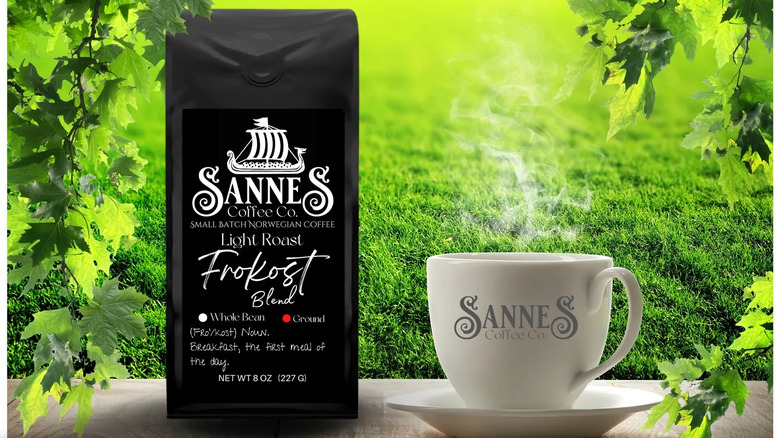
Then there's some health-related attributes of Scandinavian Light Roast coffees, mostly due to the shorter roasting time. Because of this, the beans generally harbor a bit more caffeine per bean, but also retain more healthy antioxidants such as polyphenol chlorogenic acid (CGA). If you're up for making Scandinavian-style coffees at home, seek out light-roast blends, or look for coffee labeled as Nordic or Norwegian, such as this Sannes Small Batch Norwegian light roast coffee from Amazon.