

This Tropical Fruit Makes The Best Natural All-Purpose Cleaner You've Ever Seen

We may receive a commission on purchases made from links.
You may have heard of using citrus fruits such as lemons, oranges, and even grapefruits as cleaning agents, but did you know that you can use pineapples, too? Yes, apart from being sweet, tangy, and entirely delicious to eat, pineapples can also be used as a natural cleaning agent across the board, effective at tackling everything from greasy utensils and dirty countertops to stained kitchen cloths.
The best part about this is that you don't have to sacrifice the edible part of the pineapple to turn it into a cleaning agent. You only need its skin, which would most likely be discarded anyway. But, unbeknownst to many, the peel of the pineapple has many uses. Not only does it have a lot of nutritional value and work well when used in teas, but it is also effective as a homemade all-purpose cleaner, much like baking soda and vinegar. The trick is to ferment the skin with sugar first.
This helps produce enzymes, acids, and biosurfactants (compounds that break down oils and fats), which is what enables the tropical fruit to clean dirt, tackle greasy grime, and disintegrate stains — making it a fantastic cleaning agent. However, be aware that this process will take time. It will all be worth it when you can use the fermented fruit solution to clean notoriously dirty ovens that are covered in stubborn grease, or enlist its help to wipe down countertops, kitchen sinks, and stoves after cooking. It can also tackle stained pots and pans, dishes, and any other surface that looks mucky.
How to make your DIY pineapple cleaner
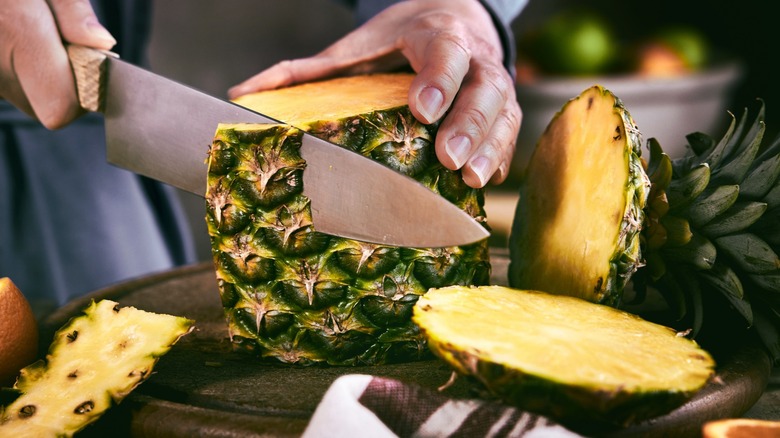
If you happen to make a big batch of pineapple salsa or a pineapple upside-down pound cake and have a lot of pineapple peels left over, make sure to save them and turn 'em into an all-natural cleaning concoction. To do this, you need three ingredients — pineapple skin, brown sugar, and water — in a 3:1:10 ratio. That is, 3 parts of pineapple, 1 part of brown sugar, and 10 parts of water. Mix everything together and allow this concoction to ferment in a tightly sealed container (such as a lidded 1-gallon glass jar) that's kept in a dry, protected place for around three months.
While you can mostly set it and forget it, you'll want to open the lid of the container every two to three days (if not daily) in order to release the pressure of the gasses that form during fermentation. Additionally, it's a good idea to stir the mixture regularly to help form the dirt-tackling enzymes, and make sure that the concoction is stored at a temperature of 77 to 86 degrees Fahrenheit for it to ferment properly.
After a three-month wait, you'll have yourself a natural, homemade cleaning agent. Just make sure to dilute it with water in a 1:10 ratio before you spray it onto those greasy or stained pots and pans. One thing to note is that this pineapple cleaner contains acid, which can permanently damage delicate materials such as granite or marble countertops and corrode utensils made from aluminum or stainless steel. So, be cautious when using them with such materials or spray it onto a small test area first if you aren't sure how it will react.