

17 Basque Dishes You Need To Try At Least Once
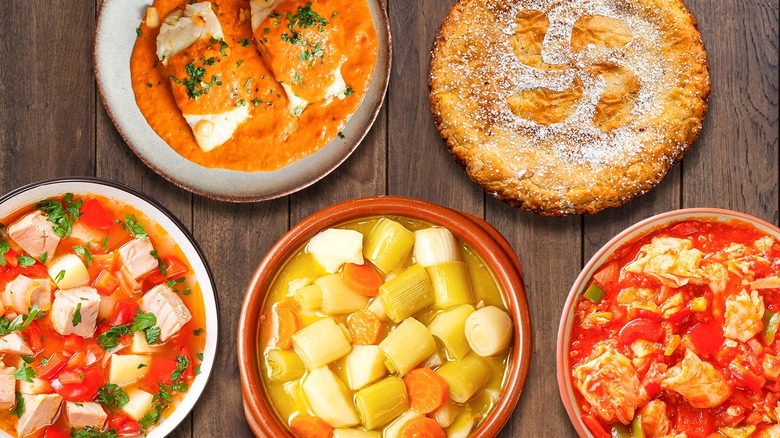
Despite the small scope of the Basque Country – it has an area of less than 3,000 square miles – Basque cuisine has a premier position in the culinary world. Straddling the Spanish-French border, the Basque Country overlooks the Bay of Biscay, including the rough waters off Biarritz, and is celebrated for its abundance of fresh seafood. From hearty seafood stews to battered and fried shellfish dishes, Basque Country cuisine utilizes garden-fresh ingredients to inspire rustic, simple, and versatile foods that are deliciously unique.
As a cultural region with rich historical roots and an unusual geography, the Basque Country doesn't have any official borders, although four of the traditional provinces are found in Spain, and three in France. The Basque Country has been officially designated an autonomous community with its own president and parliament since 1979.
Similar to Spanish tapas, pintxos are a hallmark of Basque cuisine, and the small savory bites emphasize the region's quality ingredients and traditional cooking methods. Whether a bite-sized snack or a six-course meal, these iconic Basque dishes showcase the bold flavors and prized ingredients of the world-renowned culinary region.
Tarta de Queso Vasca (Burnt Cheesecake)
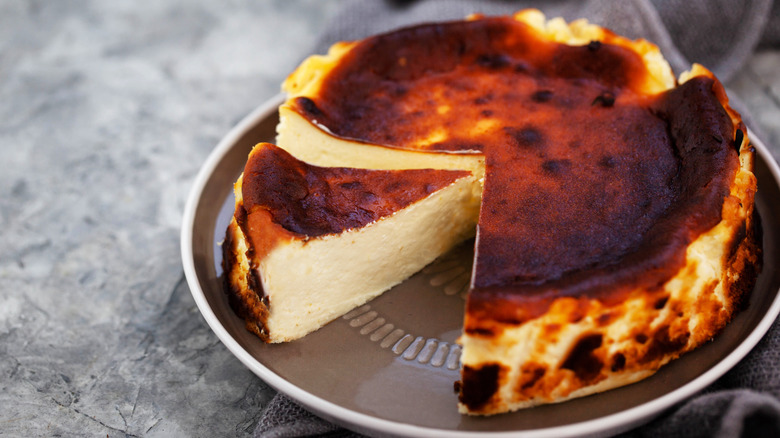
The antithesis to a New York-style cheesecake, everything about the Basques' take on the dense and creamy delicacy seems wrong. For starters, it's crustless, and if that's not dubious enough, it's also burnt. But at first bite, fresh off the baking paper-lined tray, the slightly charred and deflated dessert proves itself as a delectable end to any Basque meal.
Since the Basque cheesecake forgoes any crust, it bakes directly on the pan, which is what gives the dessert its signature golden top. While traditional recipes call for cheesecake to cook at a low temperature, once again, the Basques opt for the exact opposite. The result is an airy and loose custard-like cheesecake with a crisped, crust-like top thanks to the oven's high temperature.
The simple dessert requires no sophisticated techniques, but was born from the culinary experiments of Chef Santiago Rivera of La Viña restaurant in San Sebastián. Naturally, it isn't served with garishly colored garnishes, compotes, or coulis on top, but sliced and plated as is, with its enigmatic black exterior and soft, soufflé-like center exposed. This must-have Basque dessert gained widespread attention after its creation in 1990, spawning an entire subset of cheesecake varieties in its image. Whether you decide to travel to Spain or make it yourself, the Basque burnt cheesecake is a bold way to celebrate five basic ingredients and one renegade baking streak.
Gateau Basque (Fruit or Cream Filled Tart)
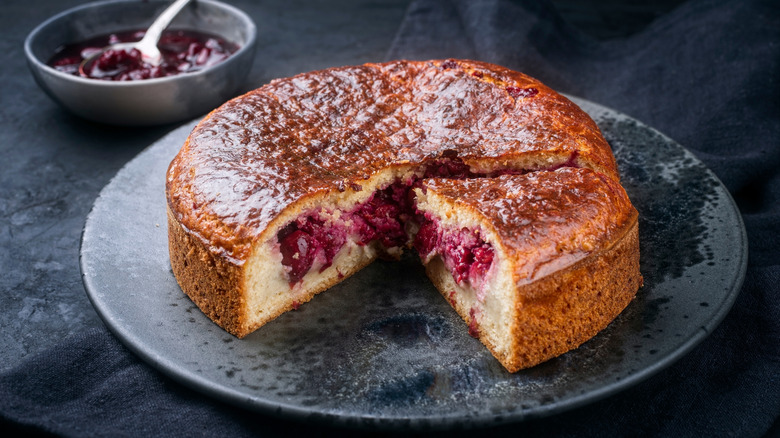
Hailing from the French Basque country, a classic gateau Basque features black cherry preserves sandwiched between two rounds of shortbread pastry. Known as "etxeko biskotxa" in Basque, the more popular version of gateau Basque substitutes jam for sweet pastry cream. The end result is a cross between a cookie, a tart, and a cake. Both crunchy and soft, the biscuit-like pastry embraces the hybrid nature of Basque country, making it a de facto symbol of the region's bicultural essence.
In Cambo-les-Bains in southwest France, the signature Basque cake is so beloved that the town decided to hold a festival in its honor. Dubbed the Basque Cake Festival, the town hosts cake-making workshops and a competition for the best Basque cake over the course of a weekend fit for gourmands from every corner of the globe. While 2024 saw the festival ushering in its 21st edition, if it's the gateau Basque that you're after, you need not cross the pond to try it. That's because the recipe for a gateau Basque is as simple as pie.
Marmitako (Tuna and Potato Stew)
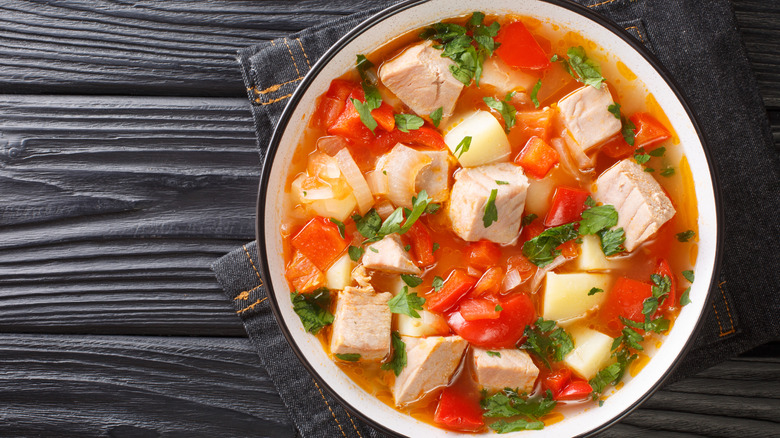
While it's an unlikely dish to have in peak summer, this steaming hot stew of tuna, potato, tomato, and peppers can be found all throughout the Basque country coastline, from the Bay of Biscay to the Pyrenees. Marmitako comes in many styles and subtle variations that change according to geography, setting, and seasonality, but the hearty and humble stew remains a comestible testament to Basque identity.
Marmitako is a staple Basque dish that dates back to the 16th century, and while the exact origins are unknown, the recipe came together sometime after the introduction of potatoes in Europe. As the starchy tuber became a fixture aboard ships enabling fishermen to travel farther out to sea in search of albacore tuna, time and circumstance put the two main ingredients in Marmitako on a winning course. An homage to New World ingredients and Basque tradition, marmitako is beloved for its depth of flavor, complexity, and legacy that celebrates the Basques' longstanding relationship with the sea.
Txuleton (Mature Rib Steak)
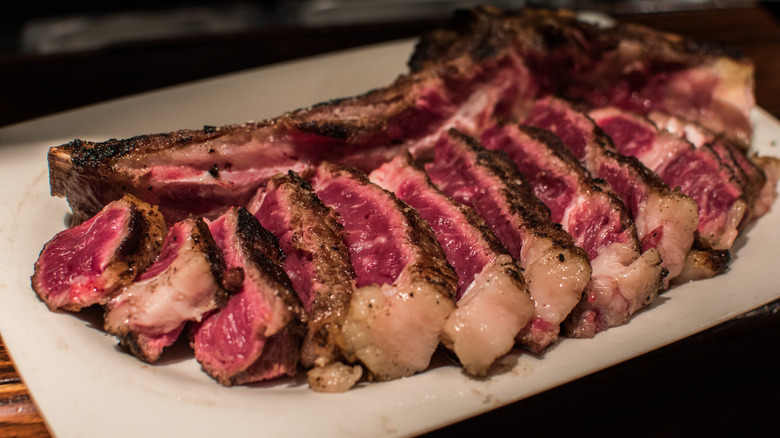
Sure, Spain may be renowned for Iberian pigs, but in Basque country, it's all about old cows; and when in San Sebastian, well, mature cows are synonymous with Basque beef.
The journey to a delicious, intensely beefy, and texturally taut rib steak – also known as Txuleton in the Basque language — begins with retired dairy cows of the Rubia Gallega breed. Put out to pasture for fattening up, the cows are then slaughtered between the ages of eight and 14 years, although some are as old as 18. While the cultural tradition of Basque beef is in stark contrast to USDA beef, for stateside meat-lovers salivating for a bite of a fat-encrusted, perfectly charred, and rock-salt-covered rib steak, San Sebastian is the singular destination for Txuleton.
Part of mature beef's appeal as a grilling meat comes down to biological factors, as older cows have higher myoglobin levels in their muscles, resulting in redder meat with deeper flavor. The other part comes down to traditional cooking methods, because Basque beef calls for exceptionally high temperatures — 800 degrees — in an exceptionally pricey Josper brand oven.
Bacalao a la Vizcaína (Biscayne-style Cod)

Plentiful in Spanish waters, cod is among the most consumed fish in the country. Beloved for its firm, flaky, and slightly sweet white meat, cod is a versatile fish, and when in the Basque Country, chances are you will find it in copious supply, either fresh or salted.
Bacalao refers to dried, salted cod, and with a legacy dating back to the Middle Ages, the dish has remained a prized Spanish delicacy. Bacalao a la Vizcaína is a simple yet delicious offering that pairs salted codfish loin with a hearty sauce made from tomatoes, peppers, onions, and garlic. Because vizcaína sauce is so easy to make, it's found in a variety of Basque Country dishes, but it's most commonly associated with cod.
Known as a dried pepper sauce, the distinct flavor of salsa vizcaína comes from the choricero pepper, which is harvested in late summer and is known for its sweet and delicate flavor. While the inclusion of tomato has created controversy among classicists, the use of choricero pepper is non-negotiable.
Spanish Tortilla (Potato Omelet)
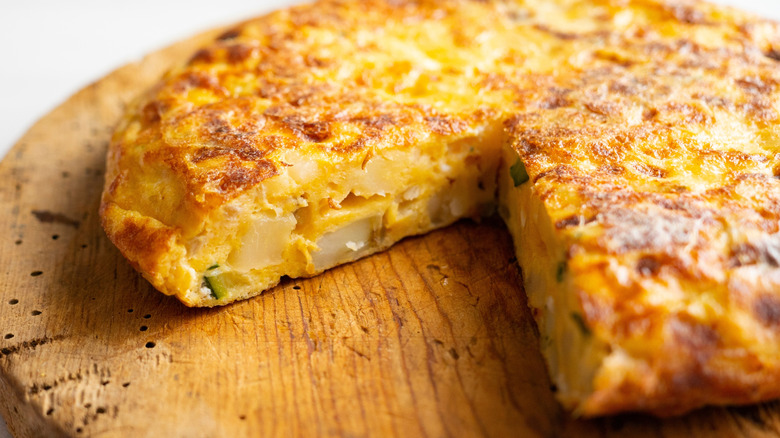
The Spanish tortilla is a beloved, versatile favorite. Traditionally made with egg and potato, the simple classic can accommodate a variety of ingredients, like chorizo sausage, bell peppers, and many other vegetables. Known throughout the Iberian Peninsula, Spaniards enjoy this hearty omelet in many ways, including as a sandwich (bocadillo), a snack (ración), or even dressed up as a pintxo (the Basque equivalent to tapas).
Since the Basque Country spans France and Spain, it's easy to think that the tortilla has been sliced from somebody's quiche, but unlike the French egg-based savory pie, the Spanish tortilla doesn't contain any pastry dough or flour-based anything. Its name actually comes from its round shape, and in Spanish, tortilla means little cake.
While the origin of the staple dish is a topic of debate among Spaniards, it's rumored that the Spanish tortilla could have originated in the Basque region, as the first written reference to tortilla was recovered from a document in Navarro, a small Basque village.
Tigres (Stuffed Mussels)
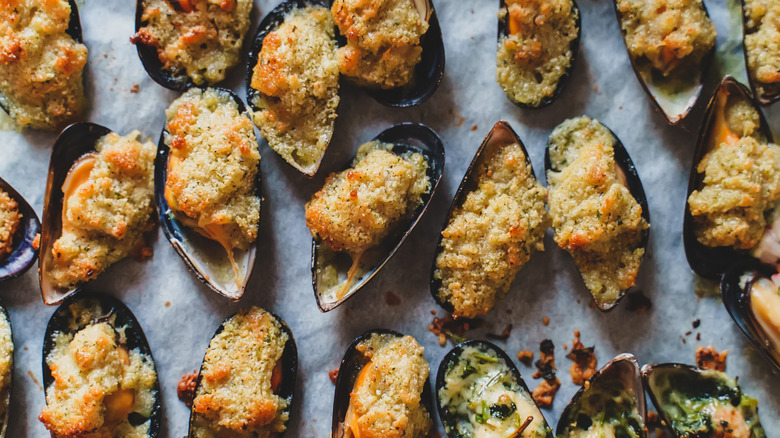
Originating from Bilbao, tigres are steamed mussels that are partially shelled and then stuffed with a milky, oniony batter and fried crispy. It's a time-consuming recipe that has several components and a few technical challenges to get right. While it's certainly not for the faint-hearted home cook, when in Bilbao, this breadcrumb-tinged finger food can't be missed. Often paired with a spicy sauce, the stuffed shellfish concoction was named after a tiger owing to its fiery taste, but the battered and fried mollusk is more simply known as mejillones rellenos in Spanish.
Whatever name you pick, this painstaking recipe involves making bechamel, a gently seasoned French sauce made from whisking whole milk with a roux, and scrubbing, bearding, stuffing, and finally frying the mussels.
A Spanish port city in the Basque Country, Bilbao is home to bounties of seafood and shellfish, meaning there's never a shortage of mussels in fresh supply, nor methods in which to cook them. While white wine and shallots dominate the typical French style of cooking mussels, when combined with decadent French flavors and sophisticated technique, tigres is a dish that captures the best of each "world" influencing the Basque Country.
Porrusalda (Leek and Potato Soup)
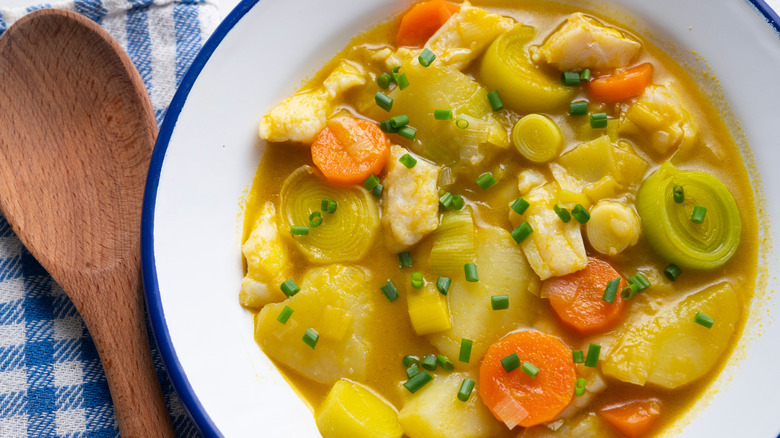
One of the Basque Country's most cherished recipes, porrusalda relies on little more than a few garden-variety alliums. Meaning "leek broth" in Basque, porrusalda is a surprisingly creamy soup that's made from leeks, potatoes, a hint of garlic, and, on occasion, carrots.
Always comforting, porrusalda can be homely or restaurant-level refined, depending on whether the soup is served with chunks of vegetables or blended velvety smooth. A rough chop on the potatoes, say about a cubic inch, is my preference as it offers a pleasant textural contrast to the hot broth. However, if opting for pureed perfection, julienned vegetables make for an expensive-looking addition to a show-stopper of a dish.
Polvorones (Spiced Cookies)
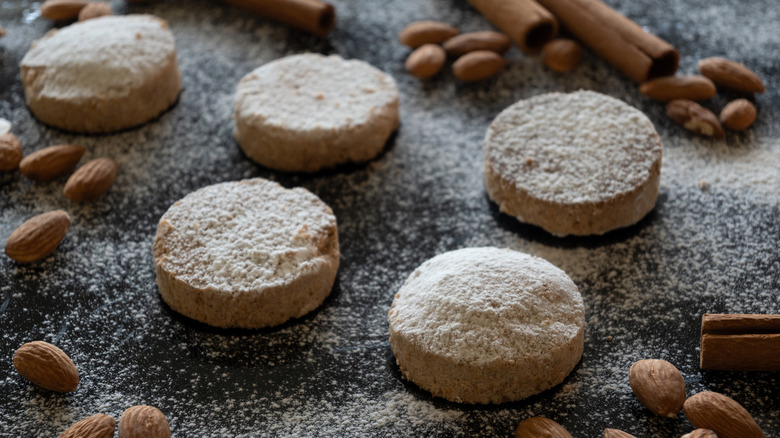
A delectably soft and crumbly cookie that's enjoyed during the Christmas season, polvorones are the Basque version of a savory, nut-based European cookie. Gently spiced with cinnamon and dusted in confectioners' sugar, these shortbread cookies are perfect alongside English breakfast tea or a cortado, the Spanish espresso drink.
Enhanced with toasted flour and citrus zest, polvorones utilize fine-ground flour and evince a shortbread-like texture with a bright acidity that keeps you coming back for more. Unlike other show-stopping holiday treats, polvorones aren't ornately decorated. However, like many Basque recipes, this holiday staple is really simple to put together, and the result is a hand-formed, tawny medallion.
The cookies' origins run deep in Spain, though the recipe has become a favorite savory-tinged sweet in Mexico and the Philippines, as well as many other locations. Traditional varieties include almonds, lemon, and cinnamon, although there's no shortage of possible variations.
Basque-style Bouillabaisse (Seafood Stew)
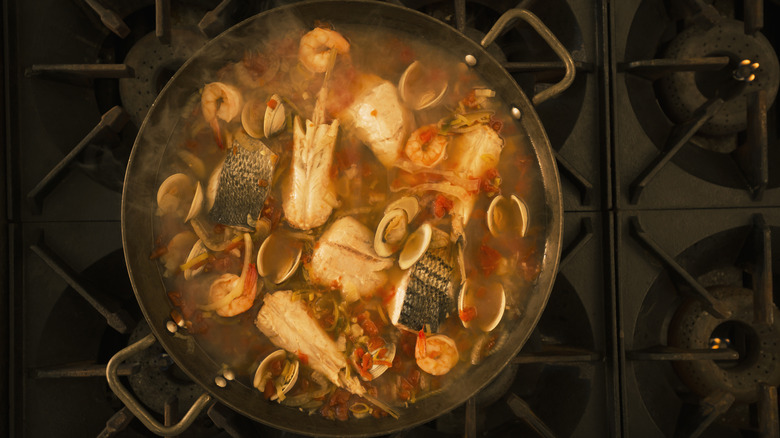
Less of a Basque Country staple and more of a fusion dish that incorporates French and Spanish culinary techniques and flavors, Basque-style bouillabaisse is a banger of a mash-up that everyone must try at some point in their lives.
The classic seafood stew originated in Marseille, and what began as a simple dish of boiled fish has evolved over time into an enigmatic stew built on layers of complex flavor. This bicultural interpretation sees fresh seafood from the Basque coastline and Armagnac from France melding with Spanish cooking techniques. Basque-style bouillabaisse calls for hake in a reduced seafood-and-tomato stock, but lobster meat is always a welcome addition.
The Spanish influence is in how the fish is cooked, which is done "a la plancha." The Spanish phrase references the pan-searing method and denotes higher temperatures than usual, which is usually on a flat surface and creates a small amount of smoking.
Cider-Braised Chorizo
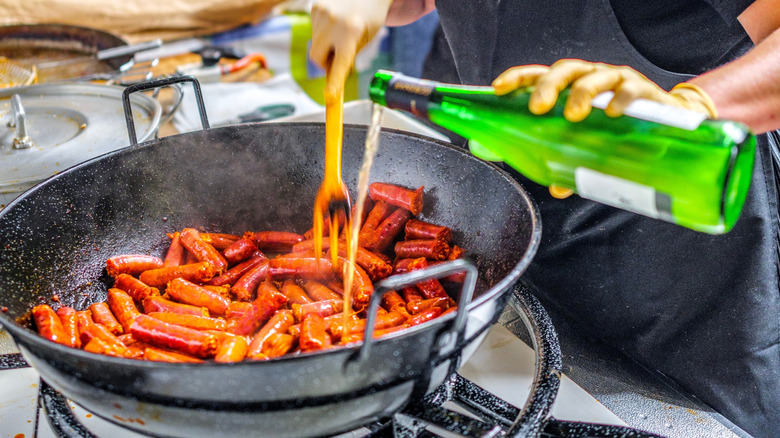
Cider-braised chorizo is the go-to pintxo for a mouth-watering flavor that'll have you staving off alcohol for at least a bite or two. That's because the Basque country staple doubles as a historical nod to the region's rural cider houses and those first sips of the latest vintage.
While chorizo is practically known the world over, the cured and dried pork sausage goes by the name of txorizo in Basque, and when braised in local, sweetly acidic cider, the spicy, paprika-seasoned sausage is revitalized with a little added warmth and a heap of crusty bread.
Hundreds of variants of chorizo exist across Spain, but a popular Basque version is txistorra, which tends to be thinner and requires less curing time. Since the recipe is no harder than sourcing chorizo and cider, aim for Basque Country exports, and get cooking.
Idiazábal Cheese
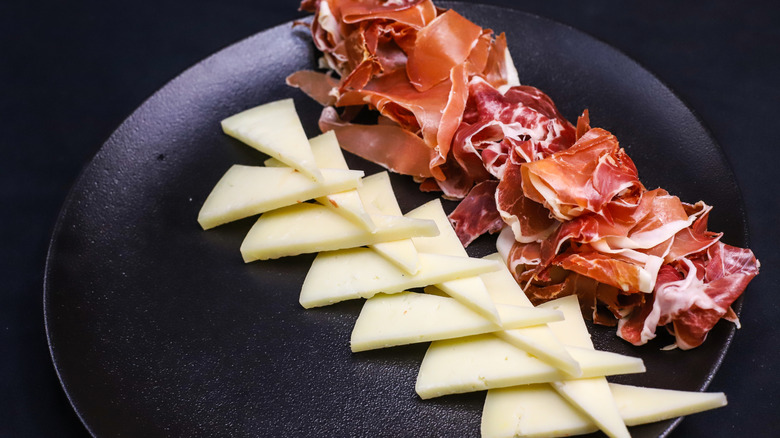
Of the many artisan foods that originate in the Basque Country, Idiazábal cheese is a time-honored artisanal product that encapsulates both the unique character of the region's terroir and legacy production methods that have long marked it among cheese connoisseurs.
Idiazábal is a semi-hard, farmhouse cheese named after the small Basque village in which it's made, where rugged terrain and lush pastures set the stage for age-old production methods to be passed down through the generations. A versatile cheese, the distinct flavor of Idiazábal is both smoky and nutty, and with a crumbly texture and buttery richness, it's a prized cheese to enjoy on its own, incorporated into more complex dishes, or simply paired with fruit and nuts as a pintxo.
Idiazábal is aged for at least two months in wooden molds stored near fireplaces, imparting a subtly smoky profile without being smoked.
Txangurro a la Donostiarra (Baked Stuffed Crab)
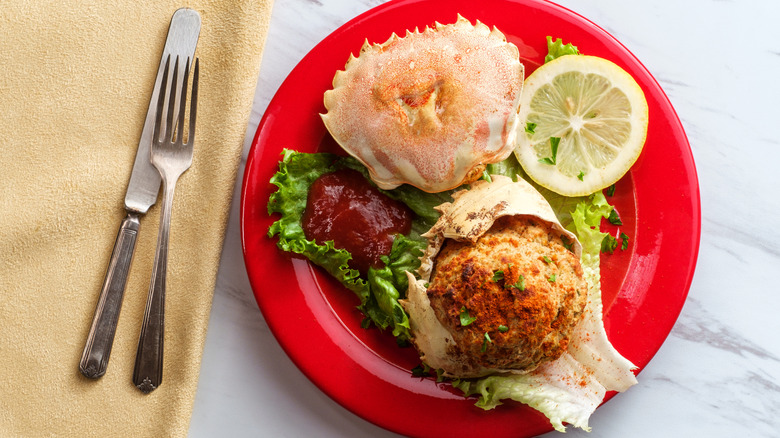
Txangurro is the Basque word for spider crab, and Donostia is the Basque name for San Sebastian, so txangurro a la Donostiarra naturally refers to a classic Basque preparation of stuffed shellfish.
Once thoroughly cleaned and shelled, fresh spider meat takes center stage and is complemented by a rich and flavorful bechamel sauce and a few other aromatics before being baked to perfection.
This recipe is an indulgent staple at pintxo bars and a worthy pairing for a crisp white wine or txakolina, the naturally effervescent Basque aperitivo. Whether making bite-sized portions or an entire casserole, baked stuffed crab is a hearty dish that celebrates local ingredients and rich flavors without too much fuss. Of course, if you're cooking this at home, spider crab may be hard to track down, so brown crab will do just fine.
Ajoarriero (Garlic Tomato Cod Stew)
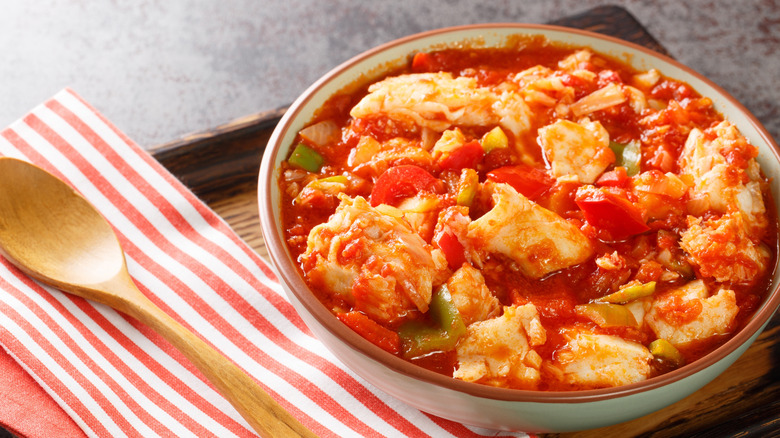
While salted cod is practically ubiquitous on tables and bar-tops across the Basque Country, this stew calls for a desalted version of the flaky white fish, but even that isn't the most prominent ingredient. Literally translated "mule driver's garlic," ajoarriero is a hearty stew that's enriched with garlic cloves, red peppers, and grated tomato. The result is a classic dish that captures the essence of Basque culinary tradition: fresh local ingredients and simple recipes.
Ajoarriero is considered a common codfish preparation that prominently features spicy garlic and shredded codfish, but many iterations exist depending on regionality and availability of ingredients. For instance, some regions incorporate potatoes into the stew while others opt for shellfish, but one immutable characteristic of ajoarriero is the treatment of the cod — it gets cut into slivers instead of chopped into cubes, as with most stews.
Chipirones en su tinta (Baby Squid In Its Ink)
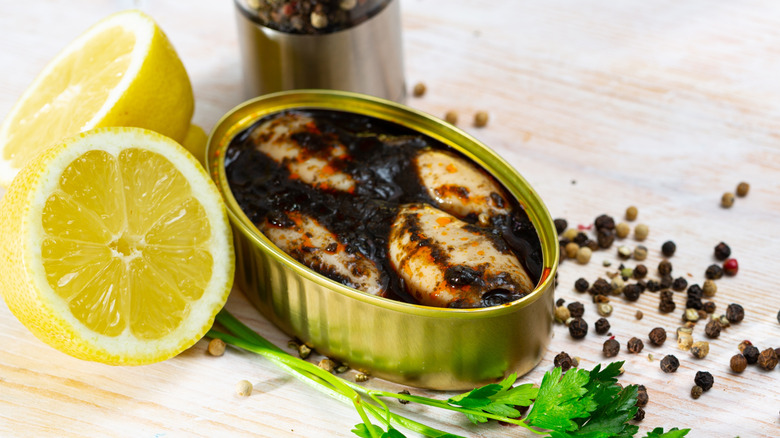
One of the most distinctive dishes of Basque cuisine, chipirones en su tinta — or "baby squid in its ink" in English — is notable for both its tender meat, salt-forward flavor, and cuttlefish ink sauce.
The ingredients make chipirones en su tinta a labor-intensive dish. For starters, it takes some time and expertise to source and handle the squid properly, after which, the squid needs more time to marinate in the sauce in order to develop its complex, surprisingly earthy flavors.
As with most Basque Country recipes, there's ample room for variation when making chipirones en su tinta, but utilizing fresh baby squid instead of the frozen stuff ensures that each bite of the inky morsel is as tender as it is striking.
Kokotxas (Fish Necks in Salsa Verde)

Kokotxa, or fish neck, is a small, gelatinous, and heart-shaped cut of meat that comes from the throat of the fish. Typically sourced from hake or codfish, the polarizing dish makes good use of what would otherwise get discarded while also serving as the perfect pairing for another Basque country staple: green sauce.
Known as salsa verde in Spanish, according to El Correo, green sauce is one of the four basic sauces of Basque cuisine. Named after the verdantly colored herbs used to make it, green sauce incorporates chopped parsley and garlic.
Whether using hake or cod, kokotxas sauteed in olive oil and served with green sauce is culturally known as "al pil pil," which is an onomatopoeia referring to the sound of fish cheeks popping in hot oil.
Callos a la Vizcaína (Beef Tripe Stew)
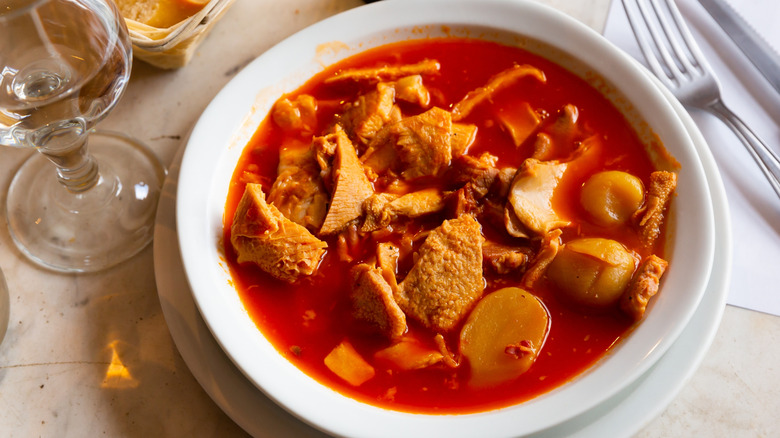
This hearty dish uses two of the Basque Country's signature foods, vizcaína sauce and dried choricero peppers, which tenderize and add complex flavors to its main ingredient: tripe. Tripe is the name for the stomach lining of a cow, and with high levels of collagen and protein, it makes for a healthy and substantial protein that would most likely get thrown away without the right skills and culinary know-how.
Callos a la Vizcaína, or beef tripe Biscayne-style, benefits from the addition of an aromatic sofrito, chorizo, and serrano ham (not to mention a hefty portion of fried bread on the side). Together, these ingredients revitalize the polarizing protein into a rich and hearty country dish that's perfect for cold weather. A hallmark of the Biscayne-style of beef tripe is the side of fried bread, perfect for soaking the dish's full, braised flavor.