

Here's How To Tell If A Rolling Pin Is Vintage
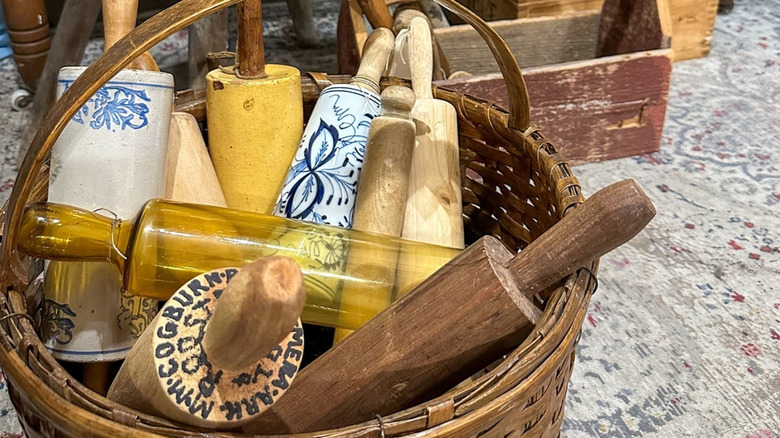
Walking into someone's kitchen and spotting a rolling pin isn't necessarily impressive, but what if that rolling pin is over 100 years old? Some vintage rolling pins have stood the test of time and can be easily identified at antique stores and yard sales by paying attention to coloration, material, and shape. There are dozens upon dozens of vintage rolling pin brands, but when it comes to identifying old versions of wooden pins (wood is perhaps the most common vintage rolling pin material), keep your eye out for printed logos on the pin, personal inscriptions, or images embedded into the tool.
Sometimes known as advertising pins, wooden pins enscribed with an ad for a product were popular in the 1930s and '40s among both American and English manufacturers. However, if you find a weathered pin made of any material other than wood, it's a fairly good indicator that you're holding an antique. While replicas do exist, glass, porcelain, tin, copper, and other materials are far less commonly used in today's production. There are some signs to look out for to determine vintage from replica, to be on the safe side. When it comes to real vintage glass pins, you'll notice a shape that's reminiscent of a balloon animal with two bulbous points on each end and a hollow interior, which was sometimes used for storing tea or valuable salt, sealed in with a glass stopper at one end. One coveted brand from the 1800s known as Nailsea produced beautifully colorful glass rolling pins; other glass pins with designs and inscriptions on the body are almost always vintage, too.
All kinds of antique rolling pins have become treasured prizes
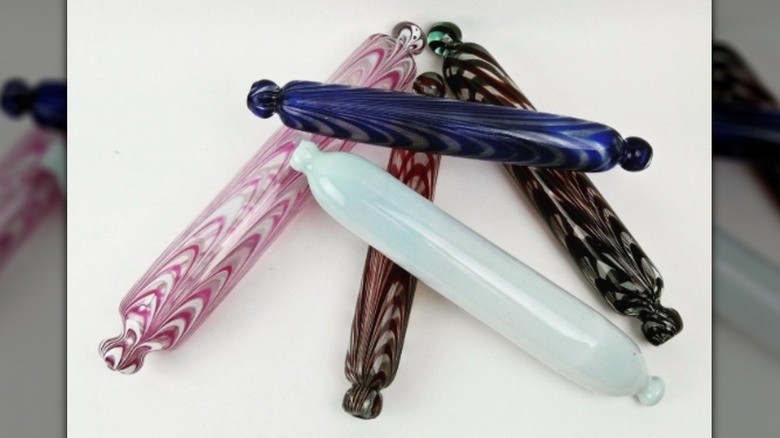
Vintage rolling pins can be worth a decent amount of money, depending on the brand and material, making them a great collector's item. If you get enough you could even utilize Martha Stewart's organizational tip for storing your favorite rolling pins, though possibly not if they're glass or particularly valuable, when you will probably want to display them.
Intricate American stoneware rolling pins were made throughout the 1800s, often with advertising stamped on the body, but very few have survived due to their fragile material. On retail sites like eBay, certain stoneware pins go for close to $300, and on other second-hand sites, you might see exceptionally rare stoneware pins for over $1,000. Meanwhile, plain, wooden vintage rolling pins can go for as low as $32. It just depends on how rare they are.
Rolling pins held deeper personal meaning back in the day, customized with quotes like "love and be happy" or "be true to me" and given as gifts. Children often received miniature versions of rolling pins to practice with in their youth before graduating to a larger pin. It was common to hang special rolling pins on parlor walls or above mantles as decoration, rarely to be used for actual baking, except on special occasions. You're more likely to find vintage wooden rolling pins while thrifting, but if you spot an even rarer pin it may be worth the investment. And if you get the bug for collecting vintage kitchen items, browse our tips and tricks for collecting vintage cookbooks, too.