

The Country That Produces The Most Beef In The Entire World

We've been eating beef since as far back as 10,500 years ago. From hunting, we went on to domesticate cattle, which are now reared for meat on an industrial scale. Global production of beef and veal reached 73.56 million metric tons in 2024, according to Statista. But while many people falsely believe that Brazil is the country that produces the most beef, as it turns out, it's the good old U.S.-of-A.
About 26.19 billion pounds (11.88 million metric tons) of beef were produced in the United States alone in 2024, per Statista, accounting for roughly 16% of the world's total production. The scale can be a bit difficult to imagine, so let's put it into perspective: If you were to gather all American farms together, you would discover that almost one-third of them produce beef.
The precise number does vary slightly depending on the source, but they all agree on one thing: The great majority of the meat used in classic beef dishes around the world, from pot roasts to beef Wellington and bulgogi, is produced right here in America. And that's despite the fact that many countries don't import much U.S. beef as it doesn't comply with their rules. The second highest is Brazil, and the third is China. But in a way, it sort of makes sense that the nation at the top of the list would be somewhat associated with cowboys and fast-paced cattle auctions.
Texas is the American beef capital
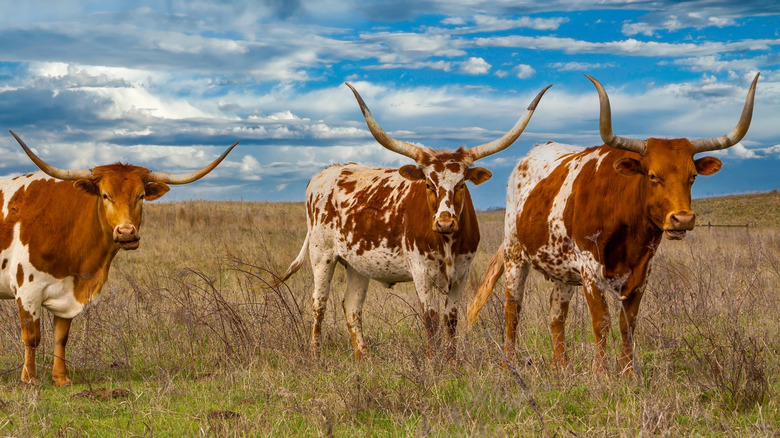
Speaking of cowboys, it probably doesn't come as a surprise that Texas holds the crown for the state that produces the most beef. According to Data Pandas, in May 2025, there are over 4.3 million heads of beef cattle in the Lone Star State, accounting for 14.87% of the total cattle production in the U.S.
Cattle ranching is ingrained in the state's history, dating back three centuries to when the Spanish brought livestock into the Rio Grande Valley. Not only was there plenty of land and pastures for cattle to freely roam, but the warm climate is perfect for ranching operations, too, since cattle can graze year-round without having to fear the cold. Over the next century, ranches sprouted beyond the Rio Grande and into the expansive rangelands along the San Antonio River. From the very beginning, Texas has had the history, the infrastructure, and the geography to be a major beef-producing state.
The second biggest beef producing state in the U.S. — Texas' northerly neighbor, Oklahoma — has a herd that's only half the size at 2 million cattle heads, or the equivalent of 6.85% of total U.S. beef production. Texas has proven itself to be such a successful beef cattle producer, that nowhere else in the U.S. can compete on a similar scale.
What kind of beef is produced in the US?
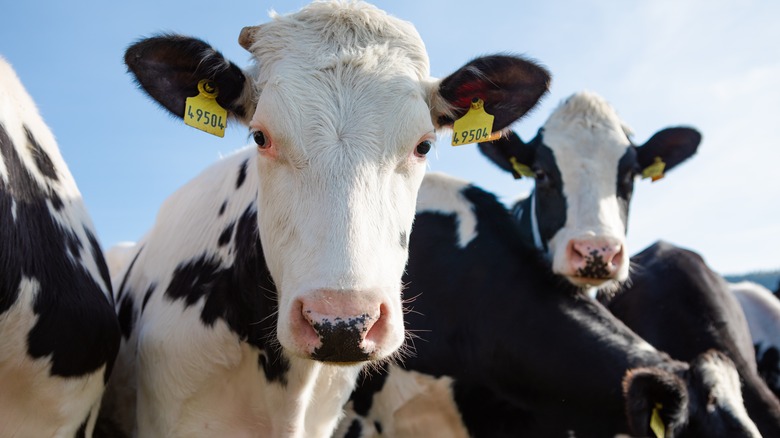
Cattle in the U.S. are generally divided into beef and dairy. The latter is the group your Longhorns and Herefords fall into. They're grown specifically for meat, and — as you may have already guessed — they make up for a huge portion of the beef produced in America. The most popular cattle breed in this group is one that you've probably seen plenty of times in the beef aisle at your local grocer: Black Angus.
According to AGDaily, there are currently more than 330,000 heads of Black Angus in the U.S. Considering how each one is often marketed with a live weight of over 1,000 pounds, you can see by doing the math yourself that it's a lot of beef — and we haven't even gotten to the other breeds like Charolais or Hereford.
But one thing that many people probably don't know about the cattle industry in the U.S. is that, outside of these breeds, a not-insignificant portion of our beef supply comes from dairy cows, as well. Although they're reared for their milk first and foremost, breeds like Holstein and Ayrshire can't keep on producing milk forever. At around four to five years of age, they are considered spent. In most cases, they'd be culled, but many farms now send their retired dairy cows to slaughterhouses to be turned into ground beef (pricier cuts like steaks are a whole lot better coming from beef cattle). That's how a surprising statistic you probably have never heard of exists: Up to 20% of the beef produced in the U.S. is from dairy cows.