

Why You'll Find Spam Everywhere In Hawaii
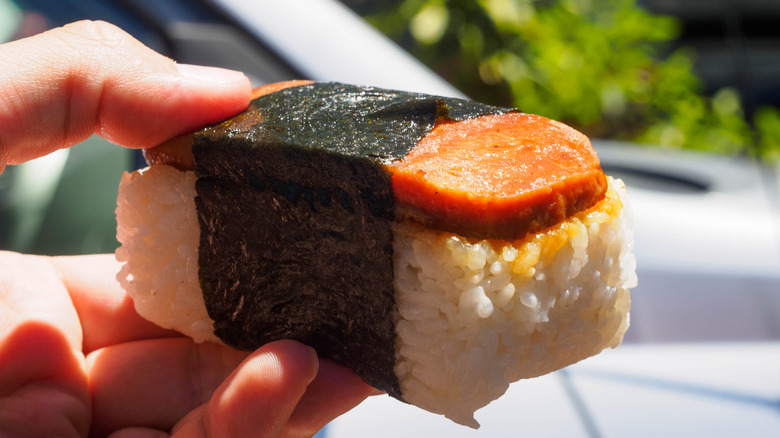
It's a wartime leftover, a palatable protein in shelf-stable loaf form, it's soft, it's pink, it's equal parts retro-futurist promise and comfort-food nostalgia. And in contemporary Hawaii, Spam is both ubiquitous and unremarkable. It's a fixture at family gatherings, 7/11 grab-n-go's, and upscale restaurants alike; grocery stores run promotions, and new Spam flavors appear each year, catering to local tastes with varieties like teriyaki and Portuguese sausage. Spam's affordability matters, but so does its versatility and ability to hold in hold up to strong-flavored dishes, like fried rice and omelets to Spam musubi with kimchi or furikake.
Hawaii's relationship with Spam started during World War II. Lean, long distance shipments of perishable goods rarely kept up with the island's need, and tins of Spam provided a practical answer. Troops stationed on the islands ate it daily, and locals soon found it in ration boxes, cafeteria lunches, and community potlucks. It just tastes good with pineapple. People learned it tastes pretty good with pineapple and started to pan-fry slices until crisp, and toss chopped Spam into noodle soups and fried rice.
From mess hall to musubi: Spam's first tour

When the United States military transformed Hawaii into a crucial staging ground for the Pacific front, the islands themselves changed, fast. Overnight, Honolulu became one of the most heavily militarized cities in the world, with hundreds of thousands of troops rotating through. Supplies strained under the pressure: Beef and pork, once shipped from the mainland, were quickly prioritized for the war effort. Spam was shipped by the ton, not just for soldiers, but as part of civilian food relief. Government pamphlets, radio ads, and local papers all promoted recipes for canned meats, teaching new ways to cook with rations.
With all that Spam on hand, it was incorporated into new routines. Island families queued for government food boxes, ration books in hand. School cafeterias, plantation kitchens, and mess halls became testing grounds for how far a single can could stretch. Spam became the taste of normalcy; a trustworthy, everyday food that didn't change, even as the world around them did.
As families adapted recipes and swapped tips, Spam became a shared language that connected neighbors, bridged backgrounds, and offered comfort during uncertain times. The very adaptability and stability that helped Spam survive the war years is what allowed it to thrive as conditions changed. Even before peace arrived, island cooks were already making Spam their own, folding it into old recipes and inventing new ones that reflected the islands' blend of cultures and ingenuity.
Can-do cuisine: Spam's island renaissance
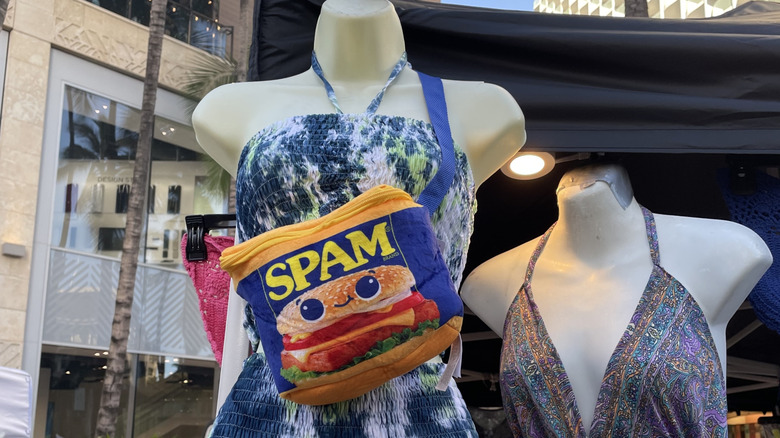
As the decades rolled on, Filipino, Japanese, and Native Hawaiian cooks continued putting Spam into their everyday meals. Dishes like Spam musubi, garlic fried rice, saimin, and bentos became everyday fare, each family layering their own cultural, culinary logic. Spam's story in Hawaii is also about resilience and pride; the can that once stood for rationing now signals resourcefulness and local ingenuity. For some, Spam brings back memories of childhood breakfasts or potlucks at the beach; for others, it's the main ingredient in a dish they've perfected over time. Modern chefs now riff on these classics, bringing Spam into inventive small plates, kimchi musubi, or even fine-dining tasting menus. Culinary creativity around Spam is celebrated and new recipes debut every year, and community cookbooks read like love letters to the can of salty pink processed meat.
Spam fits island cooking because it can stretch a meal and pick up local flavors. Its real staying power comes from its cultural saliency and how people keep finding new ways to use it. What began as a stopgap has become a symbol of identity and adaptation, and Spam's role in Hawaii looks set to continue, shaped by the next wave of home cooks, chefs, and storytellers who find their own meaning in every can.