

Keep Your Homemade Cake Fresh For Longer With This Sweet Hack
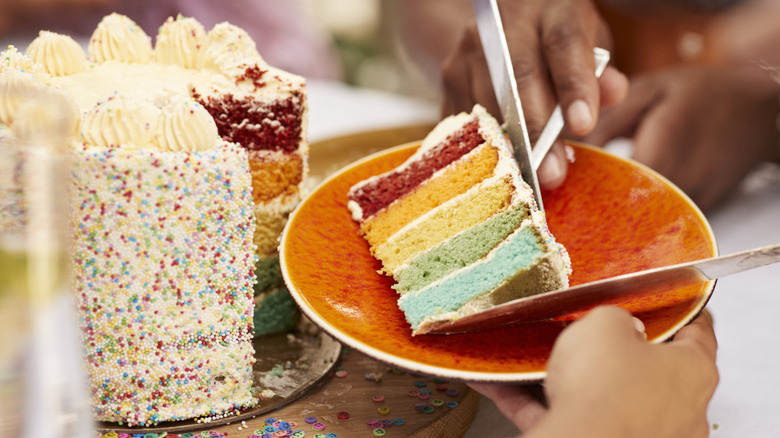
Picture a decadent, rich, sinfully delicious devil's food cake. You baked it yesterday, and it turned out perfectly. Today, as you go for a second slice, you dig your fork in and lift it to your lips. It's crusty and dry. Your cake has already started to go stale, even though it was covered. But this doesn't have to happen. The secret to preserving your cake is right there in your kitchen: more frosting.
Part of the reason we frost a cake is to preserve it. It doesn't hurt that it's also tasty. Frosting is a natural barrier against air, which causes the starches in your cake to dry out and crystallize. That's what happens when it goes stale, along with moisture loss and the breakdown of key compounds that affect flavor and texture. You could cover the exposed surface with parchment or wrap the whole cake in plastic. But those methods aren't as effective or as visually appealing as using more frosting.
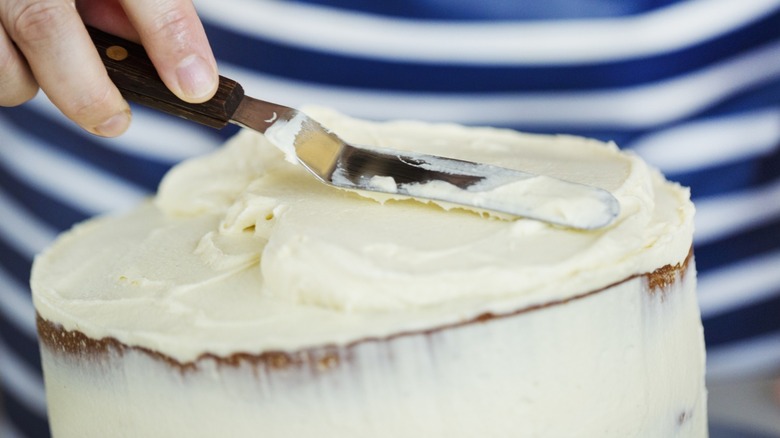
If you saved some leftover frosting when you made the cake, or even whipped up a fresh batch, you can apply that to the cake where you removed a slice. This will slow down the process of the cake going stale, and also make it a more delicious treat the next time you have a slice. It's a bit like cutting into a fresh cake every time, and you're always getting a frosted end piece.
The science of frosting preservation
Cakes have been around a lot longer than refrigeration, Tupperware, or plastic wrap. Finding a way to preserve them was a necessity because, even hundreds of years ago, no one wanted to eat stale cake. Preservation wasn't the only reason frosting and cake decorating evolved, but it played a role. The first recipe for cake frosting dates back to 1655.
In addition to looking nice on the outside of a cake, sugar has very low water activity. That means there aren't many water molecules available in frosting, because it binds moisture and holds it. That's part of how simple frosting evolved into the art of cake decorating today. Look at a typical recipe for simple buttercream. It's almost entirely made of fat and sugar. That combination inhibits the growth of mold and bacteria, so when you frost a cake, you're protecting it from them with the barrier of sugar on the outside.
We use sugar as a preservative all the time, even if we don't think of it that way. Sugar preserves fruits in jams and jellies, and hard candies can stay shelf-stable for years. That same preservative power helps keep your cake fresh. Whatever type of frosting you use, make a little extra next time for re-icing. It looks nicer, it tastes better, and it will keep your cake fresher for at least a few more days.