

This International Pasta Brand Was Born In The Same Region As Parmigiano Reggiano
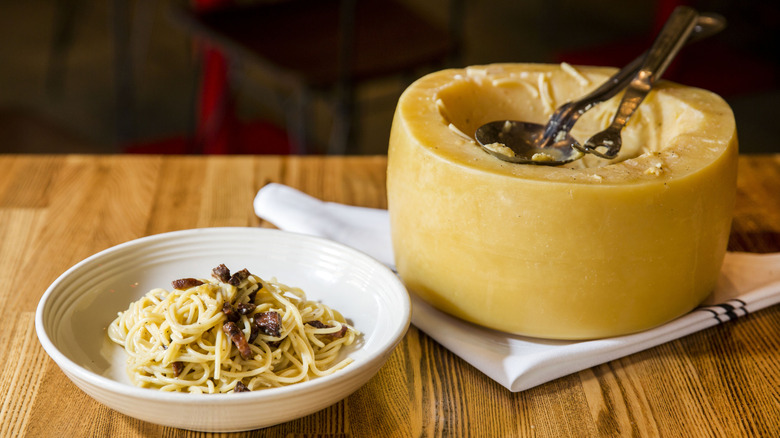
The Emilia-Romagna region boasts one of the richest culinary histories in Italy, with its world-famous cheeses, meats, and vinegars. Not only is it the birthplace of prosciutto di Parma, but it's also the land that gave us Parmigiano Reggiano and balsamic vinegar of Modena. We can also thank Emilia-Romagna for one of the most recognizable pasta brands: Barilla.
The family-focused origin story of Barilla starts all the way back in 1877, when Pietro Barilla Sr. opened a small bread and pasta shop in the city of Parma. Barilla learned how to bake while working as an apprentice for his grandfather and cousin, who taught him everything he needed to know to run his store. The road was bumpy at first –- he was forced to sell the shop in 1894 and open a smaller location in the same area –- but by 1905 he was producing 2,500 kilograms of pasta per day.
Today, Barilla's great-grandsons are running more than 30 production facilities around the world and exporting to more than 100 countries. The company also brought in an annual turnover of about 4.9 billion euros in 2024. The Barilla headquarters is still located in Parma, where visitors can tour its Pedrignano pasta plant, and the company opened an interactive experience where people can learn about the ancient art of pasta making at its very first store location in 2022.
Parmigiano Reggiano is only produced in Emilia-Romagna
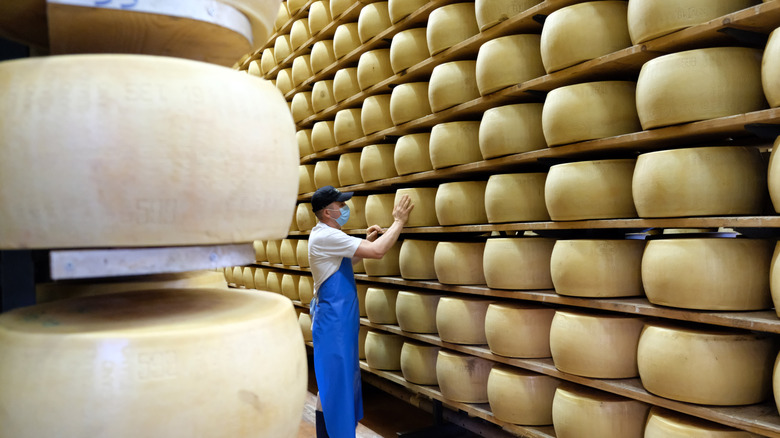
The Barilla family is very proud of its heritage, and the company tries to give back to the local community as much as it can. The city of Parma is equally proud of the Barilla success story, as is the entire Emilia-Romagna region, but there is one thing that's even more intertwined with its identity, and that's parmesan cheese.
Parmigiano Reggiano can be traced much further than Barilla pasta. The iconic cheese was first produced by monks in the middle ages, who utilized the Salsomaggiore salt mines and rich local milk sources. While the process has modernized, the ingredients list has not, and real Parmigiano Reggiano contains nothing but milk, salt, and rennet.
It's made exclusively in the Emilia-Romagna region by producers in the provinces of Parma, Reggio Emilia, Modena, and Bologna. Similarly to the origin of Champagne, a product can only be labelled as Parmigiano Reggiano if it's produced in these specific areas using strict guidelines. Any cheesemaker can make parmesan. But even if it tastes amazing, it can't be classified as Parmigiano Reggiano. The good news is that the U.S. is the largest market for Parmigiano Reggiano exports, so we can enjoy it on top of our Barilla pasta any time.