

These Rare Depression Glass Colors Could Be Hidden Thrift Store Gems
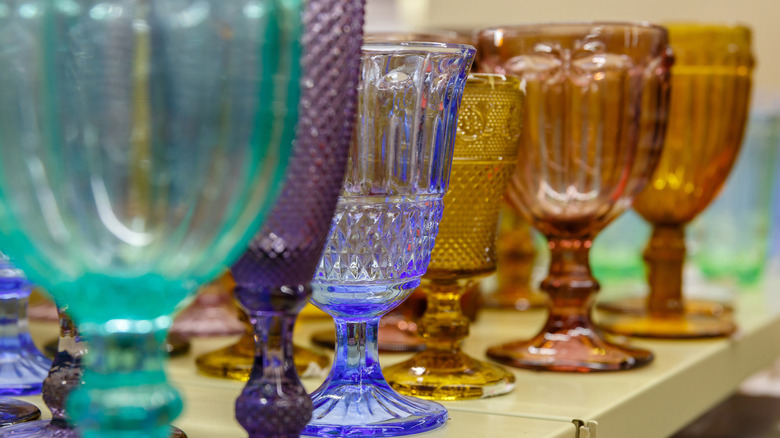
In thrift store settings, trained eyes scan quickly for milk, carnival, or etched glassware. Vintage enthusiasts rely on trusted tricks for spotting rarities, including telltale signs like the long-lasting clink of genuine crystal. We're taught to analyze sound and evaluate how the light twinkles and reflects, yet even seasoned collectors might overlook one crucial detail — color.
When searching for Depression glassware gems, the simplest trick is memorizing the era's rarest hues.The primary variations to note are the different shades of blue, yellow, green, red, purple, and white. The opacity and intensity might fluctuate, but these standout colors are quickly identifiable, even on the most cluttered thrift store shelves. Steer clear of common options, like widely-used amber, and specifically search for opaque blues and greens (called delphite and jadeite); merely pale won't do, and is relatively mainstream.
If you know the eventful history of Anchor Hocking glass cookware, you'll understand the allure of Depression glassware. Throughout the hardship of the Great Depression, there was a push for affordable creativity. As a mass-produced solution, the quality of this glassware wasn't perfect,but the bright designs were a distraction from an unhappy society and lackluster meals. That's why colors are so delicately interlinked with this type of glassware — those jadeites and canary yellows tell their own story.
How to spot the best Depression glassware
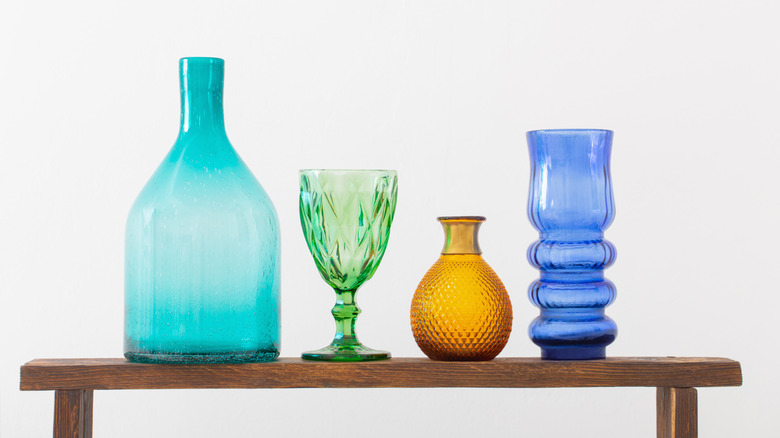
Depression glass is a novelty-rich addition to any cultured dining table. Yet these pieces often tell a story, rather than holding excessive monetary value. To spot the "best" and amplify potential value, it's a question of identifying the rarest colors and patterns. With a memorized (or scribbled-down) list of colors, you're well-positioned to take the next step in establishing the value of the glassware.
First, learn the brand basics. Remember that multiple companies invested in Depression glassware designs; memorize the vintage kitchen brands that are the ultimate thrift store finds. Often, that all-important valuation is delicately tied to which company produced the glass. For instance, Fire-King is the most collectible brand of vintage glassware if you're hunting for jadeite. There's another benefit of brushing up on brands, too; each has its own distinctive designs, such as Anchor Hocking's Cameo or Jeanette Glass Company's Iris and Herringbone patterns. Knowing the brands and identifying these individualistic patterns guides shoppers towards the most valuable purchases. As a general rule, the shorter-lived the design, the higher the value.
Quality is the final consideration. Yet, interestingly, not all product imperfections are cause for concern. Since this glassware was all machine-made, there were instances of unwanted bubbling, color inconsistencies, or molding mismatches. As long as none of these are chipped edges or storage-related damage — we're looking at you, "sick glass" syndrome — these add character, without detracting from financial value.