

The 2 Cheeses Chef Fabio Viviani Swears By For Perfectly Juicy Meatballs

What separates dry and crumbly meatballs from the best of the best? How do you get them to be plump, juicy and packed with flavor, capable of stopping conversation at the dinner table? While most cooks reach for the carton of milk, Italian-American Chef Fabio Viviani swears by a different dairy product entirely: cheese. Or two separate cheeses, to be precise. Speaking on "Daytime Chicago" about what made his meatballs perfectly juicy, Viviani said that his secret was adding parmesan and (somewhat surprisingly) ricotta to the mix. While explaining why, he also revealed a fundamental flaw in the traditional approach.
To be considered great, a meatball needs three things: It should be flavorful, soft and juicy. While Italians rarely agree on the perfect meatball recipe (there are as many different recipes as there are nonnas) most share one common technique: Adding milk-soaked bread for extra flavor and moisture. But Chef Viviani insists the introduction of cheese instead of milk-soaked bread is a real game-changer. "When we started Siena Tavern in Chicago, we were the only ones actually making meatballs using ricotta cheese in the filling," he said. "Ricotta replaces the milk-soaked bread. Unlike milk, it doesn't evaporate in the cooking process. At the end of the day, milk is flavorful, delicious water. But it's not the structure that will stay in the dish, because it evaporates."
Cooking the meatballs
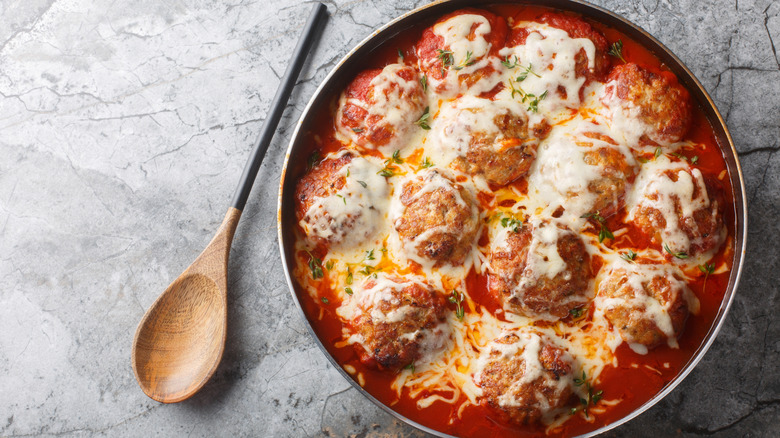
Chef Viviani, who gained widespread recognition in 2008 when he competed on the reality television series "Top Chef," likes to keep things simple in the kitchen (as you can see from the short ingredient list for the meatballs): beef, onion, garlic, parsley, basil, ricotta, parmesan, breadcrumbs, and one whole egg to bring everything together. While there's no consensus on the best meat to use — with recipes calling for everything from beef-pork blends to beef-pork-veal combinations — Viviani sticks with the best-quality beef for his flavorful meatballs, and recommends an 80-20 lean meat-to-fat ratio.
The second big departure Chef Viviani takes from traditional methods is how the meatballs are cooked. "Another key differentiator is that we sear the meatball in a skillet," he explained. "We don't bake them in the oven. We sear them on a skillet, then cover them with tomato sauce, and then put them in the oven low and slow." According to Viviani, doing this ensures that all the flavor stays inside the meatball instead of leaking out into the pan.