

17 Popular Snacks You'll Only Find In The UK
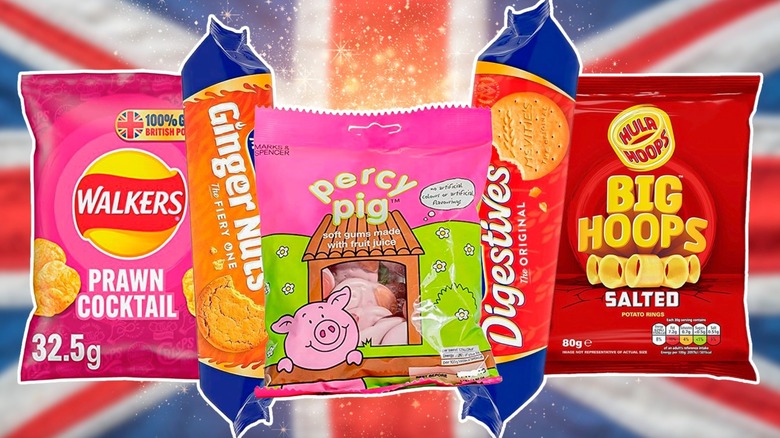
One of the great pleasures of visiting a new country is walking away with the best food souvenirs and snacks not found in the U.S. It's an easy and affordable way to get in touch with local flavors instead of splurging on a fancy meal and a great excuse to indulge in some sugary, salty snacks that aren't necessarily doing your health any favors.
Although the U.K. and U.S. share a language and have significant cultural crossover, the packaged foods in each country are remarkably different. Not only do biscuits and chips have completely different meanings, but there are all kinds of products across the pond that, at face value, would baffle most Americans. Brits wouldn't think twice about accepting some Hula Hoops, Jelly Babies, or Jammie Dodgers, but Americans might have some follow-up questions. So, whether you're wanting to brush up on your British cultural knowledge, planning a trip overseas, or are simply curious about what a digestive is, you've come to the right place.
Jaffa Cakes
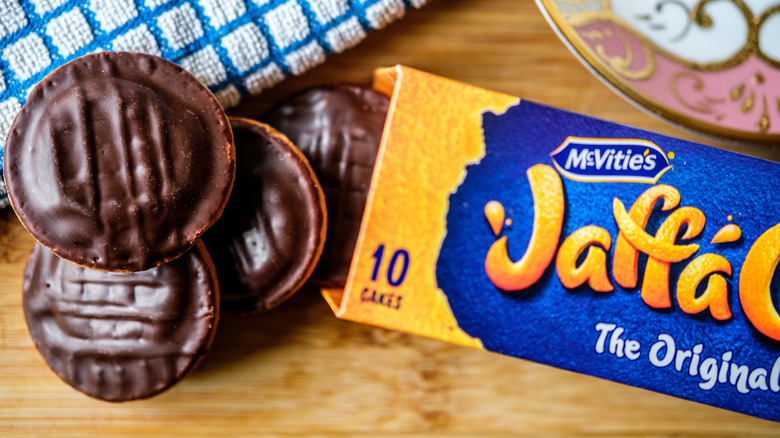
Here's a delicious flavor combination to consider: chocolate, cake, and orange marmalade. That is the concept behind McVitie's beloved Jaffa Cakes, and it's been delighting British citizens for nearly a century. The snack is roughly the size and shape of a cookie rather than a cake, making them dangerously snackable since you can simply eat them by hand from the packet.
The debate over whether Jaffa Cakes are cakes (as their name suggests) or biscuits (as their size suggests) was settled once and for all in court in the 1990s. The case revolved around whether the treat qualified for a tax exemption with other cakes or was on the hook for value-added tax with other chocolate-covered biscuits. The tribunal sided with McVitie's, which means that, in the eyes of the law at least, they are cake.
Although Jaffa Cakes are no longer made with the storied Jaffa orange variety, the manufacturer does boast that they are 8 percent orange juice. That's pretty impressive considering that only one-third of their flavor profile is citrus, but once you taste their sharp hit of jelly, it's easy to believe.
Hula Hoops
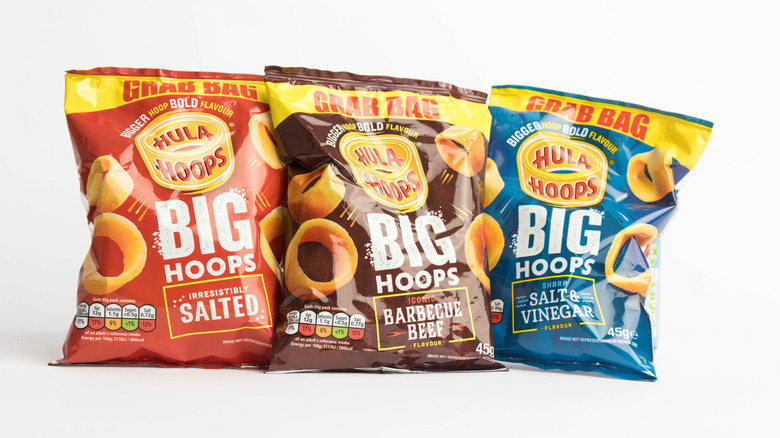
Americans have grown so used to the presence of Goldfish, Cheetos, and Sun Chips that most of us don't think twice about what they're made of. For British people, the same is true of Hula Hoops, a ring-shaped, savory snack that is not a potato chip but fits into that general category in the snack aisle. A quick perusal of the ingredients reveals that they're made mostly of potato starch and oil, along with rice flour and corn.
Introduced by KP Snacks in 1973, Hula Hoops come in various flavors, including the popular BBQ Beef. It probably won't remind you of a steakhouse, but it does nail that umami flavor that makes so many foods — including soy sauce and cheese — so irresistible. Hula Hoops are the type of snack that seems perfectly attuned to the American palate with their Pringles-adjacent texture and taste, so, strangely, they haven't hopped the pond. Luckily for Brits, they're readily available in supermarkets and vending machines across the country.
Hobnobs
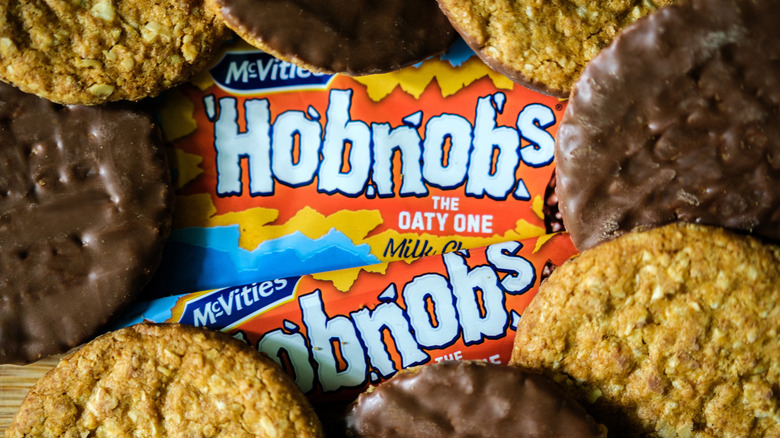
McVitie's manufactures so many different types of biscuits that it was kind enough to provide a little extra information on Hobnobs packaging. Just under the name of the famous biscuit are the words, "The oaty one." Unlike cakey, citrusy Jaffa Cakes or crumbly, caramely Gold Bars, Hobnobs are crunchy and made with oats. In fact, they are 40 percent oats and only 24 percent wheat flour. They are also perfect for soaking up milky tea or coffee.
Many people might assume that the name of the biscuit stems from the word "hobnob," which means to schmooze or socialize. However, in 2025, Pam Langworthy, one of the masterminds who created the biscuit in the 1980s, revealed the true origin. In an interview on Channel 4's "The Secret World of Biscuits," she said (via the Mirror) that it was a play on words. Before the biscuit was introduced to the public, focus groups pointed to its knobbly edges and said that if it was made at home, it would have been made on a hob (stove).
Welsh cakes
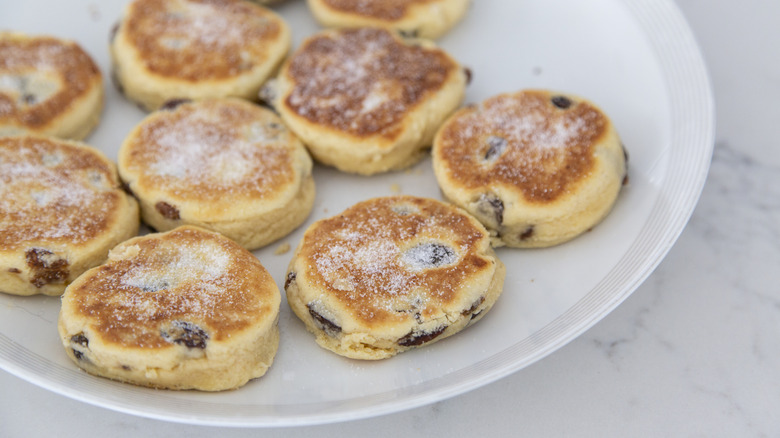
Welsh cakes are a classic recipe hailing from — you guessed it — the lovely country of Wales. Like many British treats, they are hard to categorise. Slightly thinner and denser than scones but significantly softer and thicker than biscuits (otherwise known as cookies in America), they refuse to be pigeon-holed. One thing they don't resemble very closely, though, is a standard definition of cake. Lightly sweet and usually studded with raisins, they have an irresistible, melt-in-your-mouth texture that even shortbread should be jealous of.
The Welsh name for the cakes, "pice ar y maen," means "cakes on the stone," which hints at their preparation. Rather than being baked, Welsh cakes are cooked on a griddle, which, before electricity, was a metal plate heated over a fire. Although the batter resembles scone batter with its flour, butter, sugar, and eggs, Welsh cakes often include a light blend of spices, such as nutmeg, cinnamon, and cloves.
Ginger Nuts
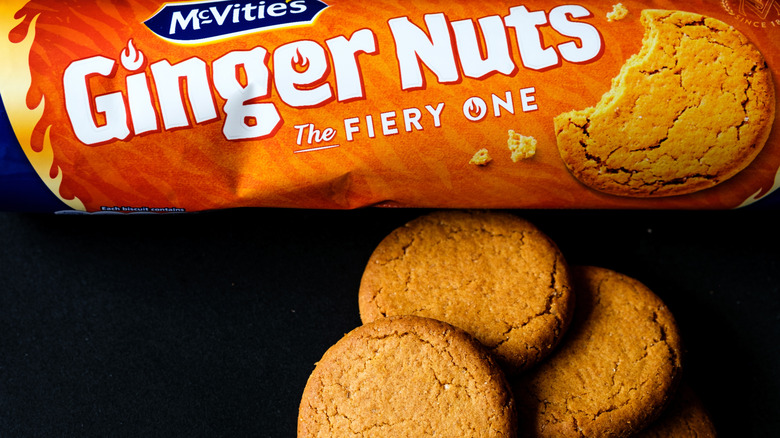
First things first: McVitie's Ginger Nuts do not, in fact, contain nuts. Flour, sugar, vegetable oil, glucose-fructose syrup, and molasses are the foundation, and they pack a powerful hit of ginger. That fiery kick is their claim to fame, and if you like gingersnap cookies, you're almost guaranteed to fall for these bad boys, too. Crunchy, sweet, and powerfully gingery, they're the perfect accompaniment to a mug of hot tea on a cold day or crumbled over vanilla ice cream on a hot one.
McVitie's didn't invent the name. Ginger nuts have been a popular cookie in the U.K. for centuries. In the 18th century, they were called gingerbread nuts, but the "bread" was eventually dropped, presumably for the sake of efficiency. Their diminutive size was the reason they were called "nuts," though nowadays, many ginger nuts, including McVitie's, are the same size as a standard chocolate chip or sugar cookie.
Walkers crisps
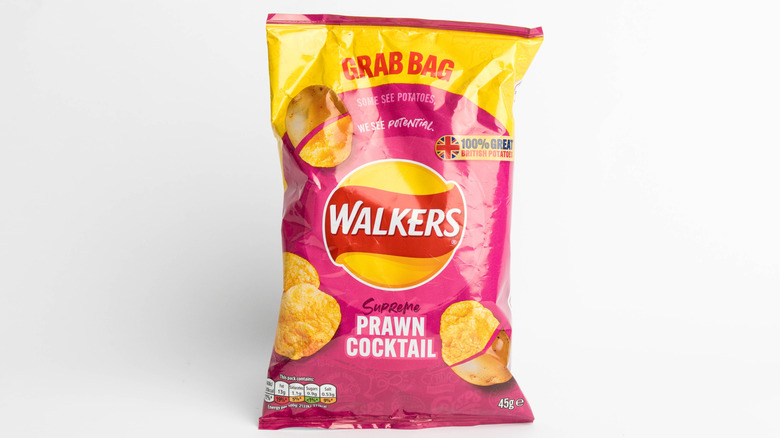
In the U.K., potato chips are called "crisps" and French fries are called "chips," so when you're offered a bag of Walkers crisps, rest assured that you're not about to get handed a packet of stale fries but the U.K.'s most popular brand of potato chips. They even outrank international behemoth Pringles in popularity. The cheese and onion flavor is the most beloved, according to surveys, but Walkers has offered a wide range of options over the years, including prawn cocktail, which is meant to taste like the beloved 1970s appetizer. At various times, you could also purchase flavors including Yorkshire pudding, haggis, bratwurst, and, rather alarmingly, Cajun squirrel.
Founded in 1948 by a butcher from Leicester, Walkers is a British institution. Its flavors are often patriotic nods to national dishes, such as prawn cocktail and sea salt and vinegar, which is meant to mimic the flavors of fish and chips, and no pub worth its salt would go without a few bags in stock.
Digestives
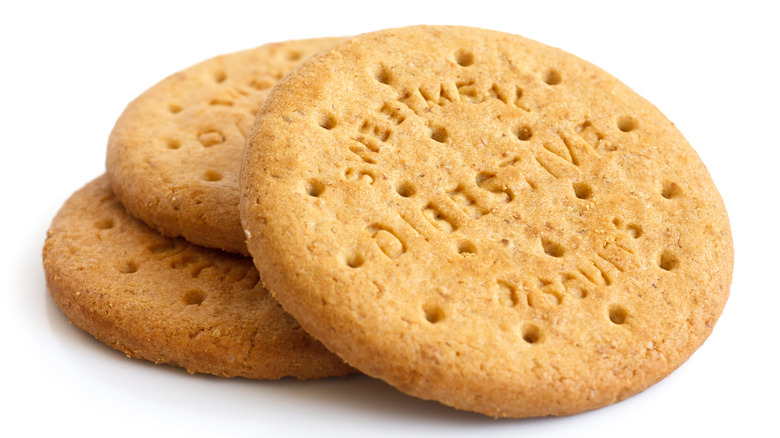
Digestive biscuits were originally billed as a cure for a scourge of flatulence among the male population in 19th-century Britain. Although the practice of eating biscuits to soothe gaseousness had been prevalent since the 1400s, it wasn't until 1892 that McVitie's created the now-famous digestive biscuit. Made of white and whole wheat flour, vegetable oil, sugar, raising agents, and salt, it is crumbly and lightly sweet.
No matter what the original marketing wanted shoppers to believe, however, digestives are not actually helpful when it comes to digestion. Baking soda can help with indigestion, but the baking process reorganises its chemical structure and renders it ineffective. The fiber from the wholegrain flour could also help, but there isn't enough of it to make a difference.
That doesn't seem to matter to the biscuit-buying public. McVitie's chocolate-covered digestive is the most popular British biscuit, according to a government survey, while the original version falls in fifth place. Considering how many adventurous flavors and recipes there are out there, that's quite an accomplishment.
Wine Gums
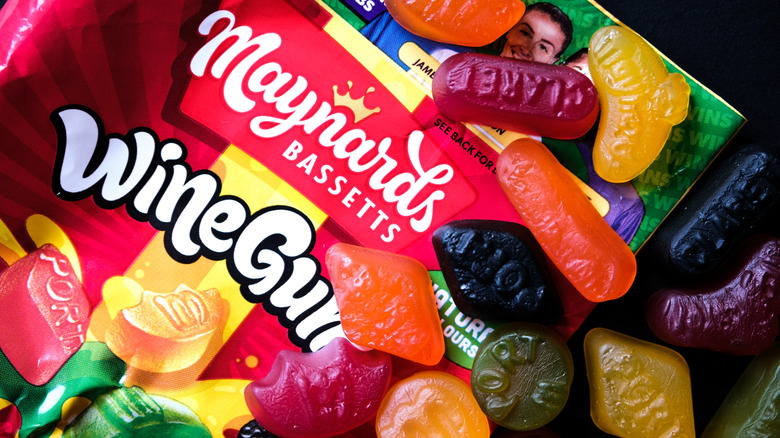
Wine gums sound like a dental condition sustained from drinking too much alcohol, but in reality, it refers to a type of fruit-flavored candy modeled after various types of vino, such as port, claret, brandy, and champagne. As you'd expect, they are geared toward adults rather than children, and as such are typically harder in texture and less sweet than the gummy candies targeted at children.
Wine gums were invented in 1909 by Charles Gordon Maynard, who ran a sweet-making company with his father and uncle. He struggled at first to win the approval of his dad, a man who didn't partake in alcohol and was scandalised at the idea of candy made from wine. From the beginning, however, wine gums have been alcohol free. Nowadays, Maynards' ingredients include glucose syrup, sugar, starch, gelatine, acid, colorings, coconut oil, flavorings, and a glazing agent – not a hint of wine in sight.
Rich tea biscuits

Rich tea biscuits are a bit of a misnomer. The word "rich" suggests lots of calories, but they are, in fact, light, crunchy, and pretty low in calories compared to other types of biscuits. Where one McVitie's digestive contains 71 calories, one of the manufacturer's rich tea biscuits only has 38. Although McVitie's produces the most well-known version, there are many other brands, including supermarket brands, that have their own spin on the recipe.
Tea biscuits have been in existence since the 1600s. Originally made for wealthy Britons as a snack to stave off hunger between meals, they are now most widely associated with tea dunking. That said, you'll find people eating them at all times of day. Since they are only lightly sweet (one McVitie's biscuit contains a scant 1.5 grams compared to nearly 5 in an Oreo), they are easy to munch on without a second thought.
Shrimps and Bananas
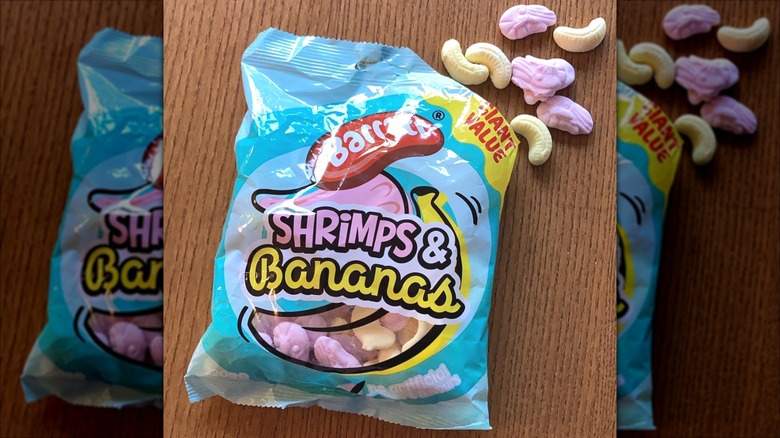
It might sound like a far-fetched practical joke, but there is a popular U.K. candy that is made to look like shrimp and bananas. With a soft, foamy texture and pastel pink and yellow colors, they look more like toys than food. Crucially, they do not taste like shrimp but like fruit. Why, then, would they be shaped like crustaceans? That much is unclear, but if people can get used to Swedish Fish, it's not surprising that they can get used to sweet, gummy shrimp, too.
The product was invented by the confectionery Barratt in the 1940s and probably seemed like a daring novelty in the beginning. But they have since become their own category of candy. You can find shrimps and bananas from multiple brands, and many of the major supermarkets in the U.K., such as Tesco and Sainsbury's, have their own take on the strange combination. Luckily, none of them have yet attempted to make the shrimp taste like shrimp.
Jelly Babies
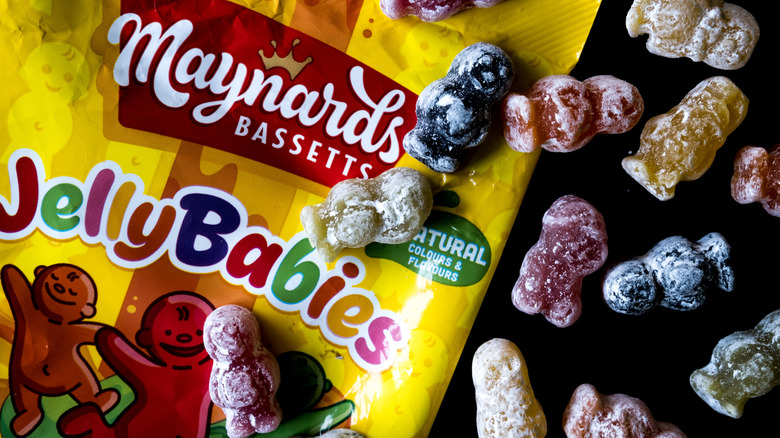
Yet another example of a squishy candy named after something incongruous, Jelly Babies are, like wine gums and shrimps and bananas, a popular treat in the U.K. Shaped like chubby-cheeked human infants, they are a bit unsettling for anyone who hasn't seen them before, and biting into them can feel downright murderous. Believe it or not, the history is even grimmer.
The story goes that they were invented by accident by a confectioner in Lancashire in the 1860s. When asked to make a bear mold, he made one that more closely resembled a baby. Rather than having him start over, the manufacturer made the most of it, launching a new sweet and calling them Unclaimed Babies. In this Dickensian era of child labour and debtor's prison, "unclaimed" children were not a rarity.
It wasn't until 1953 that they were finally branded Jelly Babies by the confectionery Bassett's. There were some attempts to make the candy less creepy by producing ads that personified each colour and turned them into animated children, but it's debatable whether eating child-shaped candy that has names and voices associated with it is any less macabre than anonymity.
Jammie Dodgers
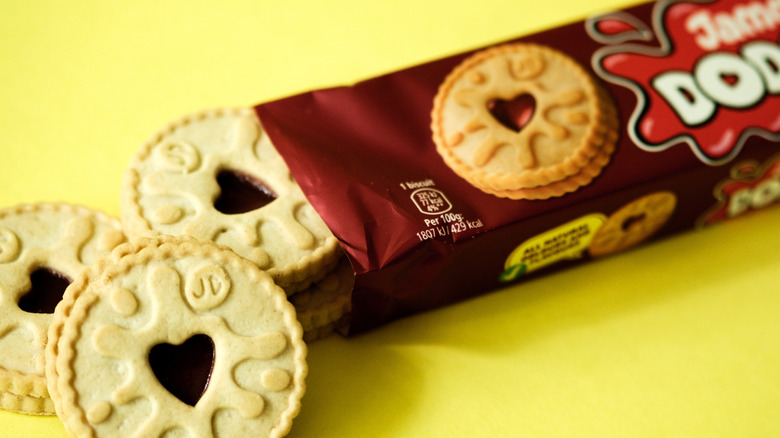
It sounds like a name out of a children's book (or the Artful Dodger in "Oliver Twist"), but a Jammie Dodger is actually a type of jam-filled cookie that is beloved throughout the U.K. They come in multiple flavors, including raspberry, strawberry, apple, and blackcurrant. What they all have in common, though, are two shortcake-style cookies with either a heart or a splash cut out of the top one to make a window onto the jam.
It's named after Roger the Dodger, a character in the "Beano" comic strip who first appeared in 1953. As his name suggests, Roger is a small boy who excels at avoiding household chores. This origin suggests that the manufacturer was trying to market the cookies to children, but Jammie Dodgers have become so beloved by snackers of all ages that they inspired an eponymous cocktail. Made with just two ingredients — raspberry liquor and half and half — it's a rich, fruity concoction that does its namesake justice.
Crumpets
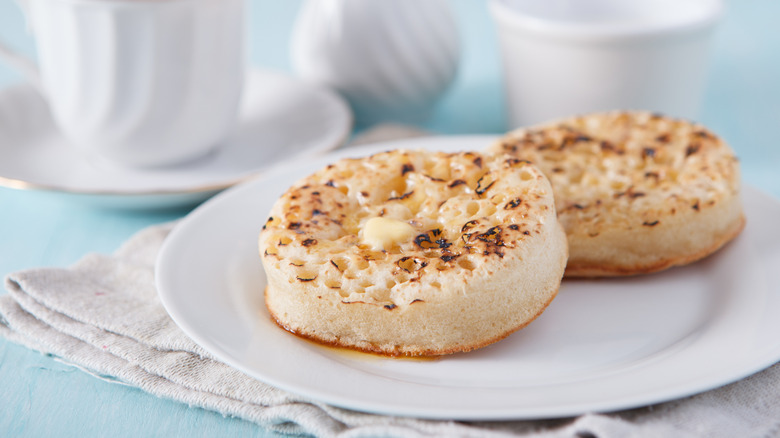
You might think that crumpets look an awful lot like English muffins, but the experience of eating them is entirely different. First, let's examine their similarities. Both are yeasted pancakes cooked on a griddle. They have similar dimensions, and they are often eaten with butter. However, crumpets are cooked in rings because their batter is usually thin, and they end up with a much more rubbery texture compared to the fluffy breadiness of English muffins. The most noticeable feature of crumpets is their network of uniformly-sized holes that soak up melted butter like a sponge.
Like English muffins, crumpets have been around for centuries. Although versions of a "crompid cake" had been around since the 14th century, it was four centuries later that Elizabeth Raffald put down a recognizable recipe for the modern crumpet in her 1769 book, "The Experienced English Housekeeper." These days, crumpets are still a mainstay of teatime snacking and even taste great fried with jam for a sweet twist on breakfast. Warburtons, one of the most familiar manufacturers of the product, makes 700 million of them every year.
Sausage rolls
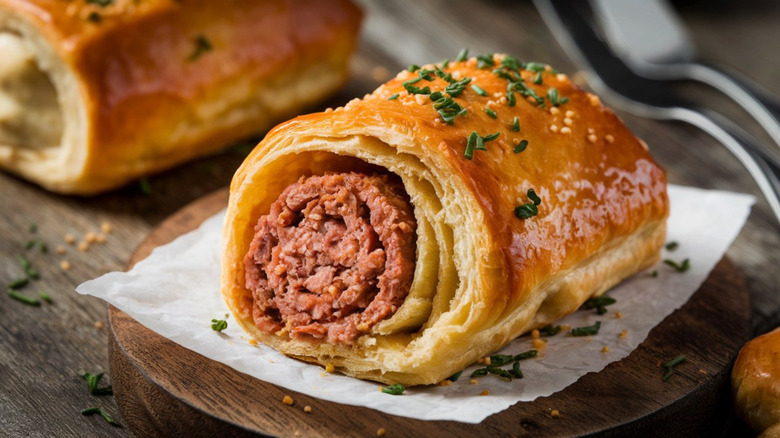
There's nothing stopping Americans from adopting sausage rolls. It isn't a trademarked or secret recipe, and given our proclivity for consuming meat, it seems like the perfect fit. Somehow, though, it hasn't become the ubiquitous snack that it is across the pond. Made of a juicy sausage link encased in flaky pastry, it's a blissfully simple sausage roll recipe that hits all the right flavor and texture notes.
It will come as a shock to Americans and Brits alike to know that this most British of snack foods actually comes from France. By the 19th century, however, their neighbors across the English Channel had taken note of the flaky, succulent recipe and begun to sell them on the streets of London. As such, sausage rolls in the U.K. began as street food and retain a similar on-the-go handiness. In 2012, the casual bakery chain Greggs was selling 2.5 million every week.
Percy Pigs™
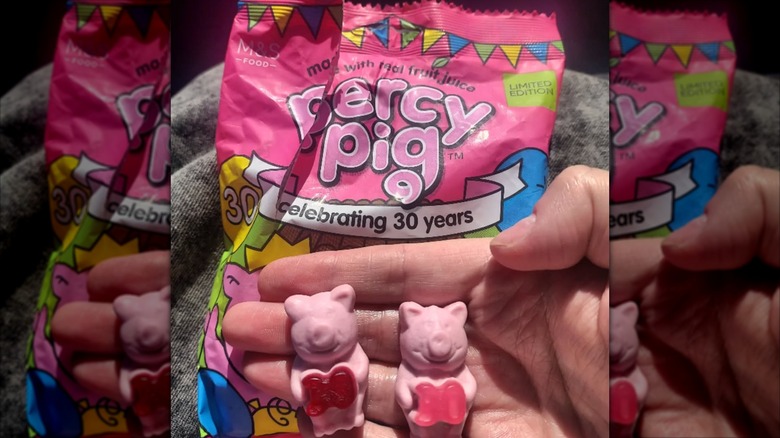
Adding to the category of spongy, pastel colored candy is Percy Pigs™, a supermarket-branded confection that has gained an unlikely cult status. Made with real fruit juice, these pig-shaped treats are a far cry from the many sickly sweet products you find in the candy aisle. Launched by Marks and Spencer in 1992, Percy Pigs were not an immediate hit. Customers were more inclined to think they were bacon flavored rather than grape and berry flavored. Realising that they just needed people to try the candy, M&S started offering free samples, and everything changed from there.
These days, the retailer sells 36 bags of Percy Pigs every minute and has capitalized on the success by turning Percy into a cultural phenomenon. You can buy Percy Pig™ bedding, bouquets, tote bags, dishes, and dog toys. The range has expanded to include Percy's friends and family, too, including his wife, Penny. And because we live in the 21st century, Percy is also a big deal on social media, having racked up millions of views on TikTok.
Cadbury chocolate
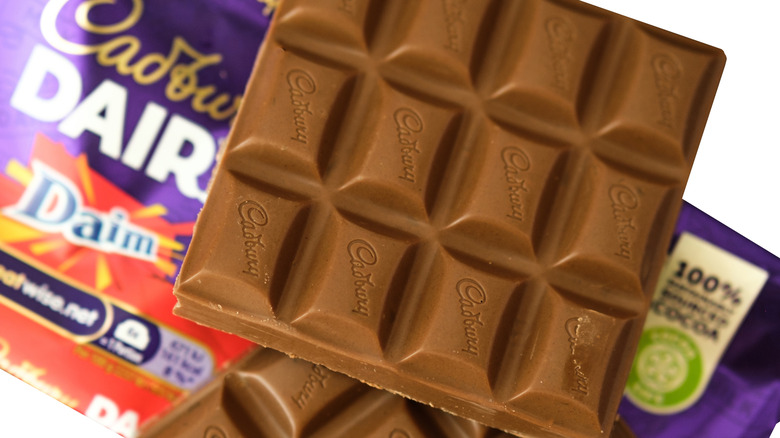
Of all the British treats you're likely to hear about, Cadbury chocolate is at the top of the list. The company was founded in 1824 by John Cadbury, a grocer who prepared chocolate for his customers with a mortar and pestle. A few decades later, his sons took the business to another level when they purchased a Dutch-invented cocoa press that allowed them to remove some of the unappetizing cocoa butter from the beans. Fast forward a couple of hundred years, and the company now sells nearly one million bars of chocolate each day.
Now, you might have noticed that Cadbury chocolate is available in the U.S., but there is a crucial difference. In 1988, Hershey paid $300 million to manufacture and sell chocolate under the Cadbury name in the United States, but the products vary in their fat and cocoa content. It's hard to be objective in these matters, but there is no denying that the British version has a more velvety texture, possibly due to the inclusion of vegetable oils.
Gold Bars
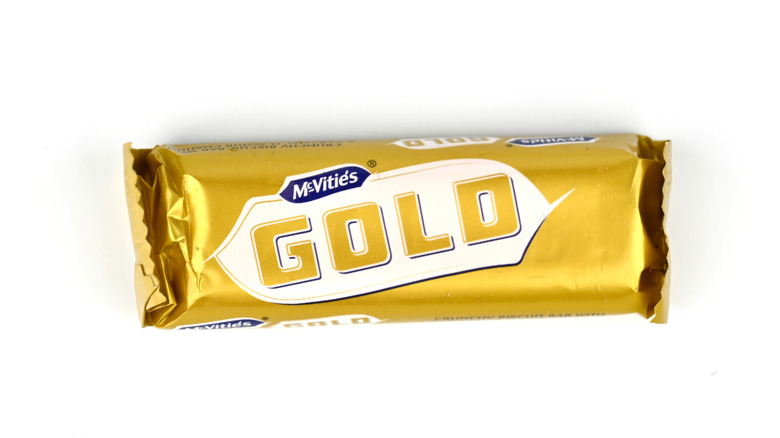
Another of McVitie's biscuit confections, Gold Bars are unabashedly sweet. Imagine a sugar cookie shaped like a bar of shortbread, smothered in a white caramel coating, and you'll have some idea of what a Gold Bar is. One of the most inspired aspects of this treat is the proportion of coating to biscuit. Most cookies that are sold with a coating only feature a vanishingly thin layer of the stuff. McVitie's own chocolate-covered digestives, for example, are 70 percent biscuit and 30 percent chocolatey coating. Gold Bars are the reverse — 70 percent coating and 30 percent biscuit — giving them a decadent quality.
First launched in 1988, they are one of the manufacturer's more recent innovations, and they are certainly on the more indulgent end of the spectrum. Just one Gold Bar is 95 calories and contains nearly 9 grams of sugar, which makes it about four times as sweet as a plain digestive.