

Most People Don't Change Their Kitchen Towels As Often As They Should
We may receive a commission on purchases made from links.
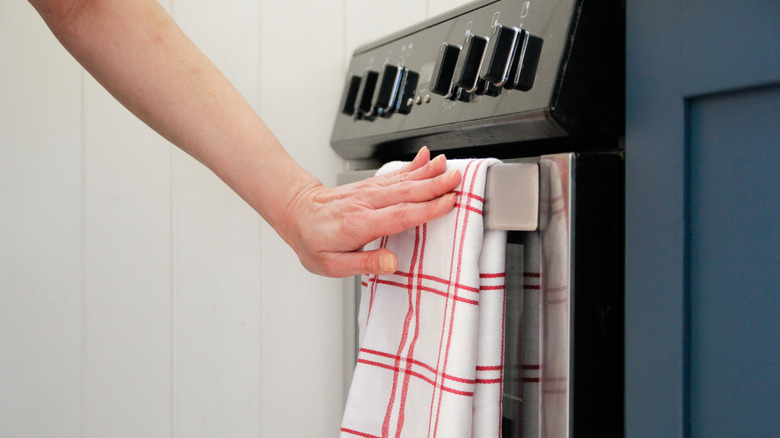
That folded towel is an unsung hero in your kitchen. The range of uses is nothing if not versatile; you can use a damp towel for proofing bread without plastic, for mopping up spillages, or as a protective barrier for handling hot items. Yet, the busy lifestyle of the average kitchen towel should be a blaring red flag. How often do you change yours? According to a study by the University of Mauritius, it may not be frequently enough: in their research, 49% of month-old towels showed bacterial growth, including Staphylococcus aureus and E. coli. To avoid that spine-shivering exposure, the wisest course of action is to change towels on a daily basis.
Don't leave germs to linger. By unknowingly touching a contaminated towel, you initiate a domino-like effect: The bacteria spreads between surfaces, heightening exposure and the possibility of becoming ill. Door handles, pan lids, countertops, and even phone cases — you name it. These types of germs are primarily associated with food poisoning, causing an intense bout of fever, vomiting, diarrhea, and nausea. It's not just leftovers that can be dangerous to eat, or undercooked chicken. The sneakiest suspect might be right under your nose or slung over your oven handles.
What are the heightened risk factors?
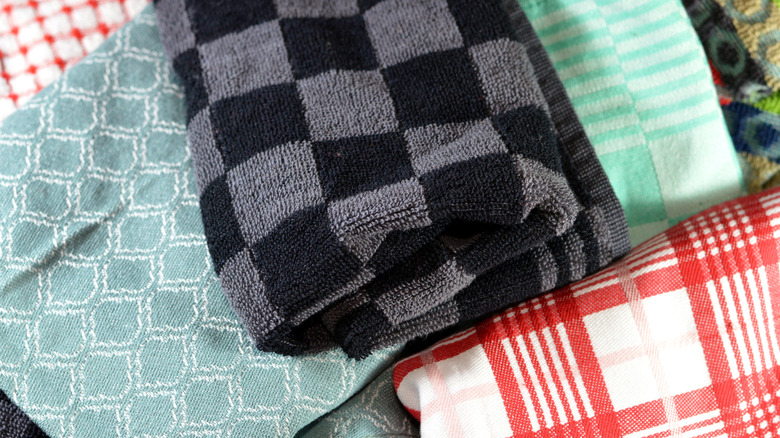
Pause that rush to grab replacements. These findings have a catch; not all towels have identical risk factors. As a general rule, be cautious of high-traffic kitchens, where towels are naturally subjected to increased usage. Think large families or those with young children. Non-vegetarian households also saw an increased risk, as the highly perishable qualities of meat encourage bacterial growth. Another factor is humidity, whether that's your country's environment or your personal usage patterns. For instance, condensation on pot lids can be messy, and you can fix it with that easy towel trick. Just throw it in the laundry afterwards. That dampness isn't helping.
Kitchen towels might be hailed for versatility, but ultimately, multipurpose usage is the silent harbinger of bacteria. There are many influences at play, including the material of the towel; microfiber is notably bacteria-resistant due to its fast-drying abilities, while cotton leaves users more vulnerable. The safest option is keeping a daily rotation of bone-dry kitchen towels, but in the meantime, monitor for "high risk" events. In a scenario where contamination is guaranteed, like handling meat, then swap the towel immediately. It's not worth accidentally retouching. Always machine-wash discarded towels (with bleach, if white), and consider keeping alternatives, like these Scott Professional Paper Towels handy.