

8 Regional Mexican Cuisines That Define The Country's Food Culture
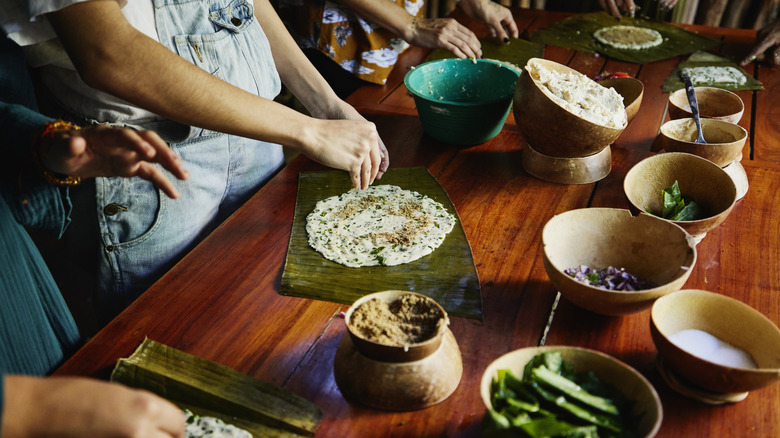
Mexican food is globally renowned and praised for its vibrant, intense flavor. Mexico's culinary landscape is heavily influenced by geography, tradition, and the impact of colonization. We spoke to Michelin-starred Carlos Gaytán, the chef and owner behind Tzuco, who helped us explore the origins of Mexican foods and highlight the dishes important to each culinary region. He told us, "Mexico's culinary identity is beautifully complex, shaped more by culture and ingredients than strict geography. Every region feels like a different country, each with its own traditions, flavors, and techniques."
While Mexico is a country that has undoubtedly been influenced by colonization, it retains an abundance of pre-Hispanic influences — these can be seen in the moles and corn-based dishes of the south and the open-fire grilling of the north. Family is all-important in Mexico, and there is a huge emphasis on passing down recipes. However, Gaytán says that this doesn't mean they are necessarily written down –– recipes are taught by watching mothers and grandmothers cook for the family the way their ancestors cooked before them. Gaytán goes on to say that in Mexico, "Recipes carry memory, pride, and love, and passing them down is an act of preservation and honor. Every time we make a dish from our childhood, we're reconnecting with our roots."
This tradition of sharing generational recipes is particularly important in a culture where many regional recipes are at risk of being lost. Chef Gaytán says that some traditional ingredients like amaranth, wild herbs, or endemic chiles are disappearing due to climate change, and many pre-Hispanic recipes are lost simply due to changing diets.
Oaxaca (southern Mexico)
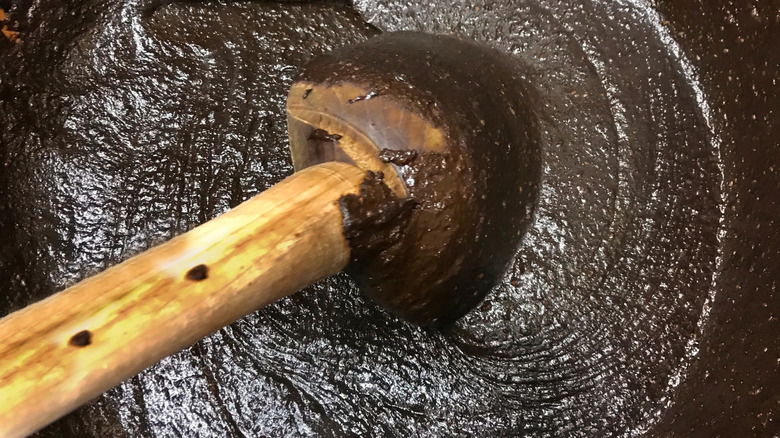
Oaxaca, set in southwestern Mexico, has a varied landscape and Zapotec and Mixtec cultural roots, which, when combined with the influence of Spanish colonization, have conspired to make Oaxaca a hotbed of culinary delights. Mole is Oaxaca's most famous dish. Mole is a generic term used to describe a sauce, and there are many different mole recipes, but at its simplest, a mole is made from chili peppers, which are ground down and to which can be added any combination of cocoa, corn, seeds, nuts, dried fruits, herbs, and spices. Chef Carlos Gaytán says, "Oaxaca is known as the land of the seven moles, and for good reason. Oaxacan mole is a deep, intricate symphony of flavors. It's complex but balanced, often using more than 30 ingredients, including dried chiles, spices, nuts, plantains, and chocolate.
Oaxaca is best known for mole negro, a complex sauce that can have up to 40 ingredients, including chili, chocolate, raisins, plantains, nuts, bread, and spices like cumin, coriander, and cinnamon. Ingredients are toasted, roasted, and ground together to create a vibrant, flavor-packed sauce. Mole is eaten alongside meat (in Oaxaca, poached turkey is typical) or vegetables, rice, or tortillas.
Mole is the star of the show, but don't visit Oaxaca without trying tlayudas, which are large corn tortillas topped with various meats, refried beans, cheese, salsa, and more. Tamales oaxaqueños are steamed corn dumplings wrapped in banana leaves and filled with chicken and mole or salsa sauce. Chapulines, or grasshoppers, are a regional delicacy boiled or fried and topped with lime, chiles, and garlic.
Yucatán Peninsula
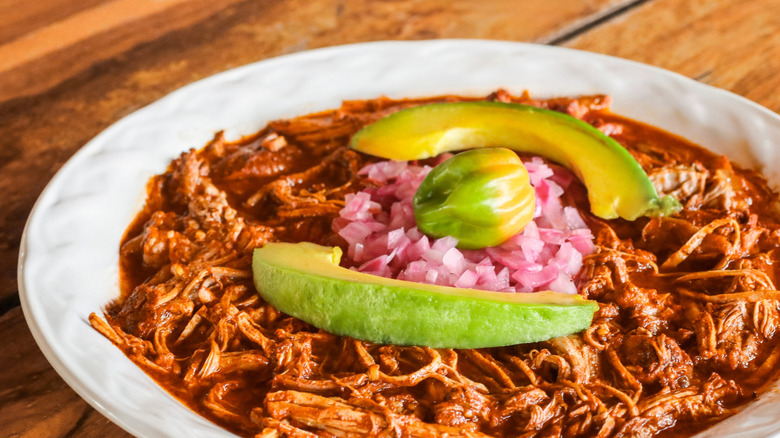
Cochinita pibil is a traditional dish from the Yucatán Peninsula. It is a fusion of cultural influences –– traditional Mayan cooking techniques and ingredients, such as corn, achiote, and habanero peppers, combined with the introduction of pigs to Mexico in the 16th century by Spanish colonizers. It is worth noting that the Mayans prepared a similar dish before colonization, but using native species.
We asked Carlos Gaytán how he would prepare this infamous dish, and he told us, "Cochinita pibil is a signature dish from Yucatán, made by marinating pork in achiote and sour orange juice ... The pork is wrapped in banana leaves and traditionally cooked underground in a pib, a pit lined with hot stones and covered with dirt. It's slow-cooked overnight, resulting in tender, smoky, and aromatic meat." Of course, today, many restaurants and home cooks opt for baking the dish in the oven. The rich, juicy pork dish is served in tacos, quesadillas, or torta, topped with salsa and a touch of lime juice.
Panucho, another typical Yucatán dish, is a thick corn tortilla sliced on one side and filled with refried black beans. Panucho is often eaten with cochinita pibil, either added to the inside of the tortilla or dolloped on top with lettuce, pickled onion, or lime. Papadzu is a traditional Yucatán-style enchilada of Mayan origin — a corn tortilla filled with hard-boiled eggs and topped with a green sauce of pumpkin seeds, tomatoes, and habanero peppers.
Puebla (central Mexico)
Puebla, a landlocked region of Mexico sandwiched between the culinary regions of Veracruz and Oaxaca, is the first place the Spanish settled. The early settlement of Spanish colonists had a significant influence on the food style within the area. Here, in central Mexico, amaranth was domesticated, and maize was cultivated. As a major stop on the trade routes between Mexico City and the coastal ports, food in Puebla takes the Mexican staples of corn, tomatoes, chiles, beans, and avocados and flavors them with meat and spices that have arrived from overseas.
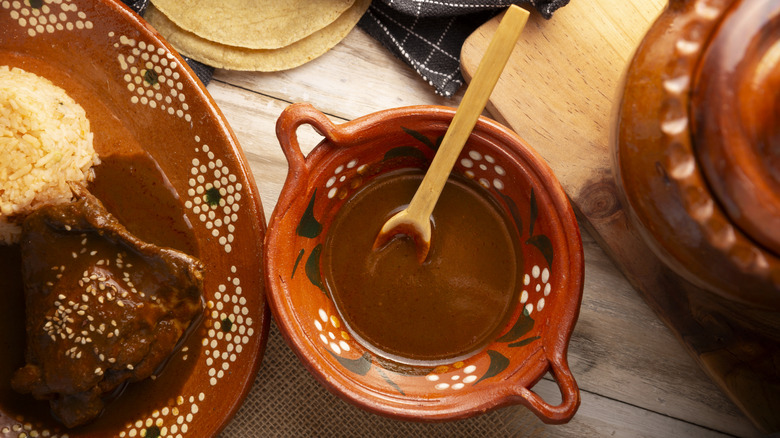
The best-known regional dish is mole poblano. This sauce is so revered that the people of Puebla hold a festival for it each year, the Festival of the Mole Poblano. It's a sauce that, while intrinsically Mexican, is filled with global influences. Like other mole sauces, the basis of this one is chiles, with three different types used. In addition to traditional Mexican vegetables like tomato, onion, garlic, and chocolate, you can see the trade route influences, with the addition of spices, nuts, and seeds. Mole is eaten as a standalone dish alongside rice and beans, as a sauce with meat, or slathered on top of enchiladas.
Nothing says central Mexico more than chiles en nogada. This dish of stuffed peppers is traditionally made in September as a foodie celebration of Mexican Independence Day. Chiles en nogada is made from poblano peppers, which are stuffed with picadillo (a mixture of ground beef and pork), fruits, and spices, and then covered with a creamy walnut-based sauce called nogada –– the dish is then garnished with pomegranate and parsley.
Jalisco (western Mexico)
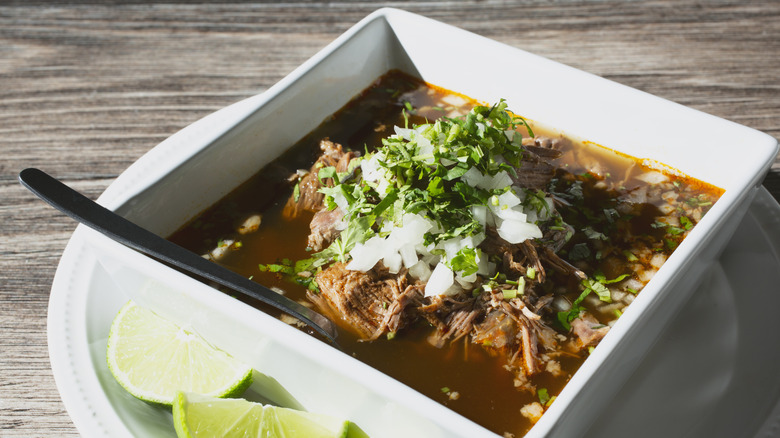
Many of the foods that we associate with Mexico come from the Jalisco region in the west of the country, so much so that Jalisco's state motto is "Jalisco es Mexico," or Jalisco is Mexico. Tequila, mariachi, Mexican rodeo, and the sombrero all come from this state that has a diverse topography encompassing 200 miles of coastline, snowy mountains, and vast freshwater lakes.
Birria is a meat-based stew that originated in Jalisco. Carlos Gaytán says it "is typically made with goat or lamb and cooked underground with dried chiles and spices. The meat [is] slow-cooked until fall-apart tender, and the juices [are] collected to create a rich consomé." Similar in style to a barbacoa, birria can be eaten as a standalone stew, topped with queso fresco, cilantro, pickled onions, and lime, or as the filling for birria tacos or quesadillas. Birria is a treasured dish that is often served as part of celebrations on important holidays. Chef Gaytán goes on to say that birria has gone viral in its taco form: "Young cooks in Tijuana and L.A. began stuffing birria into tortillas, adding cheese, and frying them in the meat's fat before dunking them in consomé." It's a perfect example of Mexican tradition adapting and thriving across borders.
Pozole, a hominy-based stew of deep cultural significance, comes from Jalisco. Pozole dates back to the Aztecs, where it was prepared as a ceremonial dish. Pozole comes in three varieties: pozole verde (green), which is made with salsa verde; pozole rojo (red), made with pork and ancho, árbol, and guajillo chiles; and pozole blanco (white), made with meat, onions, garlic, and no additional chiles. The main base of pozole is hominy. Hominy has been used in Mexican cooking since approximately 1200 B.C. and is made from white corn kernels that are soaked in lye or an alkaline liquid, most often lime.
Baja California (northwest Mexico)
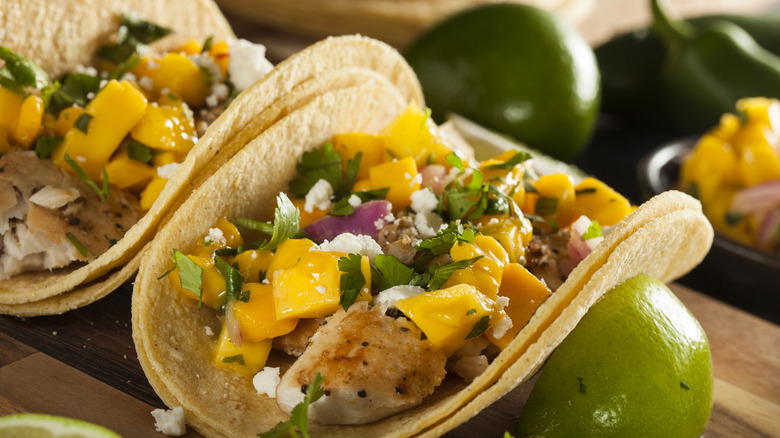
Baja California, a long, thin, ocean-lined strip of land, means that its cuisine is influenced by the sea but also by various immigrant groups that have settled there over the years. The presence of Spanish, French, Chinese, Japanese, and Russian settlers has created a cultural melting pot of gastronomic excellence. Baja California's most famous food is a relatively new kid on the block, the Baja fish taco. The Baja fish taco is made of tempura-battered fish, deep-fried, and loaded into a corn tortilla with coleslaw, chipotle sauce, and other typical taco toppings.
Baja California is also home to the Tijuana burrito –– similar in style to the burritos you get in the U.S., the Tijuana burrito tends to be smaller and simpler, focusing on a few excellent quality ingredients. Typically, it's made with beef, tomatoes, onions, and garlic, which are fried off and then wrapped in a corn tortilla with a bit of cheese and refried beans. It's usually accompanied by guacamole or pico de gallo.
The Caesar salad was also created in Baja California. It was created in Tijuana around the 1920s by Italian chef Caesar Cardini. Traditional Caesar salads typically consisted of lettuce, Parmesan cheese, olive oil, lemon juice, egg, and Worcestershire sauce, with no anchovies included.
Veracruz (Gulf Coast)
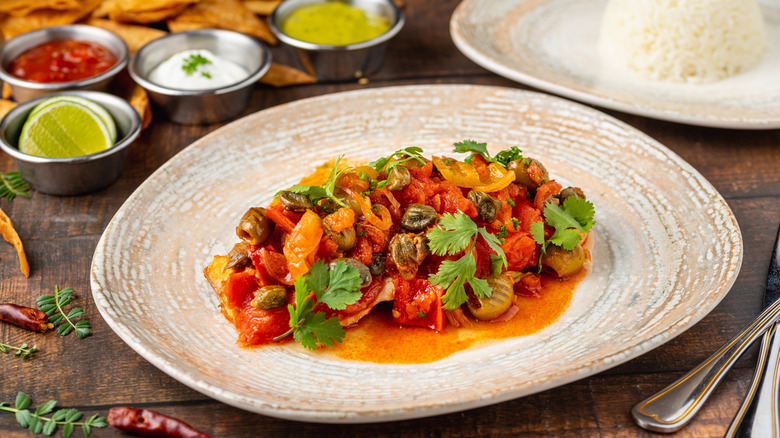
Occupying a vast swathe of the Gulf Coast of Mexico, the region of Veracruz is understandably influenced by its proximity to the ocean, not only for the abundance of seafood but also as it was the landing point for trade ships. The immersion of cultures and the availability of foreign foods mean that many consider Veracruz to be the starting point of modern Mexican cuisine.
Huachinango a la Veracruzana, or Veracruz-style red snapper, in English, is a dish of fresh red snapper sauteed with Veracruz sauce, a mixture of tomatoes and pickled jalapeños from Mexico, and the garlic, capers, and olives that arrived on the trade boats. There are variations on the dish using different fish or adding oregano or raisins.
Arroz a la tumbada is the Mexican version of paella –– it translates to rice mish mash. Veracruz was a frequently visited point for slave ships, and by the 1600s, around 5,000 African people were laboring within Veracruz. This huge influx had a massive impact on the local cuisine. Arroz a la tumbada is a derivative of West African thieboudienne and jollof and the Louisiana rice dish jambalaya. The one-pot dish is made of rice, fresh seafood, and typical Mexican ingredients such as jalapeños, tomatoes, and herbs. Chilpachole de jaiba epitomizes Mexican seafood cooking –– this hearty broth is made from jaiba, a kind of blue crab that is common in the river systems of Veracruz, and two types of chile guajillos and chiles de árbol. The soup is light and fresh; other fish are often added, particularly shrimp.
El Norte (northern Mexico)
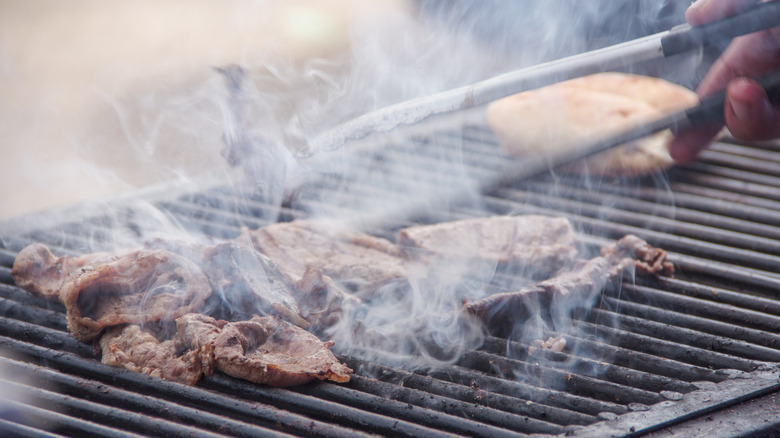
The El Norte region of Mexico is heavily influenced by the cowboy/vaquero culture as well as the coast and the U.S. border states. Chef Carlos Gaytán says, "The U.S.-Mexico border is a melting pot where cultures collide and cuisines fuse ... The region has developed its own identity, one that's neither fully Mexican nor fully American, but rather a blended cuisine born of migration, necessity, and creativity."
Carne asada translates to roasted meat, and it is essentially barbeque. Asadas are big family and celebratory affairs throughout Mexico, but nowhere more so than in El Norte. Ranchera, which is bavette or flap steak, is grilled over hot coals and sliced, then loaded into tortillas or eaten with rice or beans, accompanied by an assortment of sides like pico de gallo and guacamole. While beef is preferred, you can roast anything at an asada.
Chef Gaytán says that arrachera (fajitas) differ hugely from the U.S. to Mexico. In Mexico, the ingredients and techniques are more restrained and focused on the ingredient's flavor rather than excess. Usually made with skirt steak, thinly sliced and pan-fried, the meat is placed in a corn tortilla with a bit of salsa, spring onions, and lime. It's a simple light dish that's worlds away from the cheese and guac-loaded versions we are used to.
Cabrito (roast goat) is made of a young goat, less than a year old, that is roasted whole over a mesquite coal fire for around three hours, then eaten with salsa and tortillas. Cabrito is popular throughout the U.S. border states and, in particular, Texas, where it is sometimes eaten as fajitas.
Mexico City
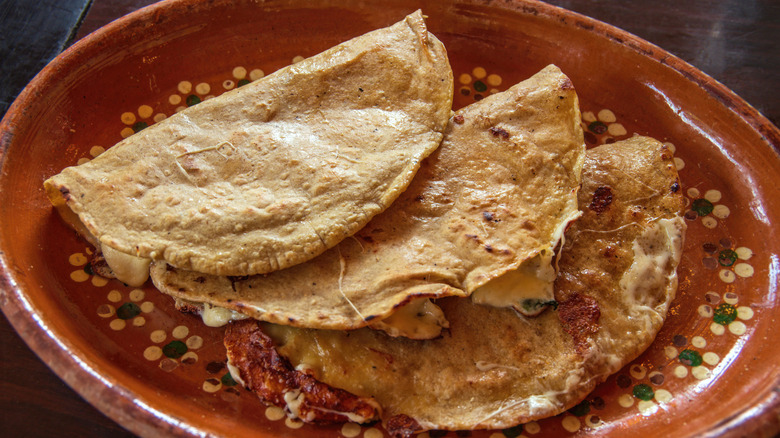
The capital city of Mexico is a melting pot of all regional cuisines. Carlos Gaytán says, "Mexico remains deeply traditional ... at the same time, there's a new wave of chefs who are embracing global influences while staying rooted in Mexican ingredients. You now see chefs... blending techniques from Japan, France, and beyond, but using nixtamalized corn, chiles, or heirloom beans."
A typical Mexico City dish is tacos al pastor, based on the shawarma that Lebanese immigrants ate when they arrived in Mexico. Tacos al pastor are made by loading strips of meat, which have been marinated in spices, onto a trompo, where they are grilled vertically. The bright orange spice mix called achiote is essential to the dish and is made of annatto, aromatics, cumin, oregano, coriander, and lime. The chef shaves slices of meat and loads them into a corn tortilla, where they are eaten with pineapple, cilantro, and onions.
The quesadilla is seen everywhere in Mexico City, eaten in high-end restaurants, and enjoyed daily as a street food. A corn or wheat tortilla is filled with meat, cheese, seafood, or vegetables in any combination, which is then fried in a pan. Regional variations of the quesadilla are the empanada in Southern Mexico and molotes in Puebla.
The quesadilla is one of Mexico's more famous culinary exports, but chef Gaytán explains that many of the dishes that are considered "Mexican" in the U.S. are Tex-Mex adaptations. Saying that, unlike U.S. versions, "Quesadillas in Mexico might not even include cheese; in Mexico City, a quesadilla is simply a folded tortilla with any guisado inside."