

The 2-2-2 Leftovers Rule: What It Is And Why You Should Follow It

You may think of late November as the prime leftover season, but summer has its own lineup of celebratory feasts — backyard cookouts, lawn picnics, al fresco dinner parties — all of which are just as likely to result in excess food as Thanksgiving. Tossing post-meal (yet still perfectly good) grilled meat or grandma's potato salad should be just as unconscionable as immediately disposing of the holiday bird; however, storing that food properly and then eating it in a timely manner are imperative when it comes to your health. Fortunately, there's a mnemonic device called the 2-2-2 rule that should help any home cook safely handle leftovers.
Developed by the New Zealand nonprofit Love Food, Hate Waste, the rule is as straightforward as it sounds. The first "two" refers to the number of hours you have to get food packaged and stowed in the fridge. After that, leftovers should be consumed within two days. Don't think you'll make a meal out of those scraps in that period of time? Go ahead and freeze them for up to two months, the final "two" in the sequence. Keep in mind — particularly during summer — that you'll need to refrigerate food more quickly if it's been sitting out in hot temperatures. According to the U.S. Department of Agriculture (USDA), the two-hour window shrinks to one anytime the thermometer hits 90 degrees Fahrenheit.
2-2-2 vs. 2-2-4
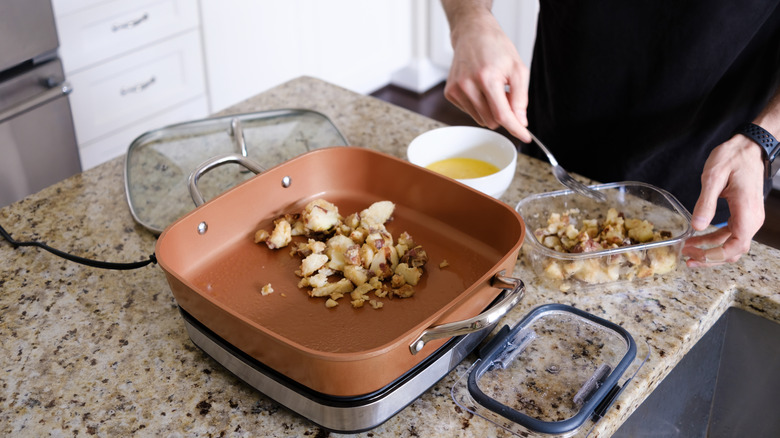
If the 2-2-2 rule sounds familiar, that could be because you've been introduced to the 2-2-4 standard, typically emphasized by health officials and food bloggers around Thanksgiving. While similar — that initial "two" also refers to the number of hours perishables have at room temperature — the remaining digits introduce different guidelines. The middle "two" is the advised depth of any container used to store leftovers, since shallow vessels ensure food cools more quickly and evenly, preventing the growth of bacteria. Finally, whoever came up with the 2-2-4 rule is apparently a little more easygoing than New Zealanders when it comes to the amount of time they're willing to reserve refrigerator real estate for leftovers. Four days max is the order here, which still falls within the USDA's recommended window.
Whichever model you adopt, just be sure to keep leftovers in airtight containers or zip-top plastic bags, the latter of which can safely (and somewhat surprisingly) be washed and reused several times. Either is a good barrier against the formation of harmful microorganisms. While wrapping dinner scraps in aluminum foil may seem like another easy storage solution, avoid breaking out those silver sheets for that purpose. Without an impenetrable seal, bacterial growth is more likely. Then, when you're ready to reheat and possibly even repurpose those ingredients in a brand-new meal, allow leftovers to warm to room temperature first. Not only will that prevent overcooking, but you'll also avoid the oh-so-unpleasant ice cube center/charred exterior experience that results in so many leftover haters to begin with.