

7 Tofu Myths You Need To Stop Believing
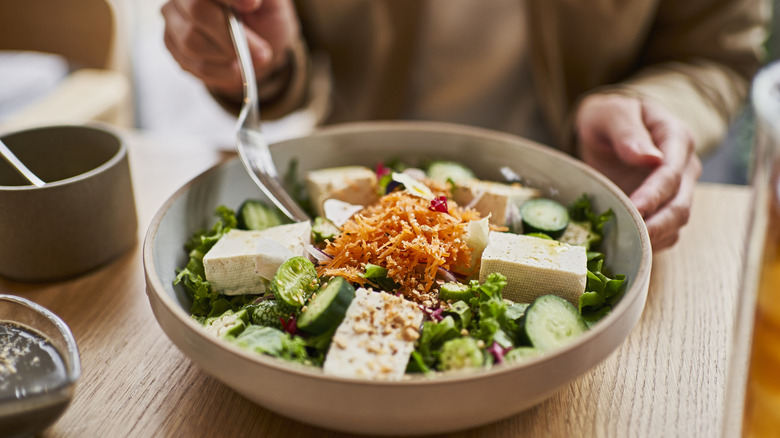
Although tofu was once seen as "hippie food" in the U.S., attitudes around it are starting to shift. The soy-based food market has grown as more people seek out nutritious and sustainable foods. In fact, per Grand View Research, the global tofu industry could exceed $3.8 billion by 2030.
Now more than ever, people are starting to see how versatile and tasty tofu can be. However, this soy-based food, which has roots in ancient China, is still plagued by myths and misconceptions. Some believe that it's bland, for example, or that eating it might increase the risk of breast cancer, or even cause men to grow breasts.
We've taken the time to debunk some of the most common myths that surround tofu. Keep reading to find out more about why this versatile, nutritious, and environmentally friendly food deserves a place on dinner tables everywhere — regardless of whether you're a vegan, vegetarian, flexitarian, or omnivore.
It's bland and boring
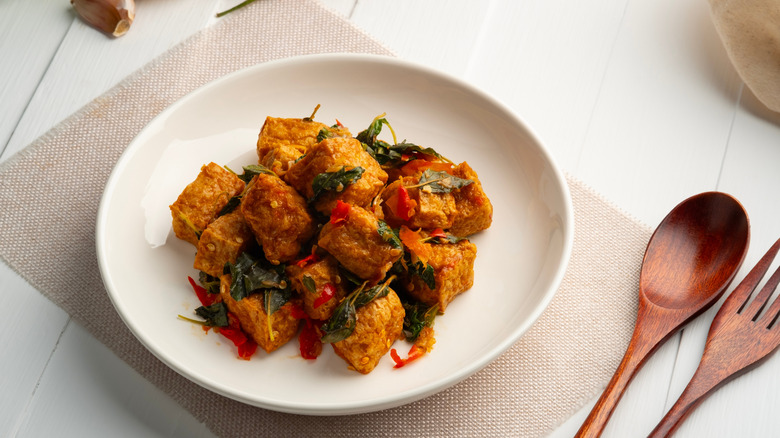
Let's get one thing clear: Unseasoned tofu isn't that exciting. This is because it's largely made up of just one ingredient, soybeans, which, on their own, taste pretty bland. But one of the best things about tofu is its potential. In fact, this soft white sponge is the perfect blank canvas for flavor and can be transformed into pretty much anything you like. It just comes down to having the right tools on hand.
If you're craving eggs, for example, tofu can be mashed and scrambled and combined with ingredients like black salt (for that sulfurous, eggy flavor), turmeric (for the yellow color), and nutritional yeast (for umami), before being cooked in a pan and served over toast. Tofu is also good at soaking up the strong flavors from curries, hot sauces, and marinades. Plus, if you fry, air-fry, or bake it with oil and cornstarch, you'll also create a tender, crispy, and almost chicken-like texture.
One important note: Not all tofu is the same and some types are better suited to certain recipes than others. If you're trying to create a meaty texture, for example, you're better off choosing firm or extra-firm tofu. However, if you're opting for a super fluffy, silky scramble, silken tofu might give you better results.
It's not a good source of protein
Right now, it's not an exaggeration to say the internet is protein-obsessed. If you're tuned into nutrition content on social media (or even if you aren't), you've probably seen Instagram Reels and TikToks instructing you to eat more of the macronutrient, which plays an important role in several bodily functions, including maintaining bone density and building muscle mass.
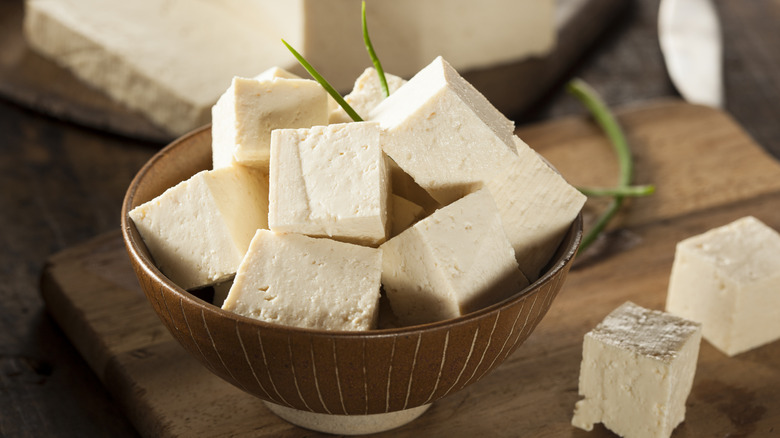
For some, only animal-based protein will do, but tofu also has a pretty high protein content. In fact, one 100-gram serving of tofu contains around 17 grams of protein. To put that in context, 100 grams of eggs (which is about two large eggs) contain about 13 grams of protein.
The recommended daily intake for protein varies from person to person, but the general guideline dictates that, on average, people need around 0.8 grams of protein per kilogram of body weight (or 0.36 grams per pound). So for a person who weighs around 135 pounds, that's just over 48 grams of protein. One 100-gram serving of tofu will help you meet nearly a third of that goal.
Tofu is linked to breast cancer
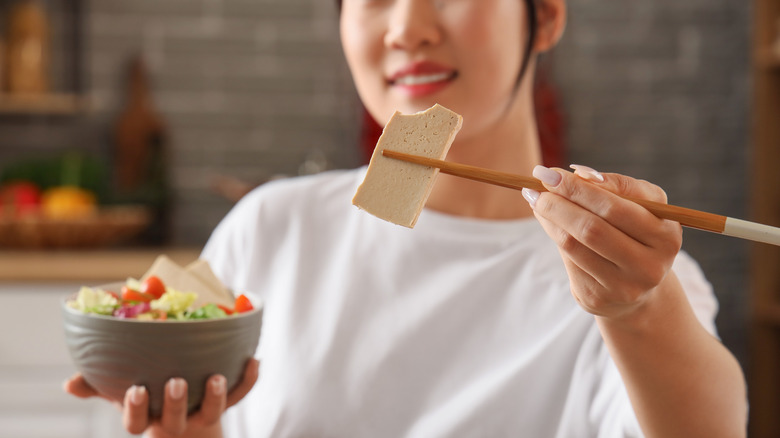
Some believe that eating soy products, like tofu, may increase the risk of breast cancer. The reason? Isoflavones, a type of plant compound found in soybeans, behave similarly to estrogen in the body. A number of studies have found that isoflavones may actually reduce the risk of developing breast cancer This is because isoflavones may help to block estrogen in some parts of the body.
On top of this, tofu contains many nutrients that help to support overall health and wellbeing. Besides being a good source of protein, it also contains fiber and both monounsaturated and polyunsaturated fats. Unlike saturated fats, which are linked to higher levels of LDL (bad) cholesterol, unsaturated fats are generally considered to be heart-healthy.
Tofu also contains important minerals, including calcium, manganese, selenium, copper, iron, zinc, magnesium, and phosphorus. There is research to suggest that certain minerals, like zinc and selenium, may also help reduce the risk of breast cancer.
Eating too much can cause breast development in men

Because of its isoflavone content, tofu has been associated with hormone disruption. One persistent myth is that eating it regularly might lead to breast development in men. In scientific terms, this is known as gynecomastia.
This belief didn't come out of nowhere. In 2008, a study on a 60-year-old Japanese man with the condition suggested that it may have developed as a result of consuming soy milk regularly. Media attention surrounding the study led to the widespread belief that all soy products, including tofu, may disrupt hormone levels in men. However, it's important to note that in this particular study, the man in question consumed 3 quarts of soy milk every day. To put that in perspective, that is nine times more than the amount of soy that the average man in Japan consumes.
Research confirms that for people who consume a moderate amount of soy, there is little to no risk of gynecomastia at all. In fact, one meta-analysis published two years after the initial study, examined 32 studies and found that isoflavones did not appear to impact breast development at all.
Tofu is overly processed
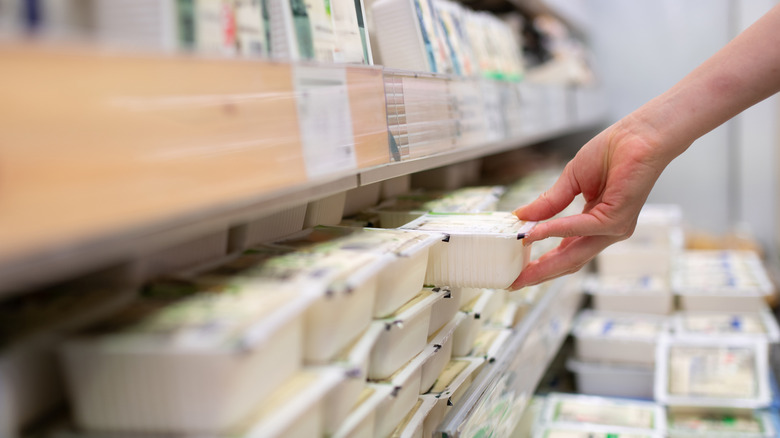
Concerns have been growing about the amount of ultra-processed foods on grocery store shelves. It's understandable; some studies have linked these types of foods, including potato chips, candy, and soda, to a higher risk of chronic diseases, including cancer and type 2 diabetes.
However, this topic is nuanced. Many foods go through some form of processing before they hit the shelves, and this doesn't automatically make them unhealthy. Kidney beans, for example, are soaked, boiled, and canned, while some vegetables are often harvested and frozen before being shipped off to grocery stores. This makes both foods processed, yet they're still packed with nutrients. The same can be said about tofu. To make the nutrient-dense soft white blocks, soybeans must be soaked, crushed, and boiled before the mixture is curdled with salt and pressed into the blocks you see on the shelves.
This process is necessary to make tofu, but it doesn't mean the food falls into the ultra-processed category. Many sources define "ultra-processed foods" as ones that are high in sugar, unhealthy fats, and sodium, but low in nutrients. Tofu, which is nutrient-dense and low in sodium and saturated fat, does not fit into this definition.
Eating tofu is bad for the environment

Another myth surrounding soy-based foods like tofu is that eating them is bad for the planet. While it's true that most foods have some environmental impact, tofu actually leaves a smaller footprint than many others.
According to the BBC's climate change food calculator, which is based on comprehensive research gathered by the University of Oxford, eating 100 grams of tofu every day is equivalent to 58 kilograms of greenhouse gas emissions per year. It also uses more than 2,700 liters of water. That might initially sound like a lot, but compared to many other food products, it is actually minimal. Eating the same amount of beef contributes to 2,800 kilograms of greenhouse gases.
Soy cultivation does, however, require large amounts of land, and for that reason, it is linked to deforestation. It's important to note, however, that most soy is not farmed for human consumption, but for use in animal agriculture. In fact, around 70% of U.S.-grown soy is used to feed farm animals, per the United States Department of Agriculture.
It's only for vegetarians
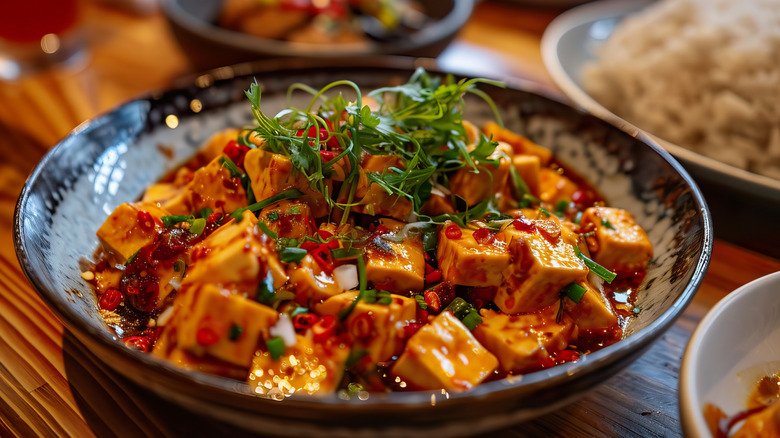
Tofu is widely used as a meat substitute, which means that sometimes, it gets pigeonholed as a vegan- or vegetarian-only food. However, tofu can be enjoyed by anyone, regardless of dietary preference. In many Asian countries, it's been that way for centuries. In fact, tofu was invented in China around 2,000 years ago and was introduced to Japan in the 8th century. Since then, it has been a dietary staple in both countries.
Plenty of traditional Japanese and Chinese dishes with tofu are not classified as vegetarian. Japanese-style mapo tofu, for example, is often cooked with oyster sauce and ground pork. Chinese-style hot and sour soup is often prepared with tofu, eggs, and pork loin or chicken breast.
Tofu is a great option for people with allergens, too. If you have an egg allergy, you can try making a delicious tofu scramble to replicate the taste and texture of chicken eggs.