

The Best Kind Of Oil To Use For Pan-Seared Steak
We may receive a commission on purchases made from links.
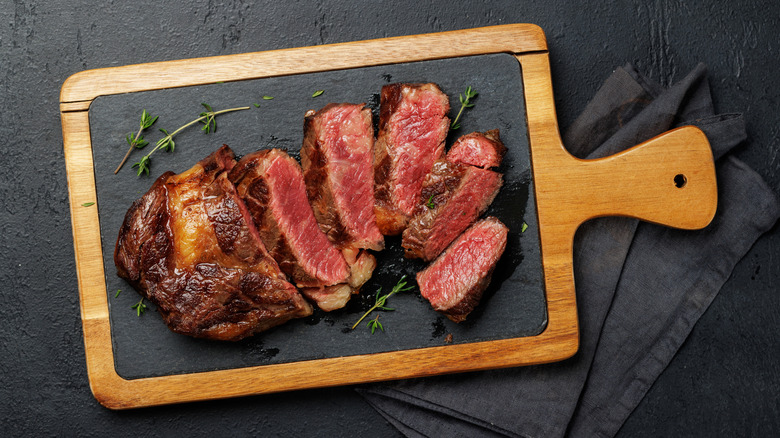
A golden-brown sear on a sizzling steak looks as good as it tastes, and you will need to heat your trusty pan to about 400-450 degrees Fahrenheit to form a savory crust. But if you combine the wrong cooking oil with this high heat, things can go south, turning a perfect sear into an irreversibly charred meat puck. The culprit is usually a low smoke point oil, which imparts a burnt, bitter flavor when overheated. The solution? Use a high-smoke-point oil of your choice.
Here's why high-smoke-point oils withstand heat so well: They're industrially refined to eliminate unstable compounds, producing a neutrally flavored oil that won't interfere with the steak's taste or significantly add char to a sear. Every oil has a temperature limit, and when it's surpassed, the oil oxidizes and breaks down. Sometimes it is good to rearrange a food's chemical components, like aging cheese or caramelizing onions. In this case, it could make your oil go rancid and create unwanted carcinogenic byproducts, such as polycyclic aromatic hydrocarbons, orPAHs.
Other factors besides heat affect an oil's ability to handle pan-searing. Saturated fats have densely packed molecules and lack double bonds, which, in plain English, means they are stacked like a brick wall and can handle the highest heats. Monounsaturated oils are also relatively stable, but their double bond structure slightly weakens their defenses. Polyunsaturated fats have many weak bonds and cannot survive a hot skillet, so stick to using those in your dressings or for low-heat applications.
Go with these heat-friendly oils when pan-searing steak
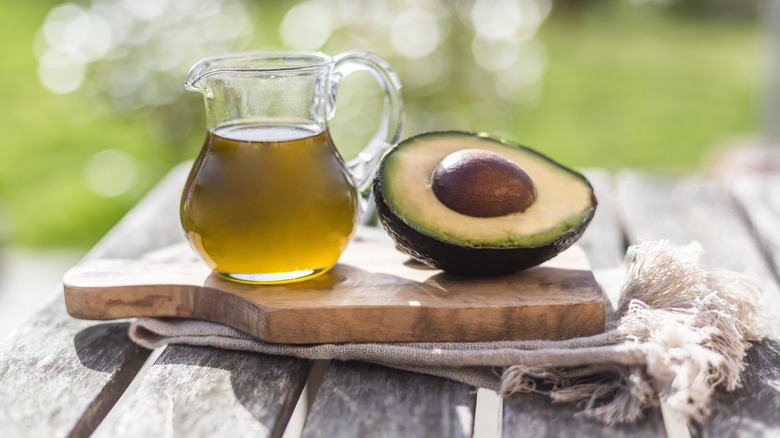
Now it's time to fill your pantry with the top high-heat oils for pan-searing steak and more. Avocado oil takes center stage with its impressive smoke point of 520 degrees Fahrenheit. It has a neutral flavor compared with other fats and is rich in antioxidants, including tocopherols and carotenoids, adding a nutritional boost to your hearty steak.
If you enjoy the flavor of butter-smothered steak, opt for Ghee, a clarified butter that retains all its rich flavors at an improved smoke point of 482 degrees Fahrenheit. Safflower oil is an affordable option, with a heat tolerance of up to 509 degrees Fahrenheit and a clean flavor profile. If you cannot live without olive oil near the stove, you can use it carefully for searing, but opt for the extra light variation, which can withstand temperatures up to 468 degrees Fahrenheit. If you cannot part with the peppery flavors of an extra virgin bottle, Graza's Sizzle Extra Virgin Olive Oil boasts a solid 410-degree Fahrenheit smoke point.
Unfortunately, butter is not ideal for pan-seared steak, as it has a lower smoke point of 400 degrees Fahrenheit. But there is a bit of wiggle room here — if you start with avocado oil or ghee, you can add a pat of butter for the final minute or two to aid browning without burning your prized cut. Steer clear of coconut oil, flaxseed oil, and unrefined sesame oil, as their flavors and heat tolerance are not compatible with pan-searing.
How a high smoke point oil enhances each savory bite

If smoke-point science doesn't motivate you to grab a sear-worthy oil, then the chef-level results will. How exactly does high-heat cooking oil bring on a steakhouse-level crust? The right oils support the Maillard reaction, a flavor-producing process that transforms amino acids, reduces sugars, and adds depth to dishes. These chemically altered molecules cause browning and release mouth-watering aromatic compounds. This complex reaction is not just fancy food science. It's occurring in plenty of foods that you are already eating. Toast, roasted coffee beans, and the crisp coating of French fries all undergo this culinary transformation, which is why we are devoted to their flavors and encourage them on premium meat cuts.
While your high-smoke-point oil does not contribute directly to the Maillard process, it plays a major supporting role, like a security guard protecting your succulent steak from burning with its resilient structure and heat tolerance. The Maillard reaction, combined with oil, enables a steak to brown without smoky interference and develop a deep, umami-rich profile. So when you pair the right oil with patience, allowing your steak to sizzle for about 1 to 2 minutes per side, you're rewarded with juicy flavor in every bite.