

Dry Curd Vs Regular Cottage Cheese: What's The Difference?
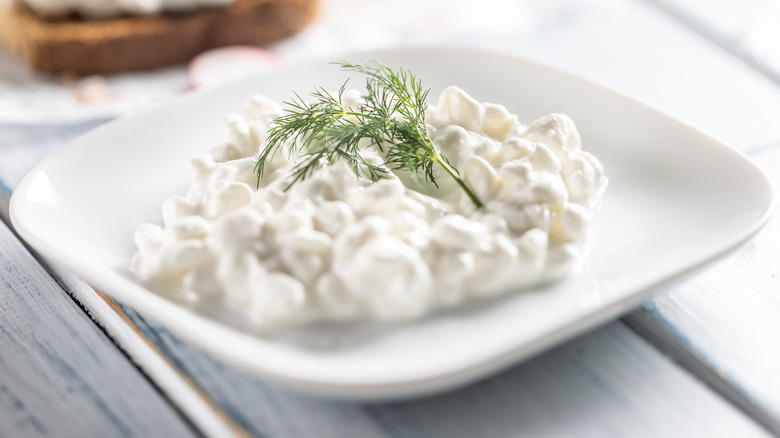
Cottage cheese doesn't usually stir up confusion — until you're staring at two tubs that look similar but aren't. One is soft and milky, the kind most people recognize. The other? Firm, squeaky, and labeled dry curd, or sometimes farmer's cheese. If you've ever wondered how these two belong in the same category, you're not alone.
Dry curd cottage cheese is made by curdling milk and draining off most of the whey — and unlike regular cottage cheese, it skips the creamy dressing entirely. The result is compact, chewy curds that hold their shape. The flavor is clean and faintly tangy, with a texture that's crumbly yet springy — think less spoonable, more firm. It's white and rustic-looking, a style that reflects its roots in traditional, small-batch cheesemaking.
By comparison, the version most of us know — the one stacked in grocery store coolers — is regular cottage cheese. Here, the curds are blended with cream or a dairy dressing after forming, giving it a softer, more luscious consistency. It's pale, mild, and easy to eat on its own or mix into other dishes. You'll often see it labeled by fat percentage, but it's essentially the same curds made richer. Understanding how each one is prepared is the key to knowing which type will actually work best in your kitchen.
How to use them
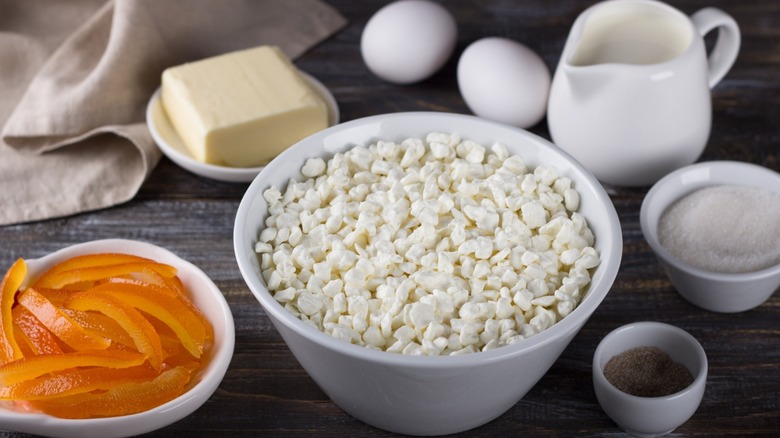
Since dry curd and regular cottage cheese behave differently, knowing how to use each one can make or break a recipe. Dry curd cottage cheese is your go-to for baked goods and solid fillings. Its low moisture content means it won't water down your dish — perfect for recipes like cheesecakes, and cheese blintzes, where you want the curds to hold together. With over 12 grams of protein and just over a gram of carbs per half-cup, it's also a lean choice for anyone looking to add substance without creaminess. Want a little more softness? A splash of cream or sour cream can bring balance without sacrificing structure.
Regular cottage cheese, on the other hand, shines in creamy or blended dishes. Its velvety texture makes it ideal for snacking, mixing into smoothies, or stirring into saucy meals like lasagna or stuffed shells. It's also a popular stand-in for ricotta — just be sure to strain it first if your dish can't handle extra liquid. Some recipes, like pierogi filling or Polish gzik, are forgiving enough to work with either version. And because dry curd can be hard to find, many cooks make do with regular cottage cheese and take care to manage the moisture. In the end, its the finish that sets them apart. Know the difference, and you'll know which one your dish really needs.