

Homemade Sushi Doesn't Keep Forever, So Eat It Within This Timeframe
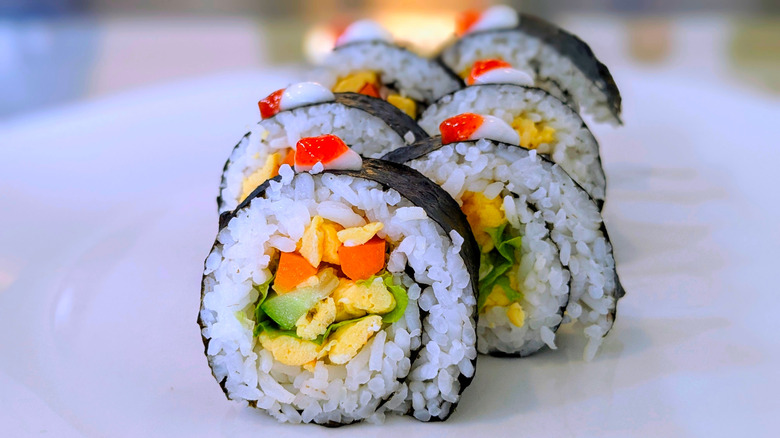
Homemade sushi is a lot of fun. Is it fiddly and time consuming? Yes, but that's kind of the point. Unless you're a regular sushi maker, choosing the best at-home sushi recipes and constructing your rolls as if they're going to be the 8th wonder of the world is just how it goes. Anyone who's taken the time to make sushi at home knows it often ends in a fridge full of leftovers because, let's be honest, who's making just two California rolls? So, how long does homemade sushi last in the fridge?
Tasting Table asked celebrity chef Masaharu Morimoto, host of "Morimoto's Sushi Master," how long sushi keeps, so you can store your homemade rolls with confidence. "Sushi is best enjoyed fresh," he explains. "However, you can store sushi in the fridge, but it should be consumed within 24 hours. After 24 hours, the flavor and the texture can begin to degrade." While homemade sushi you made 30 hours ago probably won't be dangerous if it has been stored correctly, chances are that it's taste will be lacking, leading to disappointment.
How to make and store sushi to keep it fresh for as long as possible

In terms of food safety, the potentially dangerous ingredients in most sushi include seafood and rice. Cooling rice rapidly makes it safer to keep and eat later, which is great if you're making sushi as it's far easier to work with cooled rice than with hot rice, which should help you achieve the perfect rice-to-filling ratio. Like many foods, both rice and seafood should never be sitting at room temperature for more than two hours, so if you serve a sushi platter make sure you pack rolls up as soon as you know people are done eating. Wrap the rolls in cling wrap and then place them in an airtight container in the fridge. It might feel like you're doing double duty, but keeping moisture and air away from your leftovers minimizes their chances of spoiling and maximizes your chances of enjoying a safe and delicious sushi snack later.
Once in the fridge, both cooked seafood and rice should last three to four days. Raw fish and shellfish, however, shouldn't be kept in the fridge for more than two days. So, vegetarian sushi or shrimp tempura rolls will be safe to eat for longer than salmon sashimi will. This doesn't mean the sushi you made three days ago will taste its best — Morimoto's advice certainly still applies — but the timeframe for quality retention is not the same as the timeline for food safety.
Signs your homemade sushi has gone bad
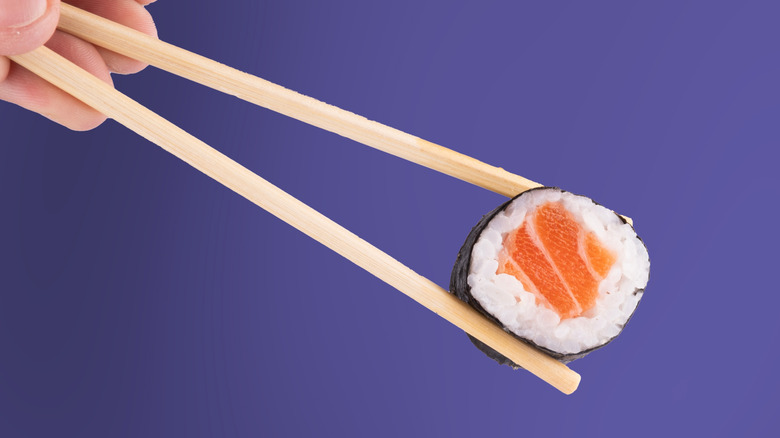
Making and storing your sushi correctly should ensure it lasts as long as possible, but there are no guarantees. Luckily, it's usually not too hard to tell when sushi begins to go bad. It's best to err on the side of caution and throw homemade sushi away if it looks a bit suspect or has been sitting in the fridge for days. We all try our best to reduce food waste, but food poisoning is even worse.
The telltale signs that sushi is no longer good include changes in color and texture beyond the slight degradation Morimoto mentions, new (and unpleasant) odors, and mold. Very dull looking sushi, sushi that is texturally altered to the touch, or sushi with a slimy feel or excessive moisture is almost certainly bad. Likewise, noticeable unpleasant smells are a red flag. Never eat sour smelling rice or fish; they are past their best and could make you sick.
Morimoto's advice that sushi is best served fresh is as true at home as it is when you're watching chefs prepare your rolls at the omakase bar. While it's not always possible to eat every piece of sushi you put together at home right away, it's also not a food you can take a lot of risks with. So, have fun making homemade sushi, and have fun eating it ASAP.