

Which Beef Cuts Work Best For Making Burnt Ends?
We may receive a commission on purchases made from links.
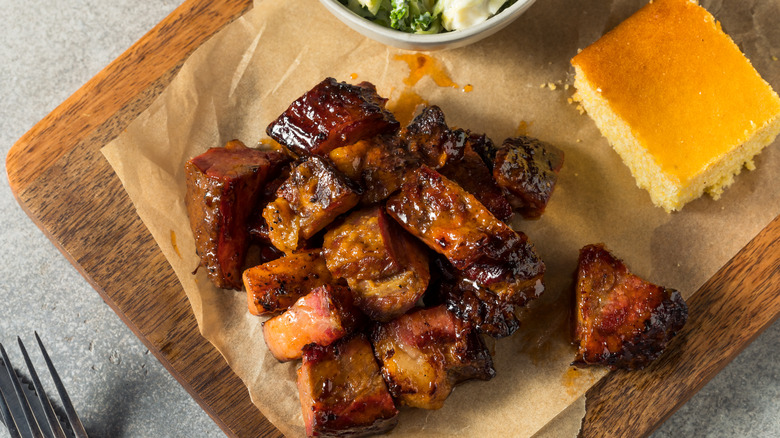
Contrary to popular belief, burnt ends weren't always the coveted barbecue staple they are today. These fatty, crunchy, charred bits of meat were discarded scraps, before the 1950s. Now, they're the decadent morsels everyone fights over. While recipes for burnt ends have come to include pork belly and even hot dogs, they're typically made from specific cuts of beef. But, which cuts work best for burnt ends? We consulted Chef Billy Parisi, a classically trained culinary school graduate and food blogger for the answer.
In an interview with Tasting Table, Chef Parisi told us, "The classic cut of beef for burnt ends is the "point" of a brisket. This is the thicker, fattier end. The other part of the brisket is known as the flat." Since fat is equal to flavor, an especially fatty hunk of meat will result in the richest tasting burnt ends. The point is also full of connective tissues and collagen that gelatinize during the low and slow cooking process, providing that melt-in-your-mouth texture we love about burnt ends. Not to mention that this happens while the meat undergoes the Maillard reaction and creates a caramelized, charred bark that provides the perfect textural contrast and layers of flavorful depth.
"You could also use a chuck roast, which is commonly known as poor man's burnt ends," says Chef Parisi. While it is a less traditional option, chuck roast is cheaper than cuts of brisket (hence the name) and cooks faster.
Tips for making the best burnt ends

Whether you're using a brisket point or a chuck roast, Chef Parisi keeps it simple when it comes to seasonings. For the dry rub, he explains, "I always seem to go back to just salt and pepper so I can taste the meat — just make sure it's seasoned well."
He continues, "Don't rush the initial smoking of the [meat]. It needs to be low and slow, and it needs to hit at least 195 degrees internally." To ensure the brisket reaches the proper temperature, we suggest using a Alpha Grillers Digital Meat Thermometer. At which point, you can pull it out of the smoker and let it rest, before trimming the point from the flat. Once you've cubed the brisket point (or chuck), burnt ends can get an extra burst of flavor and moisture from liquid seasoning.
According to Chef Parisi, "You want to ensure [the meat] continues to braise and smoke in a mixture of BBQ sauce (tomato or ketchup-based, not vinegar) along with a sweetener like honey or sugar. For the best results, he prefers "a ratio of 2:1 for BBQ sauce to sweetener." Just like that, you'll be on track to make the best burnt ends ever.