

10 Facts About The Controversial Durian Fruit You Should Know
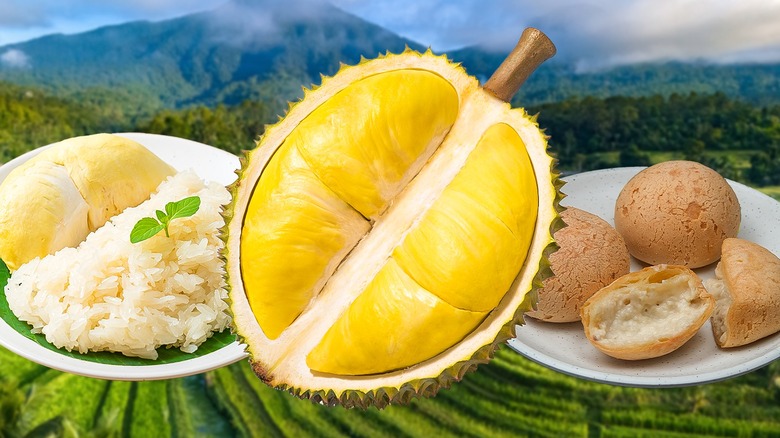
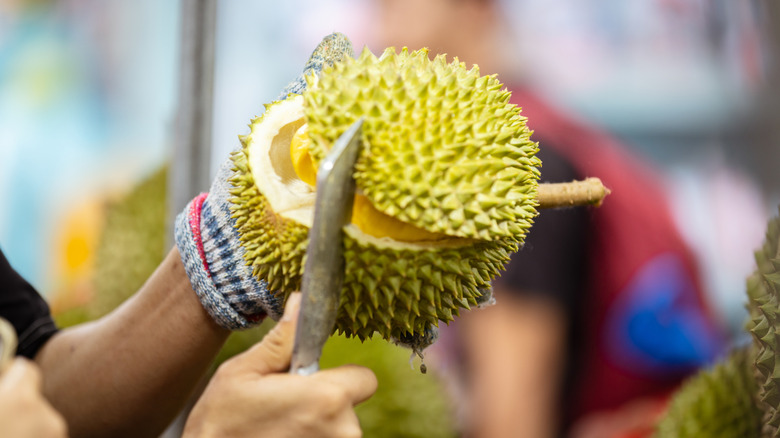
Dubbed the "King of Fruits" because of its distinctive flavor, texture, and health benefits, Durian is a tropical produce that is widely popular in East and Southeast Asia. Named for the Malay word for thorns, "duri," it does, indeed, look like a spiky porcupine from the outside. Once you open it, though, you'll find a mildly sweet, custardy pulp that you can either consume by itself or incorporate into various dishes and desserts.
Then why is durian considered such a divisive fruit? For one, it's notorious for its extremely foul smell — a combination of rotten onions, sulfur, garbage, sweaty socks, and sewage, as people have described it. That doesn't sound very appetizing, does it?
Yet, this pulp is highly coveted, and today, Thailand, Malaysia, Indonesia, Philippines, and Vietnam are the top five durian-producing countries. Given the growing interest for that fruit in Australia, New Zealand, the United Arab Emirates, Canada, and the United States, too, here are a few interesting facts about durian you should probably know about.
There are 30 recognized durian species, most of which are actually inedible
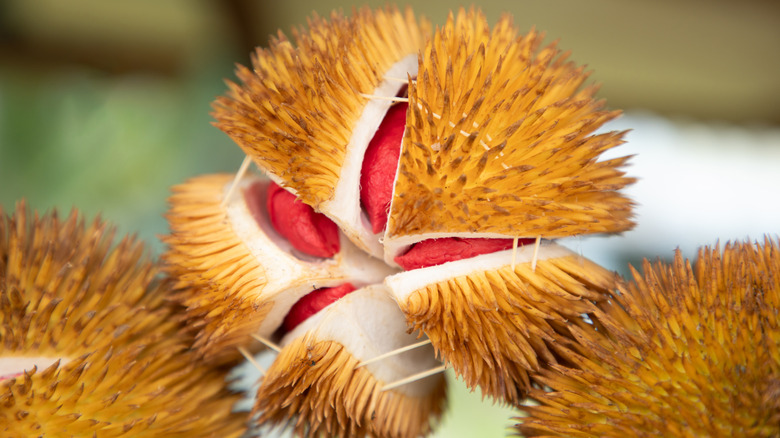
There isn't just one main type of durian. The shell of this tropical fruit, although always thorny, hard, and thick, can be either green or brown, and its pulp can range from white to yellow, orange, and red. In fact, there are 30 general species and hundreds of subspecies with polarizing flavors in every producing country, but about nine of the former produce palatable fruits. The rest may be an acquired taste or completely inedible.
For instance, the most popular variety in Malaysia is the light-greened Musang King, also called Cat Mountain King and known for its bittersweet, sticky, and creamy pulp. Another commonly consumed durian in that country is the Sultan or Bukit Merah, despite its bitter flesh and particularly pungent smell. As for the Red Prawn, one of the sweeter varieties, it's recognizable by its orange red pulp, brown husk, and short, sparse spikes.
For its part, Thailand mostly cultivates the Mon Thong or Golden Pillow, whose sweet pulp and mild smell is in high demand. Another popular Thai variety is the Cha Nee or Gibbon, which produces a brownish yellow husk and a buttery, somewhat bitter flesh.
Durian is better consumed a few days out from harvest
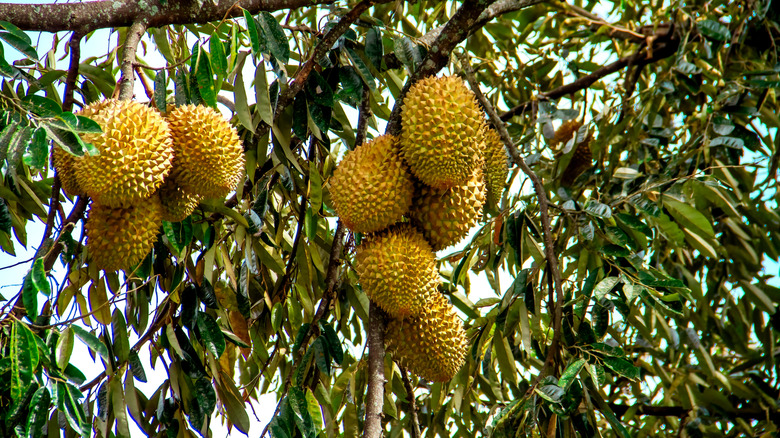
Cultivated in tropical regions and well-drained soil, durian matures in 90 to 150 days after flowering. The fruits are either harvested when they naturally fall from the tree or by hand for slower aging and safer transport to distant markets. That's because, contrary to many other species, they aren't always eaten fully ripe. Thai people, for one, actually enjoy them slightly immature, while Indonesians typically prefer them overripe.
Since naturally dropped durians have a shelf life of up to four days, buyers should always inquire how and how long ago they were collected. Moreover, once open, durian must be consumed within hours because it deteriorates quickly, and you don't want your house to smell like dirty socks, do you? Alternatively, you could refrigerate the flesh (together with the seed) in an airtight container for two to four days, or freeze it for up to four months.
This fruit boasts numerous health benefits
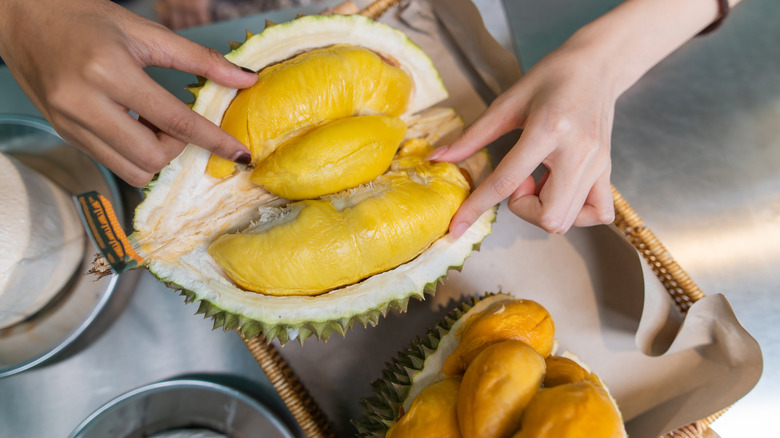
Despite its off-putting odor and intimidating thorny shell, durian is a superfood you should consider adding to your diet, whether you consume it fresh or in a dish or a dessert. That's because it contains dietary fiber, calcium, iron, thiamin, riboflavin, niacin, magnesium, retinol, alpha and beta carotene, phosphorus, potassium, folate, zinc, copper, and vitamins A, C, B-6, B-12, among other essential nutrients.
As such, this fruit is thought to help promote healthy pregnancies and bones, alleviate anemia, depression, and insomnia, fight the growth of cancerous cells, stimulate digestion and fertility, and even delay symptoms of aging, such as wrinkles, dark spots, and hair loss. Moreover, in traditional medicine, fresh durian leaves and roots are typically juiced and used to contain fever and treat jaundice, while the bark is thought to have antimalarial properties. The leaves and the flesh can also be boiled together to heal certain skin conditions and swelling.
There are strict regulations and bans concerning durian in Asia

The popularity of the stinking durian has led to many policies and laws in several Asian countries, but, wherever you are in the world, you can at least start by never using that fruit in your sangria.
In Thailand, for example, selling unripe durian is a criminal offense that could land you in jail for up to three years. Additionally, giving out false background information about the type of durian you're selling could result in a fine or a six-month sentence for first-time offenders. Finally, whether you're a tourist or a local, most hotels impose a firm "no fresh durian" policy in guest rooms. If caught, you will have to pay an odor-removal fee.
In Singapore, the durian cleaning fee of a hotel room can range from $156 to $191, and carrying the fresh fruit in airline cabins or on certain types of public transportation is banned and could get you fined. For its part, Vietnam Airlines requires passengers to seal their durians tightly in plastic to prevent the propagation of the smell, while in Malaysia they're not allowed on board altogether.
These are some beloved durian-centered dishes and desserts
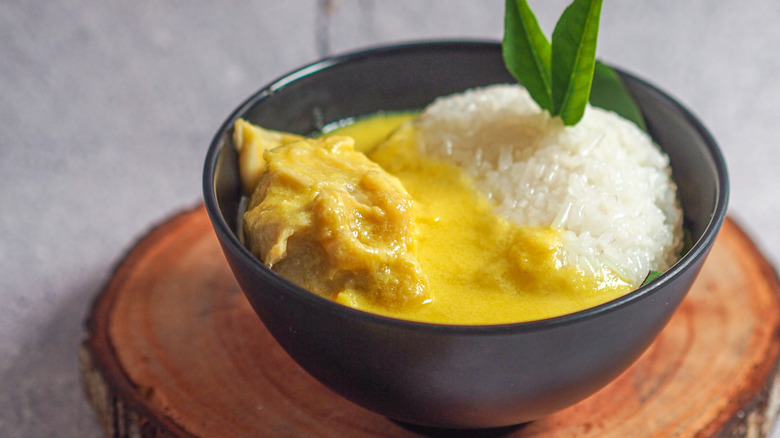
For all its polarizing characteristics, the durian fruit is very versatile and central to many Asian kitchens. It's used as an ingredient in various savory and sweet dishes, the most basic of which are ice cream and smoothies, or even alongside sticky rice instead of mango. Durian cream puffs are also quite popular (and yes, there is a difference between cream puffs and profiteroles). Indeed, mixed with heavy cream, the pureed pulp makes a bold alternative to the classic chocolate or vanilla cream filling. And, to make the creamiest durian pudding, all you need to do is mix the flesh of the bittersweet Mao Shan Wang variety with caster sugar, milk, and gelatin powder.
As far as main dishes are concerned, a durian chicken curry would require mashed durian pulp, small pieces of chicken, onion, garlic gloves, coconut milk, and fish sauce, while a hearty durian cottage pie can be prepared from unripe durian, minced chicken, and bird's eye chili peppers (which are bound to set your mouth on fire).
Durian can also be used to make fertilizer, mosquito repellent, and paper
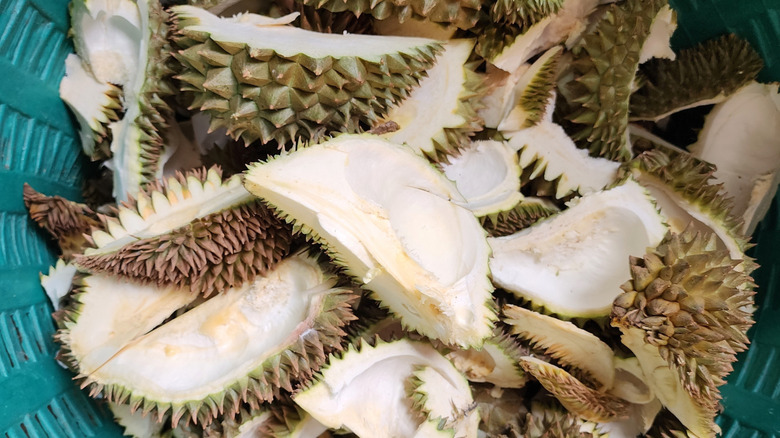
While the durian fruit boasts many medicinal properties and health benefits, it also has commercial, ecological, and personal uses. For one, to reduce waste, those thorny tusks can be composted and transformed into an organic, nutrient-filled fertilizer. For optimum results, the shells should be mixed with probiotics and lime powder.
Additionally, because of its pungent smell, the rind can be used to make a topical lotion that would repel mosquitos for up to six hours, all the while destabilizing their nerves, and, eventually, even killing them. This would certainly prove useful in countries where dengue fever is prevalent.
Finally, the rinds can be used to produce paper — or at least create more from used paper and newspapers, thus eliminating the need to cut down trees. According to a proposal from 2020 for Lyceum of the Philippines University, the process itself only requires old paper, potassium permanganate, water, a sieve or a silk screen, and a blender. Another study, published on Research Gate, discusses boiling durian peels and corn stalks separately and then blending them with newspapers to create new paper sheets.
Durian-focused events and tour packages are very popular
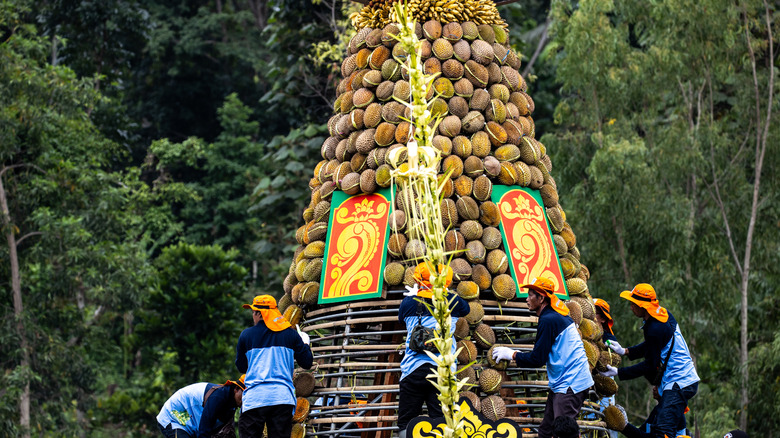
Given durian's popularity in East and Southeast Asian households, it's only natural for that tropical fruit to be openly celebrated in the form of cultural and agricultural events. The massive Malaysia International Durian and Cultural Fest, for instance, mainly showcases local varieties, such as the Musang King and D24. It also offers premium choices, durian-flavored pastries and beverages, and live cooking demonstrations.
Every year in Bangkok, the Siam Paragon shopping mall holds the Siam Paragon Tropical Fruit Parade, which features open buffets with durian-centered dishes like custard, sticky rice, ice cream, and even lasagna, as well as different high-quality fruits from local farmers and producers. For its part, Singapore offers all-you-can-eat durian buffets in restaurants and hotels during its tourist season. It also hosts a Durian Night Market in various locations from June to August. There, locals and visitors can indulge in live durian auctions, tastings, and durian-flavored dishes and beverages.
Durian buffets can be experienced in lush orchards, too, farm-to-table style. A renowned Malaysian brand, for instance, offers a Farm Tour Buffet starting at $44 per person as of this publication. Guests can observe the harvesting process, learn about different types of durians, and sample coveted varieties like Tekka, Musang King, D24, and Black Thorn. For the same price, another local brand allows guests to tour several of its farms located in the state of Pahang via 4x4.
Premium durian products are sought-after gifts and souvenirs in Malaysia
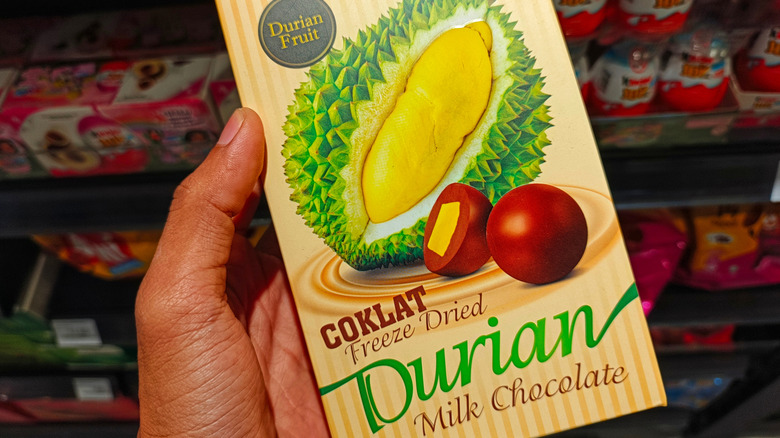
Tourists who have sampled a fresh durian during a street-food crawl, or a durian-based dish or dessert at a restaurant, may be tempted to bring some of that distinctive flavor back home. However, since carrying the raw fruit is bound by so many restrictions, a pre-packaged indulgence may be the best solution. Not to mention that it wouldn't carry a foul smell.
For this reason, Malaysia has released various high-quality durian-flavored products, from chocolates to candies, cakes, and sweets. You'll find them in local supermarkets, confectionary shops, souvenir shops, and, of course, the duty free section. The Beryl's brand, for example, offers a durian-filled milk chocolate bar and an almond-coated durian chocolate, while Alfredo proposes hazelnut wafers covered in Musang King durian and white chocolate, and G&G has successfully combined durian with milk candy. As for the brand DKing, it sells a wide range of premium durian delicacies, from frozen mochis, crepes, and pancakes to white coffee, pralines, whole cakes, and paste.
There are the myths surrounding durian's potential risks
You've likely heard some bizarre rumors surrounding durian. Sites like Raffles Medical Group have addressed some of the most common controversies in order to dispel or confirm them. To begin with, durian is thought to increase cholesterol levels and is therefore avoided by people with high cholesterol. In truth, this fruit is considered monounsaturated fats and is actually likely to lower LDL and triglyceride levels.
The second rumor warns against the overconsumption of durian, which could lead to overheating, fever, coughing, and respiratory infections. In this case, the group's doctors had conflicting verdicts: One states that an increased body temperature could simply be due to the digestion process, while the other links overindulgence in certain body types to sore throat, constipation, a phlegmy cough, and fever. As for the third myth, it states that consuming durian together with alcohol could be dangerous and even fatal. While the doctors don't believe it's a lethal combination, they do warn against an increased risk of heartburn, bloating, and excess body heat.
Finally, it's mistakenly believed that diabetics can consume as many durians as they like because the flavor ranges from bitter to mildly sweet. In fact, the fruit is high in sugar and carbohydrates and should therefore be consumed in moderation by people watching their blood sugar levels.
The most expensive durian sold for nearly $48,000

Despite its popularity, durian is not exactly a cheap type of produce, though it's definitely more affordable when it's in season. In Malaysia, for one, the retail prices of non-premium varieties are typically between $3.23 and $3.88 per pound. This is due to labor costs and conditions, not to mention that growing trees, which require a warm and humid climate and extensive fertilization, may take five to 10 years to yield fruit.
Obviously, the rarest and finest species of durian are much more expensive and coveted, such as the Kan Yao. This special Thai variety, whose name translates to "long stem," is round-shaped and has a mild smell and sweet taste. It's only available in May and June, and farmers make sure to only grow up to four fruits on each tree to maximize their nutrient intake.
It's no wonder, then, that on June 7, 2019, during a durian festival auction held in Nonthaburi, Thailand, a Kan Yao harvested from a local farm was auctioned and sold for a whopping $47,990.