

Who Invented The Salt And Pepper Combo? We Have This King To Thank
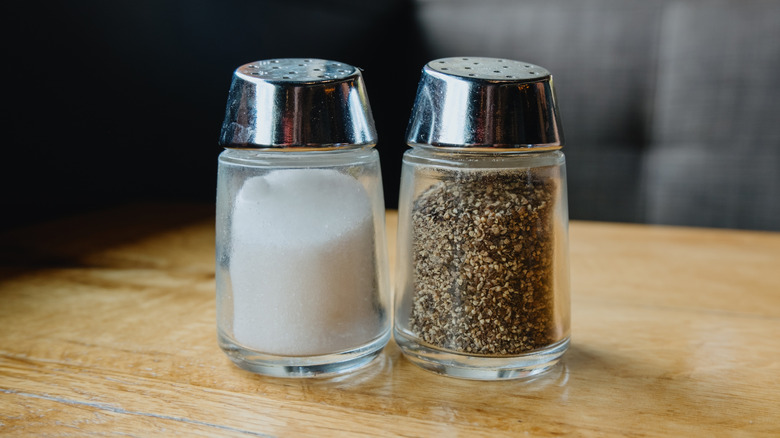
The yin and yang of the dinner table, salt and pepper are so commonly seen in tandem that most folks don't even think to question the pairing until they are well into their culinary journey. The two go together on the table — often in matching salt and pepper shakers, which have their own intriguing history — and are added "to taste" in many recipes. But how is it that pepper, which is seemingly just another spice, came to hold an almost equal standing in the kitchen and on the dining table as salt? As it turns out, this particular coupling goes back to the French monarch of the late 17th century, Louis XIV.
It was in this time period that French cuisine as we know it began to find its form. Chefs like François Pierre de la Varenne developed a style of cooking that lightly seasoned food using only spices that complemented the flavors of the ingredients. Salt and pepper was a favorite pairing, as salt enhances flavor and pepper provides a warm, aromatic, yet mild contrast.
This became the style of the age, and Louis XIV was said to prefer his meals prepared as such. Given the cultural significance of the court of Louis XIV, as well as Varenne's 1653 book, "Le Cuisinier François," it is no wonder that this pairing took hold of the time. But the larger question remains: how has this combination managed to hold its grasp on our palates as the range of spices available to us has increased so drastically?
Everyone needs salt
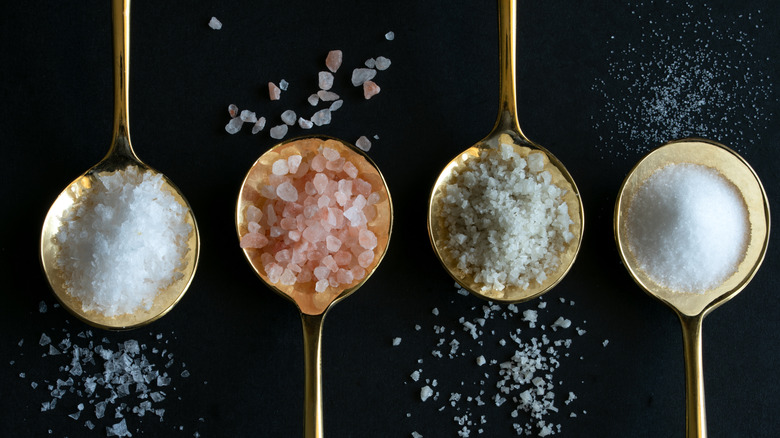
Of the pair, salt is undoubtedly the more important of the two. Salt is really the original seasoning, one that has been with us forever. In fact, the use of salt isn't even unique to humans; animals are also known to seek it out. Mountain goats have been recorded traveling as far as 15 miles to reach natural salt deposits, alluding to the fact that salt in food is about more than just taste.
Now, there are actually many types of salt, and they all have different uses. Sodium chloride (NaCl) is the typical table salt used for most recipes. But other salts like sodium nitrite (NaNO₂) and sodium nitrate (NaNO₃) are used for different purposes, such as for curing meats. Even MSG, or monosodium glutamate, is a salt. For the sake of this article, however, we will focus on good old table salt.
Not only is table salt a universal flavor enhancer, increasing our perception of all flavors, but it is also a really important substance that our bodies need in order to function. Our bodies rely on the sodium in salt for our neurons to activate, which means we use it constantly for everything from breathing to thinking. Right now, as you read this, your body is relying on sodium to process the information. Pretty cool, right? It's no wonder that salt goes in everything. Pepper, on the other hand, is a little less important.
Pepper is more of a preference
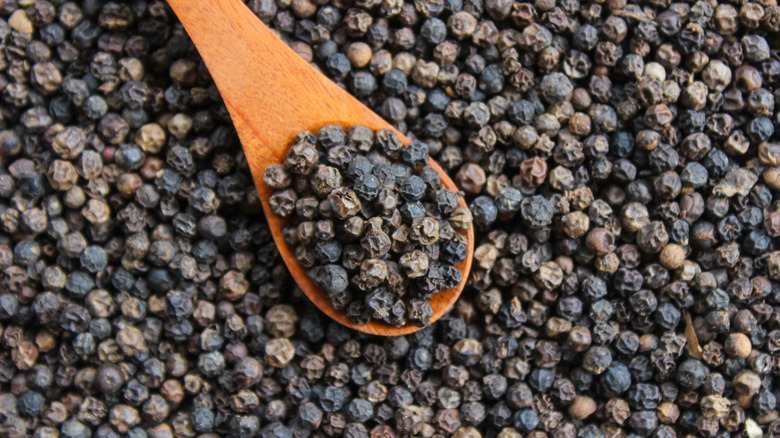
Unlike salt, there is no clear biological need for us to consume pepper. The spice comes from the dried berries of the Piper nigrum plant, a vine native to South India. Like many commonly used spices, there is some suggestion that the use of black pepper in cooking may yield some health benefits — it contains a chemical called piperine that is known to have some antimicrobial properties — but primarily the spice is used for flavor.
Pepper has been used as a culinary spice in South Asia for thousands of years but was not introduced to the Western world until sometime around 400 B.C. It quickly caught on and was one of the primary products in the ancient spice trade, valuable enough that it was sometimes even used as currency. But despite its delicious flavor and, perhaps secondarily, its mild medicinal qualities, it is clearly not as necessary to bodily functioning as salt. There are no stories, so far as we're aware, of animals traversing the landscape in search of this spice.
Really, in the end, it does all come down to taste and style. The style of eating in 17th-century France, in particular that of the monarchy, left a lasting legacy on the palates of much of the West. Sprinkling food with a few salt crystals and cranks of the pepper grinder certainly does not carry the same luxury that it did then, but perhaps now that you know the history of this condiment pairing, you may feel a bit kingly tucking into your next meal — be it salt and pepper squid or something more pedestrian.