

How The Delicate Notes Of Siphon Coffee Compare To The Bold French Press
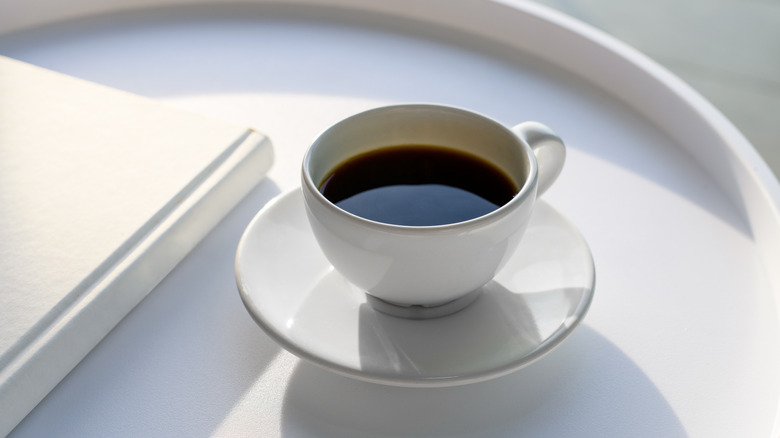
Coffee beans are roasted, ground, brewed and served in many different ways — and no two cups may ever taste exactly the same. But as is shown by the differences between a coffee maker and espresso machine, or even something as simple as the taste of an iced coffee and a cold brew, one of the most impactful influences on the way any coffee drink tastes comes down to the method in which the beans are brewed and prepared.
While the coffee beans used to brew an espresso are ground finely and brewed under high pressure to produce a small, concentrated shot, drip coffee is ground more coarse and brewed more gradually to make a larger, more diluted drink. Meanwhile, cold brew beans are ground and extracted slowly in cool water, while iced coffee is brewed with hot water and chilled. The same thing goes for siphon coffee and French press coffee.
While both of the setups for French press and siphon coffee preparations could pass as a chemistry lab in your kitchen, the two involve very different brewing processes. Although many of those differences in processes can be personalized — an inherent factor to both of these brewing styles' popularity — they inherently alter the flavor of the coffee in different ways. With siphon delivering a slightly more complex and refined flavor compared to the French press's bold and rich taste, you may find that you prefer one over the other.
French press coffee is bold and rich
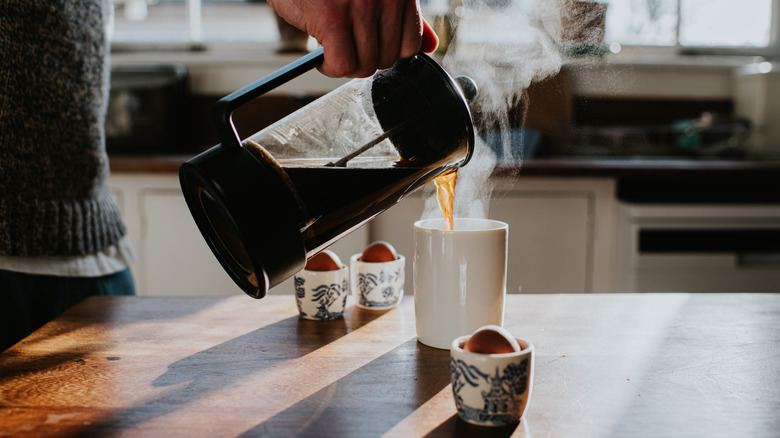
Making a French press coffee at home involves a number of different steps — 14 of them, to be exact. But once you have everything in order, it's actually a very simple process, beginning with grinding your coffee ever so coarsely and boiling the water. Depending on how strong or weak you prefer your coffee, you then measure out the coffee grounds and scoop them into your French press. From that point on, the process involves some stopping and going.
Once your water is boiling, you have to let it sit prior to submerging the ground coffee in your French press. Then, you have to give the grinds time to bloom before adding the rest of your water, stirring, and allowing them to brew for another 4 minutes, pressing, and pouring your coffee. Each of these steps are inherent to the final flavor of your cup, with the blooming stage being the bean's initial chance to release the carbon dioxide necessary to produce its flavor.
Not only does the blooming stage allow the beans to release carbon dioxide — and in turn, prevent a sour tasting coffee — but doing so also allows the water to have full contact with the beans throughout the brewing process. You'll find that the steel filter allows some of the coffee grains to pass through, which will only produces a stronger flavor. All of this comes together to give French press coffee its signature bold taste.
Siphon coffee tastes complex and refined

Siphon coffee, on the other hand, involves an entirely unique method of brewing. Beginning by grinding the beans finely while you're heating your water nearby, the first major difference between a siphon and a French press is that the machine has a built in burner that you'll need to light or turn on and position. Then, you add your measured water and ground coffee beans directly to the upper and lower chambers positioned just above and, before the water comes to a boil, seal the two chambers together.
This is when the magic happens: The siphon machine automatically passes the water in the lower chamber up and through to the upper chamber where the coffee grinds are. When this happens, you then give the water and coffee grinds a nice stir and let the coffee brew for about a minute. When the time is up, you can cut the heat, and the water will transfer back down to the lower chamber on its own. Finally, you break the seal between the chambers, and voilà — you have yourself a pot of siphon coffee.
Upon your first sip, you'll find the flavors to be much more subtle and complex but still aromatic. That's thanks to the special cloth filter that's used between the chambers, which keeps the grounds from producing the deep flavors usual to the stainless steel filter of the French press.