

This Is How Focaccia Bread Is Traditionally Eaten
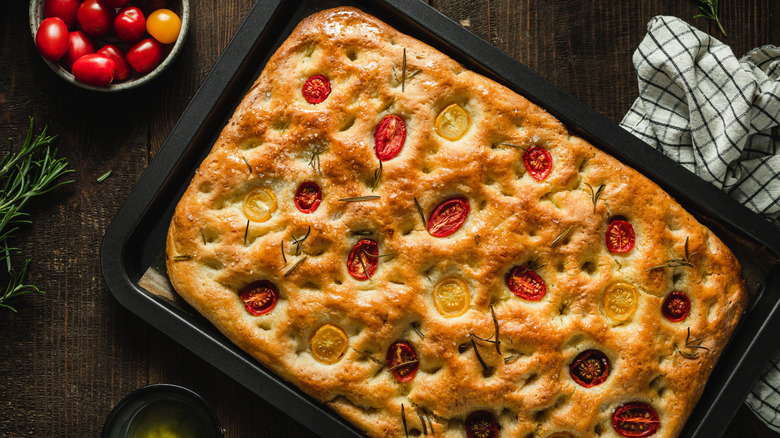
You really can't scroll through the culinary sphere of social media without coming across homemade focaccia bread these days. It graces our small screens with hand-kneaded perfection, studded in just about everything from colorful carrots and fresh herbs to edible flowers. An online phenomenon as it may be, this Italian bread is, first and foremost, a gastronomic staple in its homeland. As we're putting more and more new twists on focaccia, let's not forget to acknowledge how it's traditionally eaten. Understanding its role in generational meals might even give you a clearer insight into why focaccia has become so beloved in the first place.
It's safe to say that focaccia has stood the test of time, with origins dating all the way to ancient Roman times. Back then, it was baked over fire simply from rough flour, olive oil, and water, presumably left unleavened and plain. Hand-torn into smaller pieces, it was then used primarily as a dipping tool for salty soups. As time went on, focaccia began to make its way across Europe, reaching France and Spain, where it was also eaten during religious celebrations. In 15th-century Genoa — the capital of Italy's Liguria region, where focaccia became the gold standard for Italian flatbread — it was commonly served in churches, both during weddings and funerals. In the early 20th century, focaccia arrived in the U.S. through European immigrants. Even then, it was still made with traces of Italian cuisine's influence, commonly with lemon slices and rosemary dotting the spongy base.
How focaccia is eaten in the modern day
Nowadays, you can enjoy focaccia in so many diverse ways. Right in Liguria, having focaccia for breakfast is a well-maintained tradition. Locals to like to pair it with a cappuccino by quickly dipping it into the coffee, just enough for the salty bread to meet the coffee's bittersweetness without losing its crispy, fluffy integrity. Not much different from regular toasted bread, breakfast focaccia can also be topped with fried eggs, bacon, sausages, and more, or layered with a spread of cheese or yogurt. Moreover, Ligurian restaurants serve it with a lot of savory toppings staple to Italian cuisine, such as pesto, marinara sauce, onions, olives, cheese, and more.
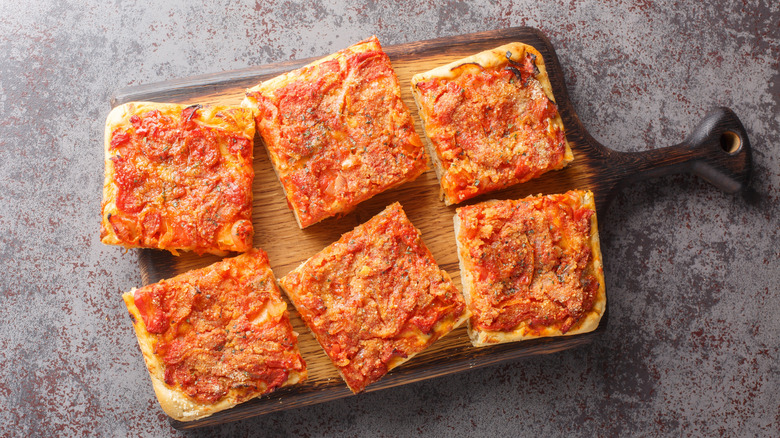
In other regions of Italy, focaccia comes in various forms. In southern regions, focaccia is thicker and dressed up with bolder toppings, making it a full-on main course. Calabria, in particular, incorporates local ingredients like cherry tomatoes straight into the focaccia, as seen in its red-dough focaccia called grupariata di Luzzi. Then hailing from Sicily is the infamous sfincione — a pizza-like street food that sees focaccia topped with anchovies, grated caciocavallo cheese, and a hearty tomato sauce.
By the time it reaches your kitchen, this Italian flatbread has lived a thousand lives and taken on different creative approaches. Just eating it as it is always brings immense joy, but you might like it more when turned into a vessel for a flavor-packed sandwich. Sliced into bite-sized cubes or shredded by hand, it's an excellent companion for dips, soups, salads, and maybe even cheeseboards.