

How Does Greek Rice Pudding Differ From The American Version?
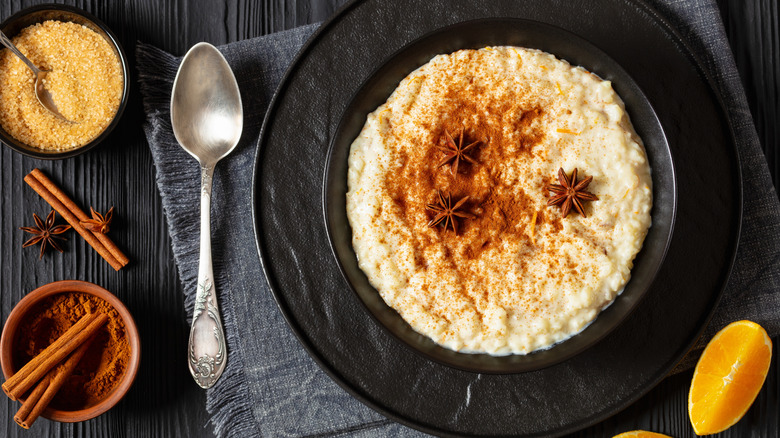
There are few things that say comfort food like a warm bowl of rice pudding. If you're used to the American or English versions of the dish, you know it's usually cooked slowly on the stovetop or baked in the oven and served steamy like a porridge with raisins, dried fruit, and warm spices. However, if you haven't tried Greek rice pudding, known as rizogalo (rizo means rice and galo comes from the word for milk), it may be the perfect time to expand your horizons. You might be wondering how something as simple as rice pudding could vary from country to country. But rizogalo's importance in the Greek kitchen and home is right up there with baklava and a host of other Greek treats that will change your life.
The basic methodology to make American and Greek rice puddings is similar: Combine rice, milk, and flavorings in a saucepan and cook to thicken. The main differences are in its lighter texture — it has a lower ratio of rice to milk — and the importance of a certain spice (looking at you cinnamon). The result is a delicate Greek dessert that is often served at room temperature or cold, and scooped lusciously into bowls or serving cups.
Less rice is more in the Greek version of rice pudding

Generally speaking, rizogalo is a lot lighter than traditional American rice puddings, which usually have a more creamy texture. While preparing a proper Greek rice pudding comes down to personal preference (or yaya's family recipe), typically there should be just enough rice to provide taste and texture, but every spoonful shouldn't be particularly grain-heavy. For every 5 or 6 cups of whole milk used in rizogalo, only about a quarter cup of arborio or other short-grain rice is called for. Whereas, American rice pudding usually requires half a cup to a cup of grains for the same amount of liquid, which makes for a thicker helping.
In American rice pudding, the type of rice can vary — from arborio to long grain rices like basmati — and the rice absorbs the milk to thicken as it simmers for 50 to 60 minutes. But in the Greek version, where there's less rice involved and short-grain is best, you're really just trying to cook the rice in the mixture of milk, spices, and flavorings until it's al dente. It's important to whisk the mixture often as it cooks to keep it light, for about 35 to 40 minutes total. At the end of the cooking process, a cornstarch slurry or corn flour is also added to the mix to thicken the whole milk into a scoopable, yet airy Greek pudding.
Don't skimp on the cinnamon

Aside from the light texture, Greek rice pudding is traditionally made with a healthy heaping of cinnamon on top. Like in many Greek dishes, from lasagna-like pastitsio to kota kokkinisti (a chicken and cinnamon dish), cinnamon in rizogalo is pretty much a non-negotiable. The dessert is usually simmered with a bit of cinnamon or a cinnamon stick in the milk and rice mixture, along with other spices and fragrances like nutmeg or vanilla. It's also common for citrus rind or zest to be added for extra brightness. But you'll nearly always find the cooled dessert served in cups or serving bowls dusted with a topping of cinnamon.
While people certainly get creative with rizagalo, with the addition of ingredients like rose essence, American rice pudding has more variation when it comes to spicing it up. It's common to add cinnamon in the American version, but it's not as essential as in a Greek home recipe. You can use cardamom, Chinese five spice, or pumpkin spice in American rice pudding to add to the warmth of the dish. Some home cooks even include a pat of butter or a hefty dash of salt to their rice pudding, like when making grits.