

12 Vintage Cookbooks That Are Worth A Fortune Today
Today, recipes are available at the click of a button, from coq au vin to chicken curry. Before Google, cooks would rely on improvisation, family recipes, or a well-worn, trustworthy cookbook to figure out how to assemble a dish. Cookbooks have been around for thousands of years; one of the oldest known examples dates to 1700 BCE in Mesopotamia, with recipes etched into clay tablets. However, for most of history, literacy was a luxury for a select few, and the cookbooks reflected this. Whether you could read them, cook from them, or even afford the ingredients inside was largely dependent on your class, wealth, and education.
In early printed European cookbooks, recipes were often divided along social lines. You might find refined dishes in "La Cuisinière Bourgeoise," a book intended for household servants, or simple and practical meals in "A Plain Cookery Book for the Working Classes." By the 20th century, rising literacy and a booming middle class helped the market for cookbooks flourish for home cooks everywhere.
Today, some of these early cookbooks are worth thousands of dollars. Whether you're an antique collector or a food history buff, these vintage cookbooks are not only monetarily valuable; they're also a rich source of culinary history and traditions.
Mastering the Art of French Cooking
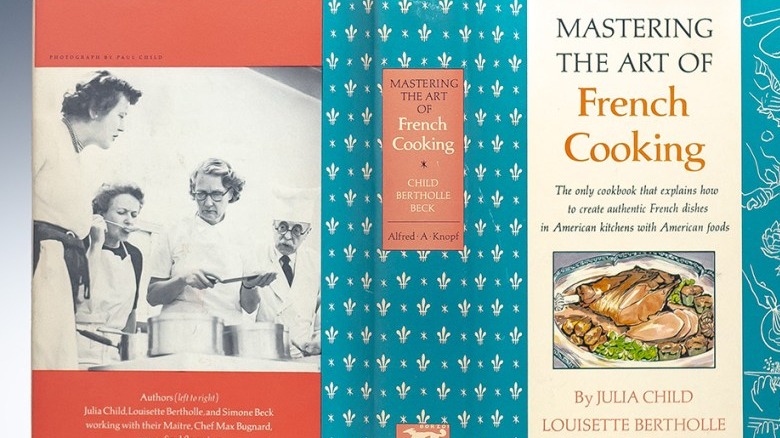
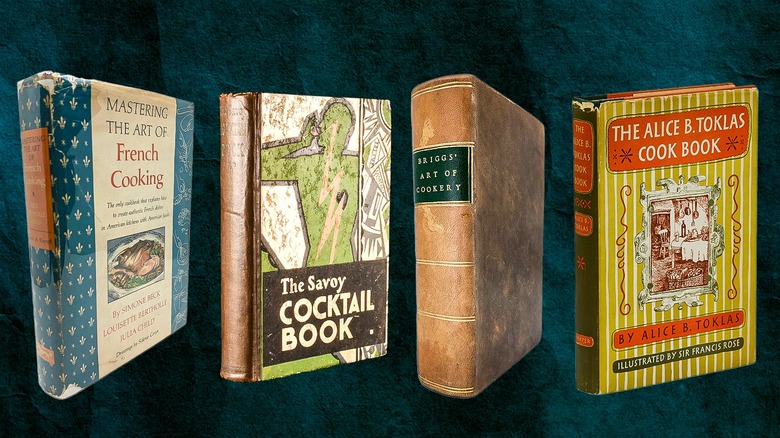
In 1960s America, home cooking was often synonymous with convenience rather than quality. Readymade meals like Swanson TV dinners and Jell-O salads were novel culinary inventions enjoying the peak of their popularity. But in 1961, Julia Child shook up the American culinary landscape with the publication of "Mastering the Art of French Cooking."
Co-authored by Simone Beck and Louisette Bertholle, this book aimed to bring classic French cuisine into American kitchens with meticulous, step-by-step instructions tailored to American ingredients, appliances, and culinary terminology. It helped everyday home cooks tackle previously intimidating dishes like coq au vin, boeuf bourguignon, bouillabaisse, and crêpes Suzette, explaining traditional techniques thoroughly along the way.
Publishers were initially skeptical, as gourmet French cooking seemed at odds with what they believed American housewives wanted. But the book was a sensation, propelling Julia Child to become a celebrity chef. "Mastering the Art of French Cooking" has remained in print continuously since its release and is now widely considered one of the most influential American cookbooks of all time.
The first edition had only 5,000 copies printed, making it a rare collector's item today. One copy listed on Kitchen Arts & Letters is priced at $5,834, while copies on AbeBooks range from $2,500 to as high as $25,000.
The Compleat Housewife
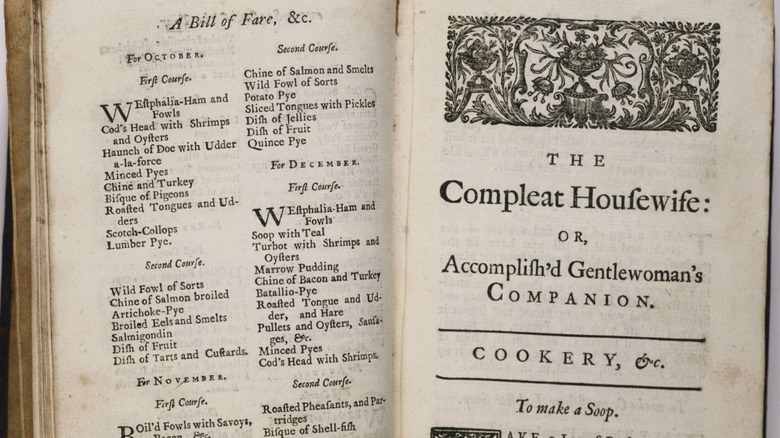
"The Compleat Housewife," first published in 1727 by Eliza Smith, offers a glimpse into the daily life and expectations of 18th-century English women. Far more than just a cookbook, "The Compleat Housewife" is a manual for managing an entire household, from cooking and cleaning to mixing paint and treating illnesses. It includes over 500 food recipes and more than 200 medicinal remedies, such as cures for stomach pain and coughs, treatments for venereal disease and cancer, and even instructions for concocting laudanum using wine, opium, and saffron.
"The Compleat Housewife" was the first cookbook published in the American colonies in 1742, printed in Williamsburg, Virginia. This book may surprise modern readers with its unconventional spelling, perplexing ingredients, and sheer variety of recipes, covering over 30 types of seafood and 35 kinds of birds, fowl, and small game like pigeons and swans. It also contains the first printed English recipe for "katchup," made from mushrooms, anchovies, and horseradish.
With its rich insight into culinary history, early medicine, and domestic gender roles, "The Compleat Housewife" remains a fascinating read for historians, linguists, and collectors. A first edition copy on AbeBooks is listed at around $4,600, while a later edition goes for $1,400 on Kitchen Arts & Letters.
The English Art of Cookery
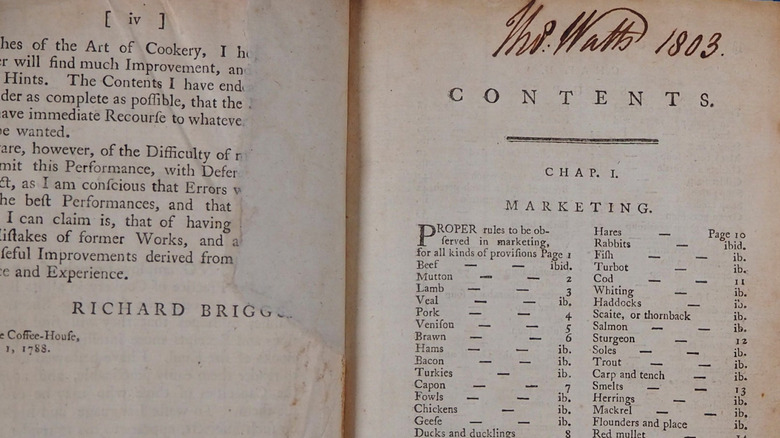
"The English Art of Cookery" was written in 1788 by Richard Briggs, a London tavern cook. This comprehensive cookbook, well over 600 pages, was intended to be a practical and straightforward guide for professional cooks and servants to follow. In the introduction, the author explains that the book is designed to be easily accessible and legible to the public: "To waste Language and high terms on such subjects, appears to me to render the Art of Cookery embarrassing, and to throw difficulties in the way of the reader." What follows are recipes ranging from eel soup and roasted pigeon to syllabubs and flummery.
Recipes are grouped according to techniques, covering everything from marketing and trussing to boiling, roasting, stewing, pickling, and preserving. Additionally, some recipes are intended to be served to the sick and for "seafaring men" — the latter includes homemade ketchup intended to last twenty years, made with stale, strong beer, pickled anchovies, and mushrooms. This book also contains early examples of Anglo-Indian cuisine: chicken and veal curries are flavored with "curric powder," and pickled elder shoots are meant to imitate bamboo.
When the book crossed the Atlantic in 1792, it was retitled "The New Art of Cookery," becoming one of the earliest English cookbooks printed in the United States. Today, original 1788 copies are highly prized; one listed on AbeBooks is currently priced at $1,687, while a later 1798 edition is priced at $1,001 on Kitchen Arts & Letters.
The Joy of Cooking
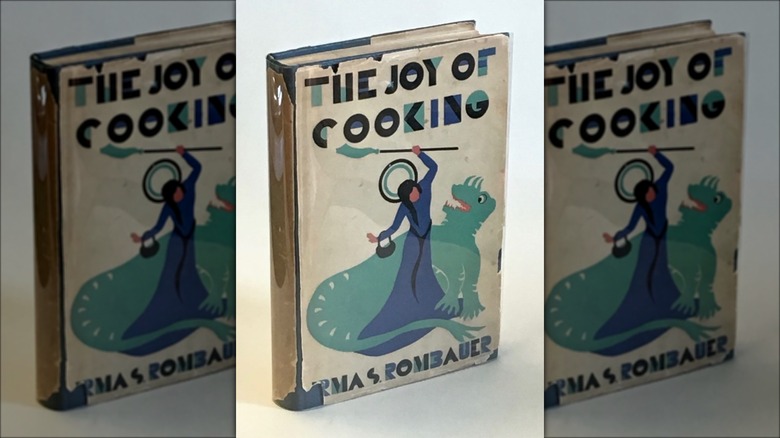
"The Joy of Cooking" may be the most iconic American cookbook of all time, but contrary to its title, it was born out of personal and national hardship. Its author, Irma S. Rombauer, was a St. Louis socialite who had grown up with private cooks and servants, but was an esteemed dinner party hostess. After her husband's suicide in 1930, she found herself widowed in her mid-50s during the Great Depression and needed a way to support her family. In 1931, she used half her savings to self-publish a cookbook that would become a cornerstone of American cooking.
The book's full title, "The Joy of Cooking: A Compilation of Reliable Recipes with a Casual Culinary Chat," captures its friendly, conversational tone that made it so widely beloved. Along with inexpensive and easy-to-make recipes, Rombauer included fun anecdotes and a refreshing frankness towards more complicated recipes. For example, for one time-consuming recipe, she writes, "The [original] German recipe reads, 'stir for one hour,' but of course, no high-gear American has time for that." Her daughter designed the original cover, depicting St. Martha, the patron saint of cooking, battling a dragon with a mop.
Only 3,000 copies of the first edition were printed, making it one of the rarest American cookbooks today. Copies with the original dust jacket with the dragon can fetch up to $9,000. Updated editions were published every decade after its original publication, including ration-era recipes in the 1940s and tips for using blenders and freezers in the '50s and '60s.Still in print today, "The Joy of Cooking" remains the most published cookbook in American history.
La Cuisinière Bourgeoise
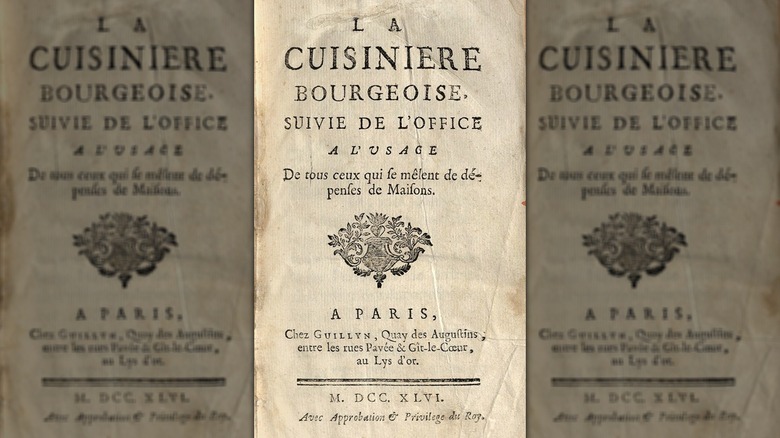
First published anonymously in 1746, "La Cuisinière Bourgeoise" was the most widely read and frequently reprinted French cookbook of the 18th century. Eventually attributed to a prolific but mysterious author known as Menon, it marked a turning point in French culinary writing. While many of Menon's contemporaries focused on the elaborate and extravagant haute cuisine of the aristocracy, "La Cuisinière Bourgeoise" was expressly written for a singular female cook of a middle-class household, as signified by the feminine case used in the title.
Menon's goal was to simplify techniques, reduce costs, and offer practical guidance using familiar, easily sourced ingredients. He even included moral advice for the cook's behavior, stating that she should be literate, clean, attentive, and gentle with the other servants. The book concerns everyday French fare with recipes meant to be manageable without a full kitchen staff.
Its popularity endured for over a century, making it the only French cookbook written before the French Revolution to be reprinted afterward. The true measure of its success came not just from its longevity, but also from the flood of imitations it inspired. Today, early copies of the book start around $800; one English translation sold for $1,751 on AbeBooks.
American Cookery
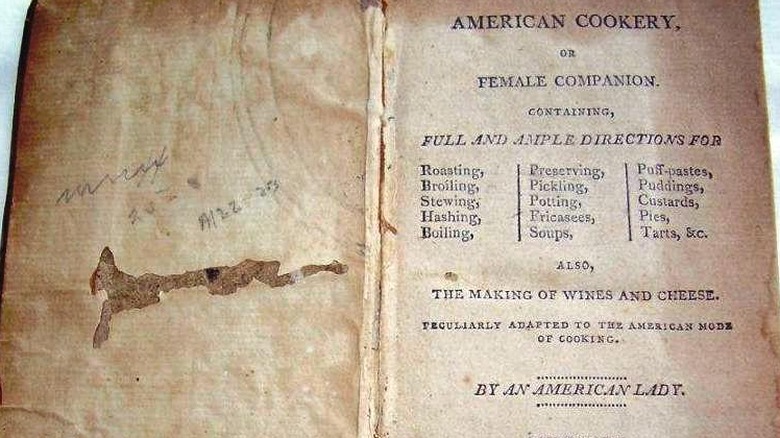
Published in 1796, "American Cookery" by Amelia Simmons holds the distinction of being the first known cookbook written by an American, for Americans. At a time when most cookbooks were imported from England, Simmons' work marked a shift toward a uniquely American cuisine. She embraced ingredients native to the New World — most notably, "Indian corn," or cornmeal, as a substitute for British oats. The book features the first printed recipes for pumpkin pudding and johnny cakes that would later become staples of American cuisine. "American Cookery" also featured the earliest printed recipe for "cookies," which were previously referred to as cakes in England.
Little is known about Simmons herself. She lived in Hartford, Connecticut, and self-published the book at her own expense to be sold in a local bookshop. Despite its modest beginnings, the book remained in print into the 1830s, went through multiple editions, and was even plagiarized. British writers soon began referencing "the American manner of cooking" in their own books, a sign that Simmons had helped define a national style.
Only four known copies of the 1796 first edition survive today, making it one of the rarest cookbooks in American history. A later edition sold on AbeBooks was priced at $2,505.
The Art of Cookery Made Plain and Easy
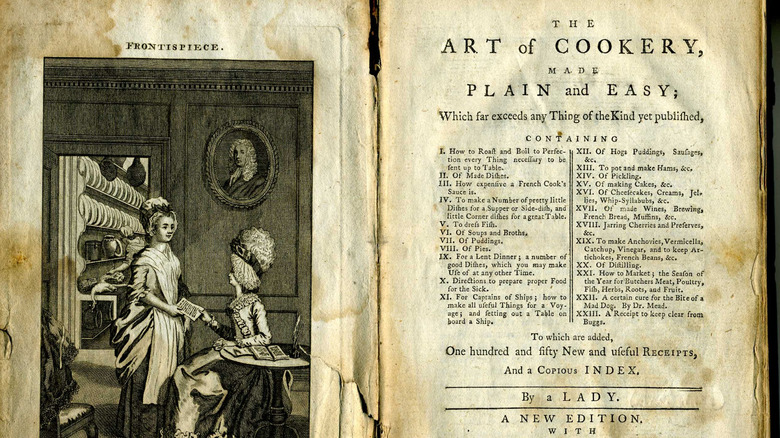
"The Art of Cookery Made Plain and Easy," published in 1747 by Hannah Glasse, was the most popular English-language cookbook of the 18th century. Its appeal lay in both tone and content: Glasse wrote in a straightforward, conversational style that made her recipes accessible to a broad audience, not just upper-class readers or professional cooks. With over 900 recipes ranging from puddings and soups to Lenten meals and care for the sick, it was a truly comprehensive guide to domestic life.
Glasse's influence extended well beyond Britain. Her book was widely used in colonial America; even several Founding Fathers owned copies. Among the most notable entries are curry and pilau recipes made in the "India Way," which introduced early British readers to making Anglo-Indian cuisine at home. These 18th century curries were far milder than modern versions, often seasoned with herbs, lemon juice, and peppercorns rather than strong spice blends.
With dozens of editions published over the centuries, Glasse's work helped shape Western culinary traditions and remains a treasured artifact for collectors and culinary historians. Early editions are rare and highly sought after on the antiquarian book market; one first edition published in America was sold on AbeBooks for $2,875.
How to Cook a Wolf
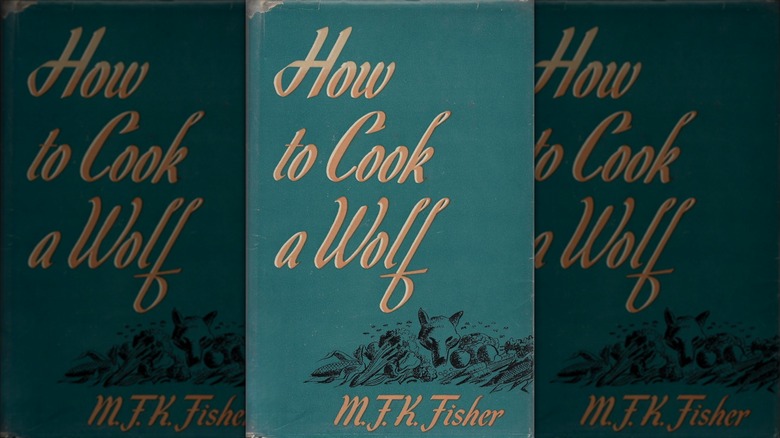
Published in 1942, M.F.K. Fisher's "How to Cook a Wolf" is not a traditional cookbook; rather, it is a poetic meditation on survival, dignity, and the emotional power of food during tough times. Written during the peak rationing period of World War II, Fisher's central ethos in this collection of essays is that good food can nourish the soul just as much as the body. While there are some legitimate, albeit dated, recipes included in "How to Cook a Wolf," it is most famous for its wisdom and defiant wit in the face of scarcity.
The chapters bear evocative titles like "How to Boil Water," "How to Pray for Peace," and "How Not to Be an Earthworm." In one chapter, titled "How to Drink to the Wolf," she includes a recipe for homemade vodka: a practical workaround in a time when liquor was scarce.
"How to Cook a Wolf" found new relevance during the COVID-19 pandemic, when many people once again turned to cooking as a pastime under constrained circumstances (the sourdough bread fad might ring a bell). Today, this book is celebrated as both a culinary oddity and a literary achievement. First edition copies are prized by collectors, with listings on AbeBooks ranging from $1,000 to $4,000.
The Savoy Cocktail Book
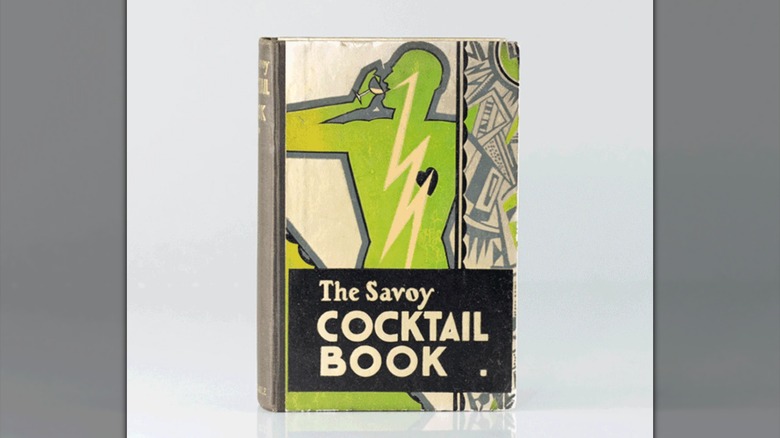
"The Savoy Cocktail Book" is as much an artistic artifact of the Art Deco era as it is a useful guide for cocktail mixing. Published in 1930 by Harry Craddock, a famed barman of London's luxurious Savoy Hotel, this book features over 750 drink recipes accompanied by cheeky anecdotes and commentary. With whimsical color illustrations and a bold geometric layout, the book is a striking piece of graphic design that reflects the glamour and indulgence of the Roaring Twenties.
Craddock had moved to London to escape Prohibition in the United States and became the head barman at the Savoy's American Bar—the longest surviving cocktail bar in London. The recipes span every cocktail category: sours, slings, egg nogs, punches, wine cups, champagne, and more. Craddock himself is supposedly the inventor of the Corpse Reviver No. 2 and the White Lady.
Today, "The Savoy Cocktail Book" is considered a cornerstone of cocktail culture and a coveted collectible. Reprinted editions are widely available, but first editions are rare and highly sought after. In 2012, a signed 1930 copy sold on AbeBooks for $9,500, making it one of the most valuable cocktail books ever published.
De Re Coquinaria
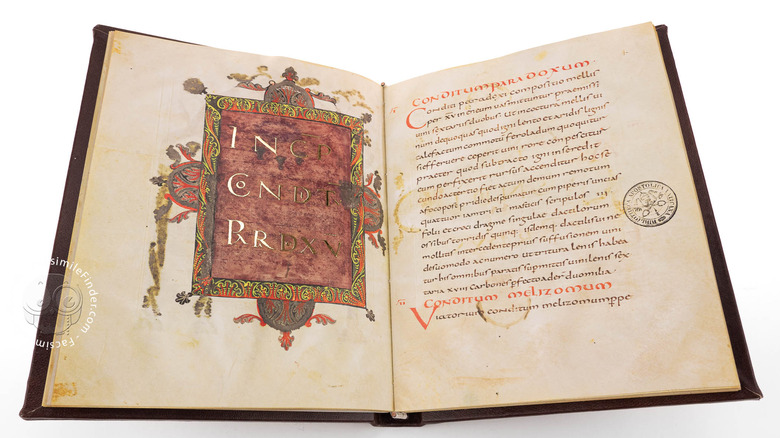
"De Re Coquinaria" is the oldest known cookbook to survive from the ancient world. Attributed to the Ancient Roman gourmand Marcus Gavius Apicius and compiled as early as the 1st century ACE, the text has been edited, amended, and copied by hand countless times over the centuries. Written in Latin, the book contains nearly 500 recipes, loosely organized by type of dish: meats, vegetables, legumes, fowl, seafood, and more. But these are not recipes in the modern sense, as there are no measurements listed. The instructions were likely intended for experienced cooks in wealthy Roman households who would have already known the techniques.
The recipes of "De Re Coquinaria" often feature fermented fish sauce (also known as garum), wine reductions, and exotic ingredients like flamingo, peacock, and dormouse. One chapter is even devoted to "quadrupeds." Despite, or perhaps because of, its vagueness, the text remains a captivating glimpse into Roman tastes and culinary excess.
Since the printing press wasn't invented until the 15th century, early copies of "De Re Coquinaria" were painstakingly handwritten, making any surviving manuscript exceptionally rare. A 1498 edition, just 50 years after Gutenberg's invention, is listed on AbeBooks for $16,870.
The Alice B. Toklas Cook Book
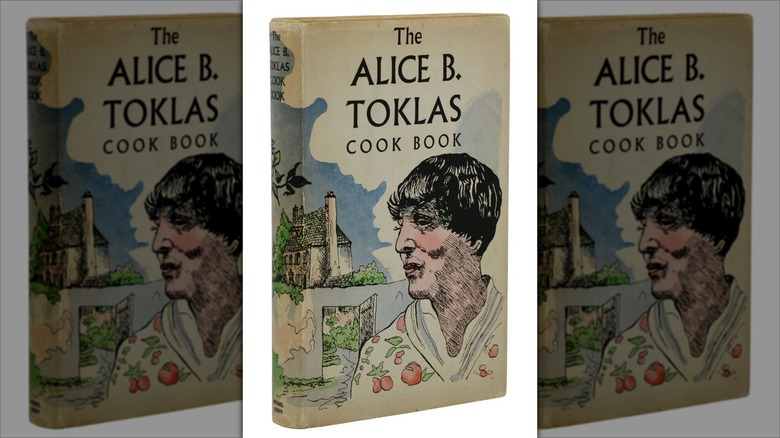
First published in 1954, "The Alice B. Toklas Cook Book" is one of the bestselling cookbooks of all time. This semi-autobiographical memoir features wildly extravagant dishes that were served to the most famous authors and painters of the 20th century. Toklas, the lifelong partner of modernist writer Gertrude Stein, became a household name thanks to this work, which blended elaborate French recipes with tales of bohemian expat life and Stein's legendary Paris salon, which hosted prominent artistic figures like Picasso, Hemingway, and Matisse.
Many of the recipes are wildly elaborate, if not impractical. One involves a chicken stuffed with golden potato "eggs" and drenched in cream; another recipe for fish, adorned with red mayonnaise and truffles, was allegedly served to Picasso. But the most infamous entry is the "Haschich Fudge," a cheeky recipe for a cannabis-laced dessert that she states is a perfect addition to "a Ladies' Bridge Club" and "should be eaten with care." It was banned from the original American edition but cemented the book's status as an icon of 1960s counterculture as the first published recipe for pot brownies.
"Alice was one of the really great cooks of all time," James Beard once said. Today, "The Alice B. Toklas Cook Book" remains a transgressive landmark of culinary and literary history, as well as a cherished item for collectors. First edition copies are priced anywhere from $2,000 to $45,000.
Les Dîners de Gala
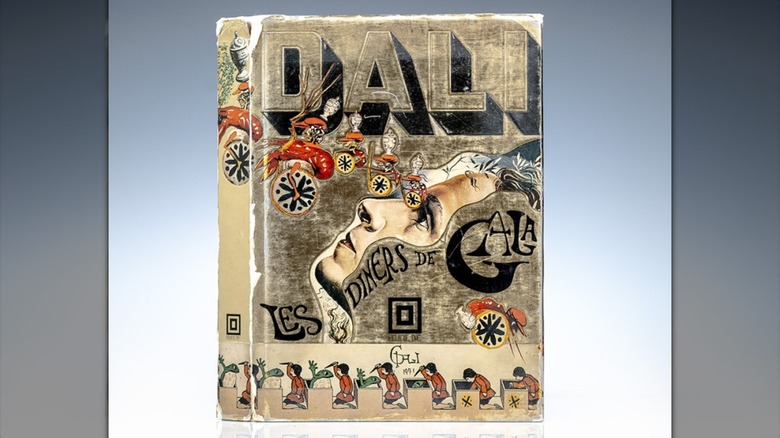
Originally published in 1973, "Les Dîners de Gala" is Salvador Dali's wildly surreal and lavishly illustrated cookbook. Rumored to have had only 400 copies printed, this rare book features 136 recipes alongside photographs of opulent feasts and the artist's signature surrealist drawings. Hardly a practical guide for cooking, the book is a fever dream of decadence and desire, with Dali as the host of culinary fantasies.
Dedicated to his wife and muse, Gala, who graces the book's ornate cover, "Les Dîners de Gala" features twelve chapters organized by dish type, covering meats, seafood, and vegetables; the tenth chapter is focused solely on aphrodisiacs. Dali's illustrations, featuring writhing humanoids paired with elaborate, borderline-grotesque dishes, transform each page into a spectacle.
Not a cookbook for the faint of heart, "Les Dîners de Gala" is a prized possession of art collectors and food enthusiasts. Original copies have sold for anywhere from $500 to over $10,000, depending on the condition.