

How To Calibrate Your Manual Coffee Grinder For The Perfect Shot Of Espresso
We may receive a commission on purchases made from links.
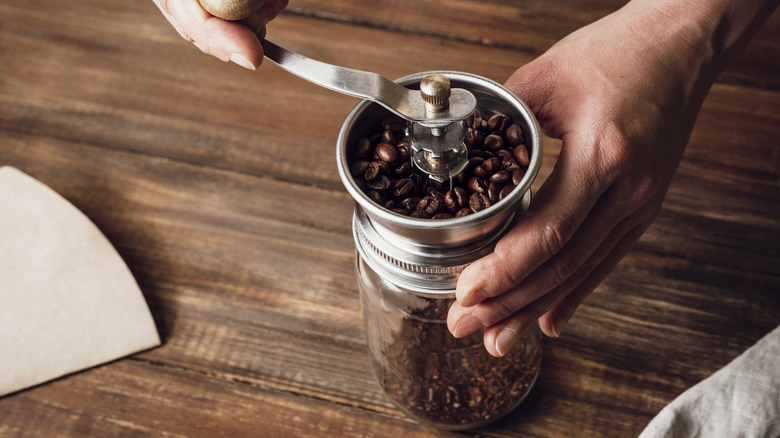
Any espresso enthusiast will tell you that in order to pull a perfect shot, the very first thing that you need to do is buy yourself a coffee grinder — and to stop using any of that pre-ground stuff. Grinding your own beans gives you far more control over the grain size and, by extension, the quality of your final brew. For folks who happen to choose a manual grinder, you'll need to master some basics before you can make a brew-perfect grind. Among those is figuring out your grinder's zero.
Zeroing a grinder is basically finding the point where the burrs very nearly touch. Burrs are the metal grinding parts of the machine and the closer they are together, the finer the possible grind. While espresso does use finely-ground coffee, don't grind at or near point-zero (it's way too fine). Instead, think of point-zero as your reference point for dialing in different grind sizes. From zero, adjust the grinder to a coarser setting by about ten clicks and pull a shot to see how it tastes. Fine-tune from there until you find the setting that gives you the perfect-tasting shot, write it down, and you'll no longer have to guess-timate the next time you have to grind a new batch.
Now, how exactly do you find zero? Pick up your grinder and hold it horizontally so the handle hangs down loosely. Now, turn the adjustment dial clockwise to size down the grind. Then, lift the handle and let it drop. At first, it should drop normally and point downward again. But as you continue to tighten the dial, the handle will become stiffer and stiffer. When you can lift the handle and keep it horizontal without it drooping down, that's when your grinder is zeroed.
Why you need to recalibrate your coffee grinder often
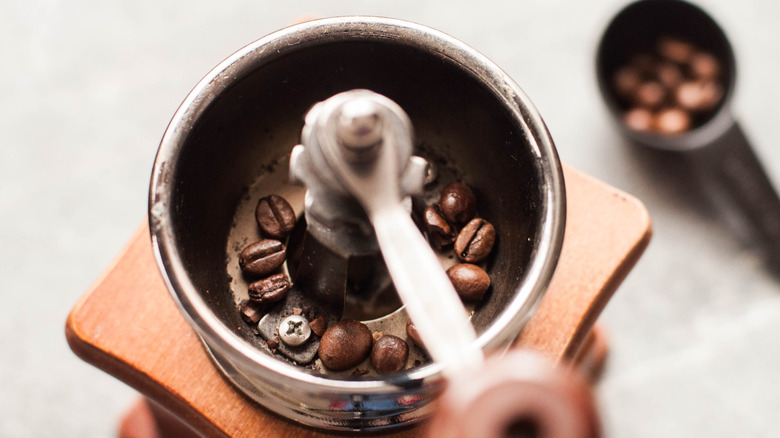
Even if you've bought a pricey 1Zpresso J manual coffee grinder, it won't last forever. Eventually, the burrs are going to wear down from all the work it's been doing. When that happens, your true zero will gradually shift from its original position on the dial, giving you a coarser grind than expected. Fortunately, the fix is simple: Just follow the same steps above to recalibrate, find your new zero, and voilà, your trusty manual grinder is back to working like new.
You should also recalibrate after deep-cleaning your grinder. Unlike the routine monthly cleanup sessions where you take a fine-toothed brush to all the nooks and crannies or feed sugar through the grinder, a deep clean is usually necessary after a year of use and involves completely disassembling the grinder to remove the coffee dust and nasty gunk that's built up over months of use. Once you've cleaned everything and reassembled the burrs, they'll likely be out of alignment. Simply recalibrate to find your new zero, and update any notes you've made about grind settings for different brewing methods — they might be a bit different than before.