

The Best Cuts Of Beef And Pork For Kabobs, No Matter Your Budget

It can be tempting to think that the secret to soft, melt-in-your-mouth kabobs lies in buying the most expensive cuts of meat. But pros know the key isn't spending more. It's choosing the right cuts and applying a simple trick that can transform even budget-friendly into perfectly juicy kabobs.
"Tender cuts will always be preferred for kabobs, but those can get pricey. I gravitate to lesser-known and versatile cuts like the tri tip of beef or the sirloin of pork for kabobs," Jamie Waldron, owner and operator of J. Waldron Butchers in Ontario, Canada, shared with Tasting Table. Waldron also had a suggestion for turning cheaper cuts of beef into culinary gold: "If your budget won't allow for either of those then I would suggest getting a hand-held meat tenderizer." A tenderizer can take the form of a mallet with a textured head or a handheld tool with a set of blades. Either way, it breaks down the connective tissue of the meat, making it softer.
The most tender portions of beef — such as ribeye, T-bone, and porterhouse — are found along the cow's back where the muscles do minimal work. They make up a relatively small percentage of the animal, and that scarcity helps drive up the price of these steak cuts. By comparison, tri tip is a firmer but flavorful cut located closer to the rear end of the cow. While it might cost $6-12 per pound, a ribeye can start at double that ($10-20 per pound or more). For similar reasons, meat from the lesser-worked muscles of the pig's back, such as pork tenderloin, will cost more at the store than the sirloin, which is often bonier.
2 more tips for juicy kabobs
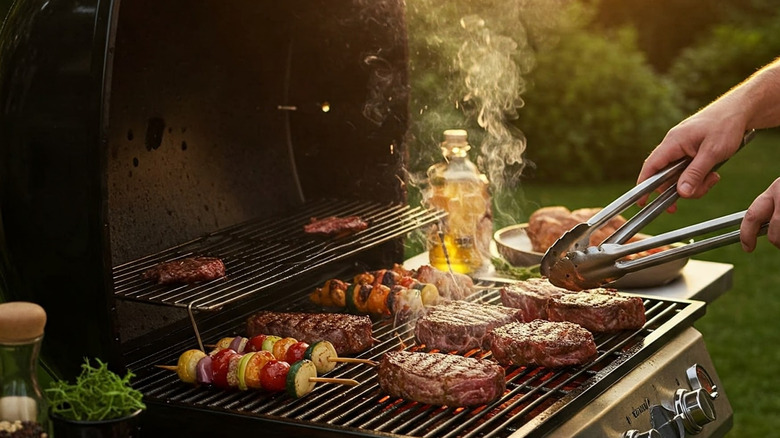
Once you've selected the desired cut and pounded out your frustrations with a tenderizer if necessary, two key steps will ensure your kabobs stay juicy instead of dry and chewy. The first involves size. Make sure you chop your chosen meat into even cubes, approximately 1 to 1 ½ inches, before sliding them onto your skewers. There are two important reasons for doing this. The first is that consistency in size will ensure the meat cooks more evenly — you won't end up with some pieces charred on the outside while others remain undercooked in the center.
The second reason is that the smaller the size of meat creates more surface area, making it easier for any marinades you might use to work their magic. It's important to note here that marinating your meat doesn't just add flavor; the right set of ingredients also makes your meat tender. Acidic ingredients like lemon juice or dairy products like yogurt are part of a large set of natural ingredients that can be used to improve the quality of the meat. They're popular in kabob-style recipes around the globe.