

9 Classic Italian Cocktails, Ranked Worst To Best
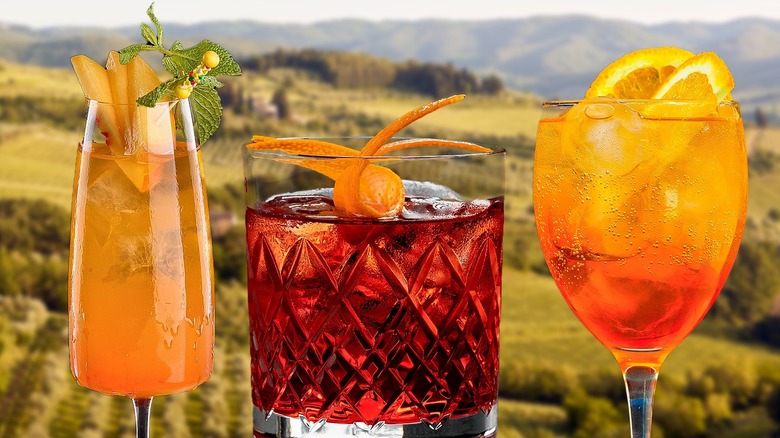
Throughout my career as an international bartender, I've found that cocktail culture is often viewed through a U.S.-centric lens. It's true that modern cocktails can be traced back to U.S. prohibition, when bartenders needed a way of making bootleg booze more palatable, but the roots go back much further. It shouldn't be much of a surprise that Italy — a nation famed for its food and drink – also had a meaningful role to play in cocktail history.
Italian cocktail culture stems from the concept of aperitivo, a pre-dinner social gathering for enjoying a light drink – called an aperitif – before the main meal. The idea dates all the way back to ancient Roman times, and even the name is derived from the Latin word "aperire," which means "to open." Not only is aperitivo the opening to a meal, but it's believed to open the stomach in preparation for food. Italian aperitivo cocktails transformed in the 18th century with the nation's invention of modern commercial vermouth, and again in the early 20th century with the repopularization of bitter herbal liqueurs. This is why most renowned Italian cocktails feature at least one of these as a base ingredient. Although many of these drinks follow a similar template, they're each uniquely delicious in their own way. Like the best Italian dishes, they're often simple in nature yet marvelously complex in taste. Over the years, I've made, tasted, and tweaked a huge number of Italian cocktails, so below, I'm going to rank my favorites.
9. Bellini
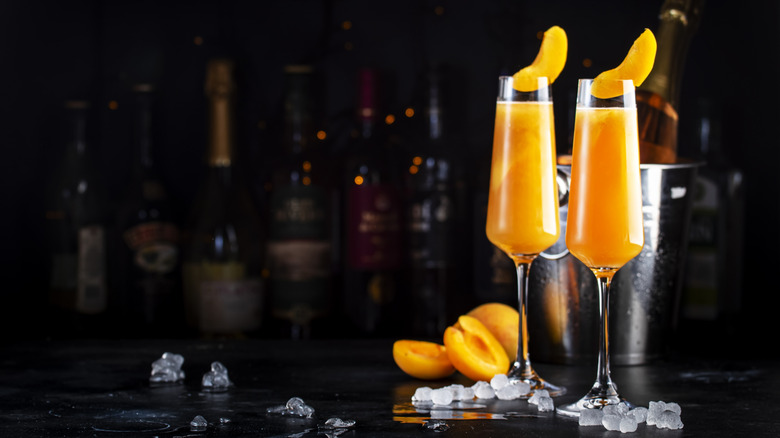
Besides ingredients like vermouth and bitter liqueurs, Italy is also responsible for gifting us an entire cocktail style — the popular spritz. In the 1800s, visitors from the Habsburg Empire found Italian wine a little strong for their tastes, so they began watering it down with a spritz of soda water. Nowadays, a spritz typically consists of prosecco, soda water, and a flavoring ingredient – usually a sweet syrup or Italian liqueur. You can add all sorts of ingredients to a spritz cocktail, and the vast category contains a combination of famed classics and homemade recipes. For the purpose of this ranking, I've had to narrow things down, so let's kick things off with the famous Bellini.
The Bellini was invented in the 1940s by Giuseppe Cipriani, owner of Harry's Bar in Venice, and it's the perfect example of how to create a delicious minimalist cocktail. The original drink consisted of one part fresh Veronese white peach puree to two parts prosecco, and I'd argue it's still the best recipe. An authentic Bellini is fruity with a soft floral aspect, and the sweet peach is balanced beautifully by the dry, crisp sparkling wine. A hugely popular brunch cocktail, in some ways, the Bellini is a victim of its own success. You'll often find Bellinis made with cloying, synthetic-tasting peach syrup or with the wrong peach variety, which can throw off the delicate flavors. A true Bellini deserves a higher place in these rankings; unfortunately, it's frustratingly hard to come by the real deal.
8. Avanvera
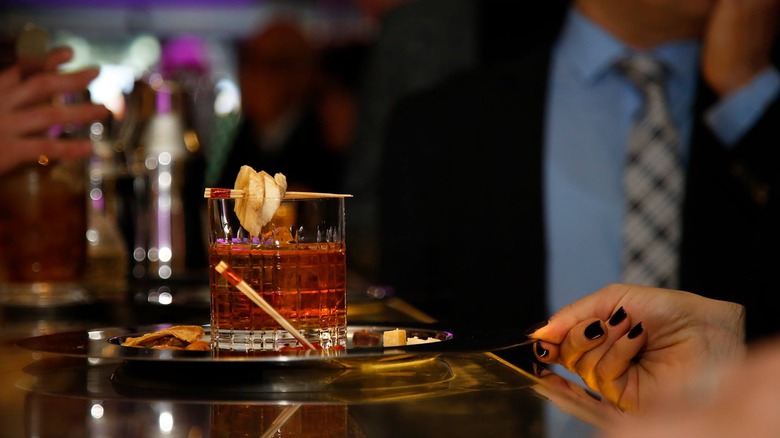
Of all the cocktails we're covering today, the avanvera is arguably the least well-known. It was born out of the Italian Futurist movement of the early 1900s, at a time when creatives were attempting to challenge cultural norms while simultaneously embracing nationalistic ideas. If anything, it's more of an artistic statement than a drink, albeit one with questionably close ties to a protofascist political movement.
With a name that translates to "nonsense" in Italian, the avanvera is made with grappa, sweet vermouth, and Strega — a spicy Italian digestif. It is garnished with banana slices. The exact measurements were left up to the bartender, and the cocktail was traditionally served on a silver platter alongside a mixture of snacks meant to represent both local and colonial produce. It was even accompanied by a performative component, like the banging of a small gong or a spritz of perfume. However, if you strip back the artistic elements and approach the avanvera as just a beverage, it's a pretty tasty cocktail. It's a richly complex drink that can be well balanced with the right recipe that provides just enough sweetness to counter the potent liqueur. In some ways, the avanvera tastes a bit like a lighter, more herbaceous version of a Manhattan, with a touch of banana funk. You're unlikely to find it listed on a cocktail menu, so if you're intrigued by this odd piece of Italian cocktail history, you'll likely have to take my approach and experiment with the ingredients at home.
7. Americano
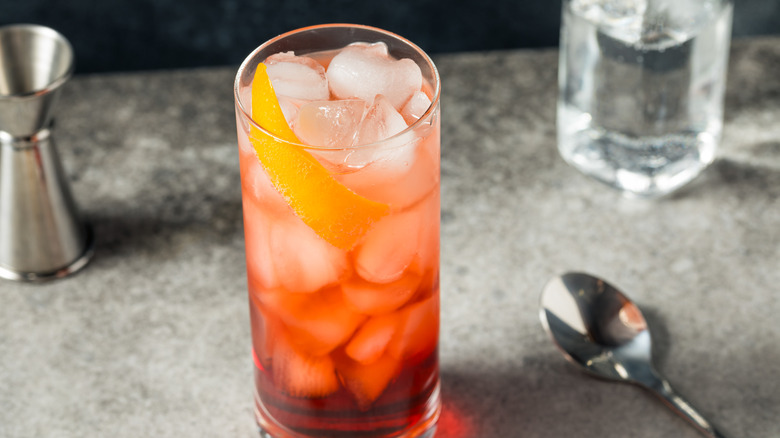
These days, the name Americano tends to make us think of coffee; however, it's also the name of an International Bartenders Association (IBA) cocktail dating back to 1860. The precursor to the Americano is a cocktail called the Milano-Torino, which combines bitter Campari and sweet vermouth – the former being invented in Milan, the latter in Turin. The story goes that an American tourist visiting Gaspare Campari's Milan-based bar found the original recipe too punchy and requested a splash of soda water to lengthen and soften the bold ingredients. Interestingly, this is also how the coffee supposedly got its name, due to American soldiers watering down their espresso during the Second World War.
The official recipe for an Americano is one ounce of Campari, one ounce of sweet red vermouth, a splash of soda water, and an orange slice to garnish. The Americano has the hallmarks of an ideal aperitif – it's light and refreshing with a pungent bittersweet profile that's perfect for a pre-dinner tipple. The cocktail is herbaceous and spicy with fruity touches of bitter orange from the Campari that are lifted by the effervescent soda. However, like most Campari-based cocktails, the Americano isn't for everyone. The astringent liqueur is notoriously something of an acquired taste. Personally, I love it in cocktails, but it took me a little while to come around to its intensely bitter flavor, and I'd still struggle to drink it outside of a mixed drink.
6. Cardinale
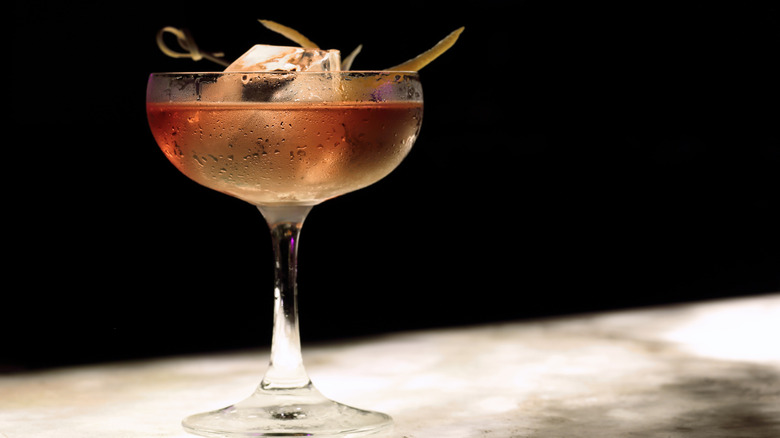
Cardinale is another iconic Campari and sweet vermouth-based aperitif cocktail; however, its origins are disputed, and the original recipe has evolved over time. Some claim the drink was invented at Harry's Bar, the birthplace of the Bellini, but it's more likely to be the creation of Giovanni Raimondo at Rome's Excelsior hotel. It was supposedly named in honor of a cardinal who frequented the bar and ordered the beverage, but there are different opinions on the clergyman's exact identity.
When the coctail showed up in the 1950s, it was made with one part Campari to two parts riesling wine and three parts gin. The modern recipe adopted by the IBA calls for a little extra gin and swaps the wine for dry vermouth. I've made and tried both variants, and if I'm totally honest, I prefer the original a bit more. The modern version is essentially just a drier, sharper take on a classic Negroni recipe – it's a great drink but can be a bit intense for some tastes. I don't mind a leaner Negroni that combines sweet and dry vermouth, but I feel using only the latter unbalances the strong flavors. Conversely, the traditional Cardinale is more refined thanks to the naturally fragrant riesling countering the botanical nature of the gin. Overall, it's a lighter cocktail with a softer texture that makes it a more suitable pre-dinner drink than its modern cousin.
5. Bombardino
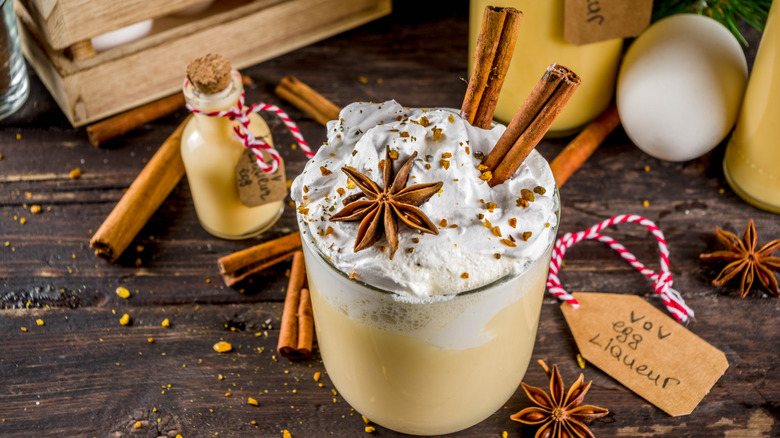
Although many Italian cocktails share similar ingredients, bombardino is something of an outlier. A deliciously warming winter concoction, the boozy, dessert-like drink is unbeatable on a chilly evening or after a day on the ski slopes. It was supposedly invented in the Italian Alps by a ski lodge owner who'd moved to the mountains from the coastal city of Genova. The story goes that the bombardino – a name meaning "the little bomb" in Italian – was first whipped up for a group of skiers taking shelter from a blizzard. Interestingly, it's a tale of origin similar to that of Irish coffee, which was created to warm up travelers stranded by inclement weather at an Irish airport.
You'll find a few different recipes, but the real deal is made by combining rum or brandy with zabaglione. Zabaglione is a kind of boozy Italian custard made from sugar, egg yolks, and sweet Marsala wine, and bears similarities to eggnog or advocaat, which are sometimes used as substitutes. Rich and creamy, bombardino is a modern staple of Italian ski resorts, much like glühwein in Germany and Austria or vin chaud in France. It's often topped with whipped cream and a sprinkling of cinnamon to add a more decadent and spicy element to the tipple. Bombardino isn't quite as versatile as other Italian cocktails, and drinking more than one might be a bit overindulgent, but it's an iconic Italian drink nonetheless.
4. Garibaldi
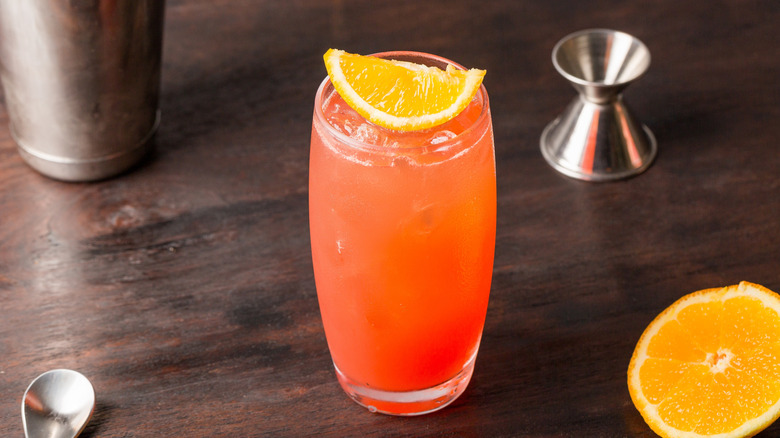
The Garibaldi is one of Italy's older contributions to the cocktail world, dating back to the 1800s. It's named after a revolutionary Italian general called Giuseppe Garibaldi, who, besides being a strong contender for the most Italian name of all time, is credited with unifying Italy into a single kingdom during the 19th century. Garibaldi biscuits were named after him, too, so it's clear he was something of a high-profile figure.
Containing just two ingredients, it's another remarkably simple recipe, belying a flavor profile that offers more than the sum of its parts. The official IBA recipe calls for an ounce and a half of Campari built in a highball with four ounces of freshly squeezed orange juice, but you can tweak these ratios depending on your taste. The sweet juice helps balance the robust Campari, while the liqueur's bitter orange aspect blends seamlessly with the fresh fruit component. While it's been around for centuries, the Garibaldi was popularized in later years by Dante's Bar in New York, where bartenders use a milk frother to aerate the orange juice. The technique is a welcome addition to the recipe, as it helps soften the weighty bitterness of the Campari, lifting the texture and making the intensely flavored liqueur notably more palatable. Despite its strong flavors, the Garibaldi is relatively low in alcohol for a cocktail, making it an ideal afternoon sipper and an excellent aperitif.
3. Hugo Spritz
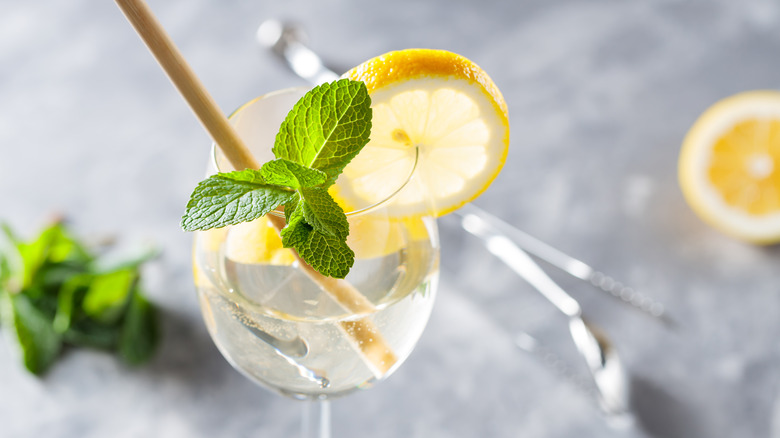
As I mentioned earlier, I felt it was necessary to narrow down the number of spritz-style cocktails on this list due to the sheer volume of options. However, despite being pretty new as far as cocktails go, the Hugo spritz has become increasingly popular since it was invented in 2005. This refreshing cocktail is the brainchild of a bartender called Roland Gruber, who perfected his recipe while working in the town of Naturno in South Tyrol, an Italian region bordering Switzerland and Austria.
The Hugo spritz calls for half an ounce of elderflower liqueur, four ounces of prosecco, and an ounce of soda water, garnished with a lemon wheel and mint sprigs. The original recipe called for lemon balm before Gruber decided elderflower was a better fit. Interestingly, St-Germain was the first commercially released brand of elderflower liqueur, but it didn't hit the scene until 2007, so it's likely Gruber would have had to make his own. It's up to you whether you want to take the purist approach, but I recommend using St-Germain, as it's pretty readily available and works well in numerous mixed drinks. The Hugo spritz is an extremely refreshing aperitif with a soft sweetness that's well-balanced by the dry, fruity sparkling wine. The floral aspect of the elderflower is never overpowering, and it's a great option for those who find fruit-forward spritz cocktails too sweet, and vermouth or bitters-based cocktails too pungent or overwhelming.
2. Aperol Spritz
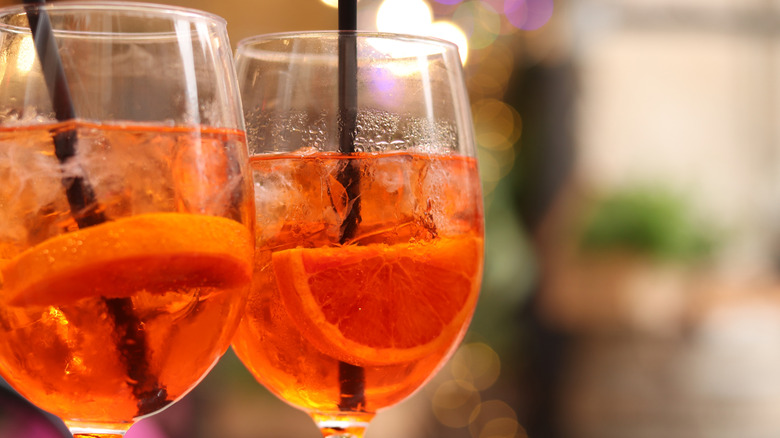
The birth of the Aperol spritz marks the time when the drink style transformed from soda-diluted still wine to a fully-fledged cocktail. It wasn't long after the invention of commercial Italian bitters in the early 20th century that bartenders began mixing them with spritzed wine to create complex yet refreshing aperitifs. The employed bitters were typically region-dependent, with recipes containing brands like Aperol, Select, Campari, or Cynar. By the 1970s, prosecco took the place of still wine to give us the world-famous cocktails we know today.
While I'm partial to most takes on the spritz cocktail, I feel that the Aperol spritz is the best of the bunch. It's incredibly easy to make, requiring just two parts Aperol, three parts prosecco, and one part soda water – all built over ice in a wine glass and garnished with an orange slice. An unbeatable drink on a hot summer day, Aperol is lighter and sweeter than Campari, making it a more approachable cocktail overall. It boasts a similar orange-forward profile, but it's more delicate and nuanced, and has nearly half the alcohol content, so you don't have to feel guilty about having a second glass. Plus, if you still find the taste of Aperol slightly too bitter, you can always swap the soda water for lemonade to make it more palatable.
1. Negroni
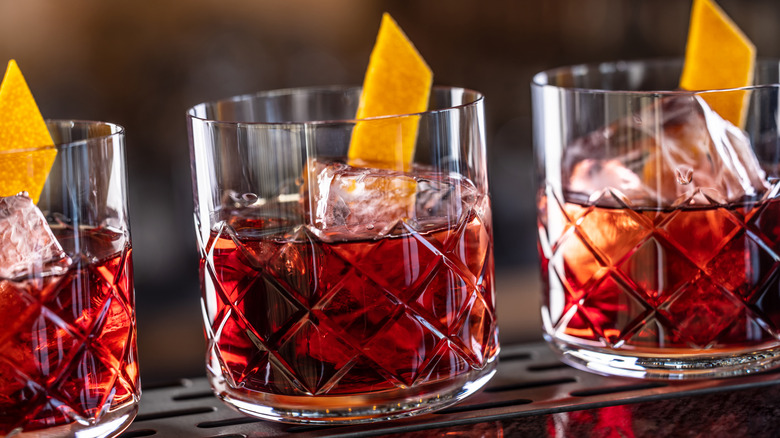
Out of all the Italian cocktails, it's arguable that few have impacted and inspired the modern cocktail scene as much as the Negroni. A short drink made with equal parts gin, Campari, and sweet vermouth, and garnished with orange peel, any cocktail bartender worth their salt knows the recipe like the back of their hand. Negroni is said to have been invented in 1919 by Fosco Scarselli, a bartender at Florence's Caffè Casoni. A guest, who some name as Count Camillo Negroni, felt the classic Americano cocktail wasn't strong enough for his tastes, leading Scarselli to swap the soda for gin.
The Negroni is a magical cocktail that manages to be decidedly simple yet wonderfully complex. The drink transforms with each sip, with Campari leading the charge before giving way to the sweet vermouth. Meanwhile, the botanical gin holds everything together, fortifying other ingredients. The Negroni has inspired countless spin-offs, some of which have become contemporary classics themselves. The Boulevardier exchanges gin for bourbon for a richer profile, the Rosita adds a herbaceous twist with tequila blanco and a touch of dry vermouth, while the Negroni sbagliato freshens and lengthens the base recipe by subbing the gin with prosecco. The Negroni is not only the pinnacle of Italian cocktails, but it also sets the bar of what a great cocktail should be – simple, delicious, inspiring, and quite simply timeless.
Methodology

Some rankings are easier to make than others, and ordering those listed above was no mean feat. While taste was an obvious factor, they're all delicious in their own right and well worth making or ordering the next chance you get. These are all cocktails that I have personally made and tasted over my lengthy career as a cocktail bartender, but I appreciate that taste is subjective. I find this is especially true when it comes to Italian cocktails, as many contain base ingredients that many find too strong or bitter.
To that end, I also made my choices based on the availability of each cocktail and its ingredients, and the consistency of quality you're likely to experience when ordering one from a bar or restaurant. Versatility was a factor, too, both in terms of how the recipes can be tweaked to taste and how and when they can be enjoyed. I also considered the impact each drink has had on the modern cocktail industry and how it's influenced the creativity of bartenders around the world.