

The Type Of Salt To Avoid When Salting Pasta Water
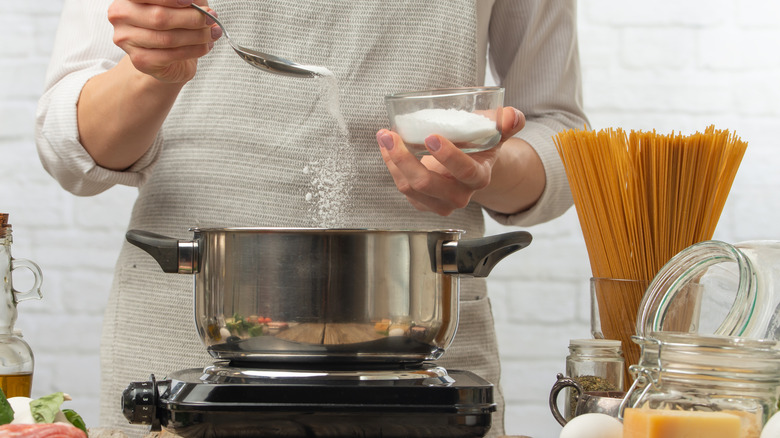
If you haven't been salting your pasta water, it's about time to make a change. Salting the water not only adds flavor, but it also slows the starch gelatinization process to keep pasta from becoming gummy or sticky. While it sounds simple enough (and it is), you'll want to avoid using certain types of salt, particularly those with lower sodium levels.
One salt that should be avoided is Himalayan salt since it contains less sodium per serving and has an elevated price point compared to table salt. The beloved pink salt mined near the Himalayas in Pakistan is known to contain a multitude of trace minerals — including iron oxide which gives the salt its quintessential pink color — but, it generally comes in rock form and is better used as a finishing salt for steak or adding into other dishes. Though it does have a more complex flavor profile than other salts due to its natural harvesting and minimal processing, it's subtle mineral flavors will be hard to perceive in the cooked pasta, and much of the salt will remain in the cooking water anyway.
For a purer-tasting salts that are typically more economical, you could opt for kosher or fine sea salt instead. Even table salt will do. All-in-all, salting pasta water with these higher sodium salts will provide a nice foundation for pasta to pair with flavorful sauces.
Be generous when adding salt to pasta water
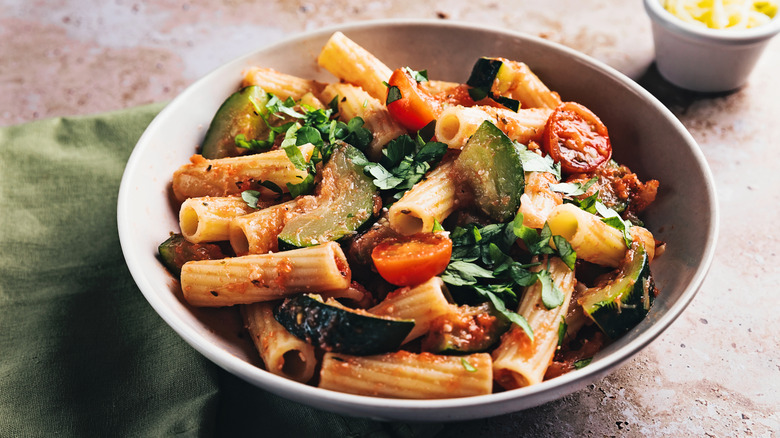
Before adding spaghetti, rigatoni, or an array of other fun pasta shapes into the pot, you'll want to salt your cooking water, generously. This is yet another reason to keep low-sodium (but, even gourmet) salts like Himalayan salt on the shelf for another occasion. It might sound like a lot, but for every five or six quarts of water used to boil a pound of pasta, you can add up to two tablespoons of salt – even if you're using options with higher concentrations of sodium. Just be sure to add salt at the right time.
The pasta will only absorb a portion of the salt, meaning that the generously water will help enhance the pasta's neutral taste in dishes. With well-seasoned water, your pasta will also be able to achieve a nice al dente texture that will make the perfect canvas for a variety of pasta plates. Think: salty and creamy carbonara or hearty ragu alla bolognese with tagliatelle. Whatever the recipe, you'll be glad you salted your pasta water first — and didn't waste any low-sodium or specialty salts in the process.