

The Types Of Steak Most Likely To Cause Flare-Ups On The Grill
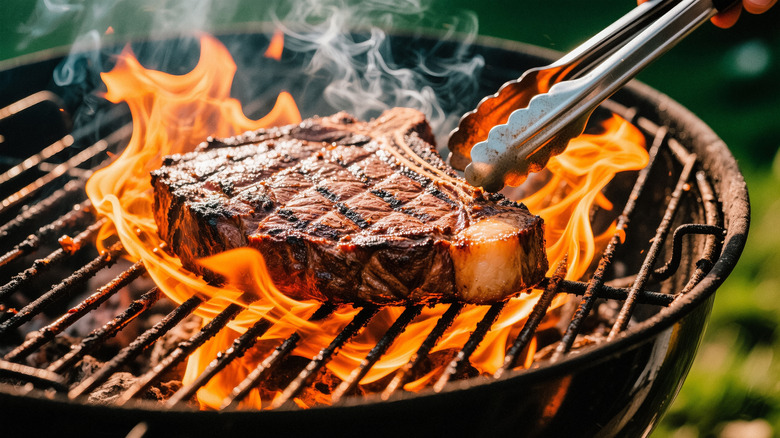
If you've ever cooked a steak on the grill, you've likely encountered a flare-up — when large flames shoot up to engulf your food — at some point. And if you grill steaks enough, you may have even noticed that certain cuts of steak seem to cause more flare-ups than others. We spoke with Michelle Wallace, renowned pitmaster, TV personality, and owner and founder of b'tween sandwich co. in Houston, to learn more. "[Flare-ups] happen when the fat starts to render and drip on to the hot coals which can cause flames," she says. "This happens more when grilling particular cuts of meat. Those that have higher fat content can produce more flare-ups."
Not surprisingly, a ribeye, "known (and loved) for its high marbling/fat content" (and the most fatty steak cut you can buy) tops chef Wallace's list of cuts likely to cause a flare-up, along with "New York strip, Picanha, and even skirt steaks." Other fatty steak cuts to look out for when grilling include the tomahawk, porterhouse, chuck, flat iron, and flap. That doesn't mean you should avoid grilling these cuts of steak altogether, though there are a few things you should keep in mind.
How to minimize flare-ups when grilling fatty cuts of steak
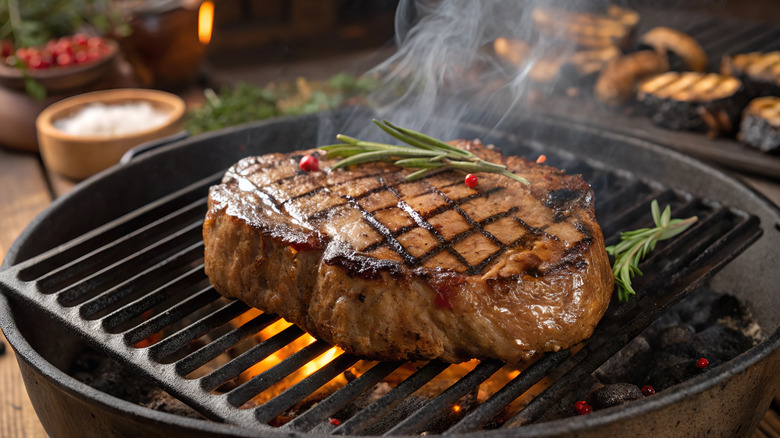
Chef Wallace does have a few recommendations on precautions to take when grilling fatty cuts of steak. which include "trimming excess fat from the steak before grilling, use a two-zone fire (hot and cool side) to be able to move steaks away from the flare-up, and ensure you start with a clean grill." Other tips to best avoid flare-ups when cooking steak on the grill include avoid grilling in high winds, waiting to add pepper until the steak is cooked, and patting your steak dry if you use a marinade before putting it on the grill.
It's important not to disregard grill flare-ups if they happen, even though they look cool — if you do, you'll just end up with a charred and burnt piece of steak, and possibly, a dangerous grease fire. Move your steak to a cool side until the flames subside enough to continue cooking as normal. You can also put the cover on the grill, thereby depriving the flames of necessary oxygen. Do not, however, try to extinguish the flare-up with water, as it can cause the grease fire to spread. It's also a good idea to have a fire extinguisher on hand, just in case.