

Your Ahi Tuna Isn't Searing Properly, And Here's The Likely Problem

The flaky, buttery interior and caramelized coating of seared tuna steaks might just be enough to land them on your weekly dinner rotation for life. However, if you find that your fish always has a chalky texture and overly crisp exterior, this may have less to do with the quality of the meat and everything to do with how long you cook it.
There's nothing like hearing the sizzle and pop of tender fish searing in a pan, but don't let the joy of that experience make you prolong it more than necessary. Ahi tuna is delicious when seared, but only for a short amount of time. Overcooking is one of the biggest mistakes you can make when searing ahi tuna, and it may cost you the integrity of the entire steak. Despite its buttery taste, the fish has a low fat content that prevents it from retaining moisture when it encounters excessive heat. Cooking it quickly ensures that you end up with a center that's perfectly tender and flaky.
Ahi tuna also has fragile connective tissue, so it doesn't take much heat to turn the once-delicate flesh rubbery. As you cook the fish, the proteins lose their structure and bind together to create a new form. When met with excess heat, these proteins will tighten up even further, resulting in an overly firm texture.
Time your tuna for the perfect ahi steaks
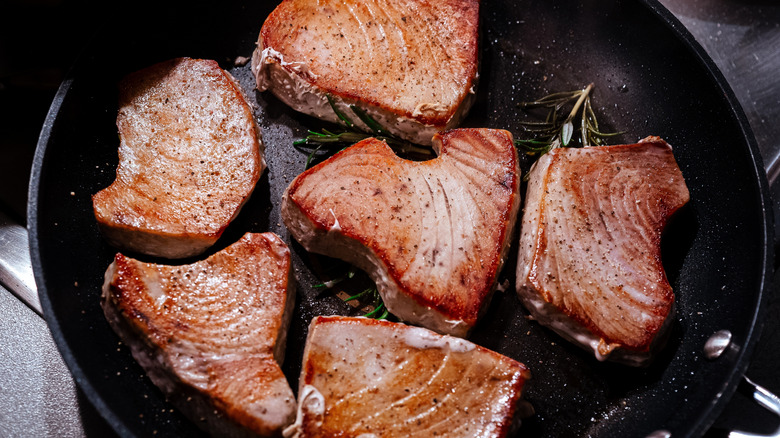
Your fish's cooking time will depend on the size of the steak and how well-done you want it, but browning your seared ahi tuna for about one or two minutes per side is a good place to start. Excessive heat is the enemy of tuna steaks, but that doesn't mean they should be cooked at a low temperature. The slightly caramelized exterior and crisp edges are integral to this dish, and to achieve them, you'll need to sear the meat at a medium-high or high temperature.
To make sure your pan is hot enough, sprinkle in some water before adding any oil and make sure the water forms balls that dance around on the surface and eventually dissipate. Before removing your tuna from the skillet, check for an even, golden-brown coloring and a pink center.
The seared steaks will have a mildly sweet, meaty flavor that doesn't need much sprucing up, but you can always go beyond salt and pepper. When prepping, don't marinate your tuna steaks for too long, especially with acidic ingredients. Excessive marinating can turn the fish from tender to tough, and acidic ingredients will break down the connective tissue. Keep the marinade simple with herbs, oils, and spices, but leave salt out until after cooking. The mineral will draw out what little moisture your tuna has, resulting in a chalky finish.