

The 2-Second Freshness Check You Need To Try Before Buying Berries At The Grocery Store

Part of the magic of fresh berries is their tender brevity. There's almost nothing better than roasted berry and buttermilk pancakes, some stirred into yogurt, or just straight, by the handful. They usually have a day or two when they pop, tart and firm, but then, sometimes overnight, they've slipped into decomposition. Opening your carton of berries and discovering layers of moldy mush is disappointing, costly, and wasteful. However, incorporating this quick preventative measure into your berry-shopping routine can help you avoid this unpleasant scenario. It's easy: Next time you're making your selection, give the carton a gentle flip. Turn it upside down and notice how the berries behave.
If you bring home berries that are already compromised, all the best fresh berry storage hacks in the world won't make a difference. In an ideal container, you'll see the fruit tumble and shift easily, showing off berries that are still plump, dry, and resilient. But if you spot berries clinging to the plastic or pressed into the bottom, or see stains and sticky residue, that's a warning sign. Stuck berries often indicate that there has been some leaking, bruising, or early-stage spoilage. Even the most minor issue with the tiniest berry in the bunch can set off a downward spiral within the ecosystem of the entire container. This easy-peasy two-second berry freshness check is a no-brainer in the grocery store — just a quick upside-down flip of the carton.
Why good berries go bad
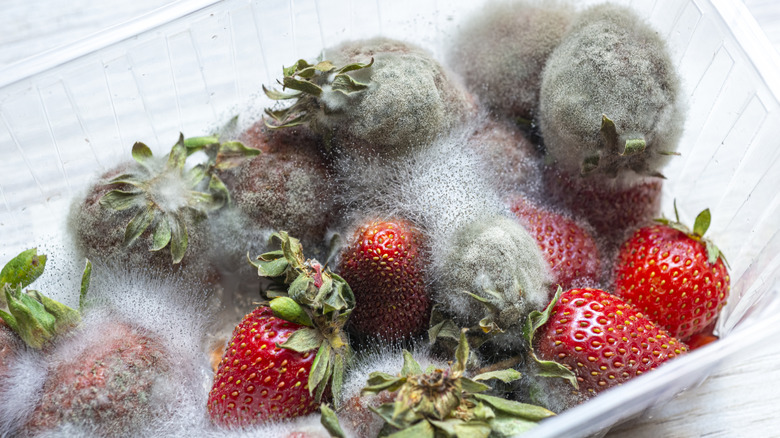
Berries, in their fleeting fragility, are notorious for how quickly they slip from perfect to past their prime. That narrow window of ripeness is owed to their thin, edible skins and high water content, both qualities that make them irresistibly delicate and especially vulnerable to damage. This is because of the structure of the berry skin's cell walls, which are built to provide just enough structure to hold in water and sugars, but not much more. As berries ripen, the pectin in their cell walls begins to break down, a natural process that leaves the fruit soft, vulnerable, and ready to puncture and collapse from the slightest push. So, unlike firmer fruits, berries are easily crushed, and once ruptured, their insides begin to leak, a process that can't be reversed. Even the seemingly gentle pressure of berries pressing against each other inside the carton is enough to cause bruising and breakage, especially during transport or when stacked on store shelves.
Moisture compounds the problem. Water, from condensation, leftover field dew, or even a single leaky berry in the bunch, can seep into tiny crevices in the fruit's skin. This breaks down the skin's natural defenses but also creates a damp, enclosed environment where mold and bacteria flourish. That's when you'll see berries glued to the carton's bottom, often surrounded by telltale streaks of juice or even patches of fuzz. Essentially, the stickiness is a sign that at least one berry has begun to break down, and the rest are likely to follow in short order. A container full of taut, uncompromised berries that roll easily and look dry and unblemished is your best bet for bringing home a taste of summer that lasts long enough to enjoy and incorporate into these 23 berry recipes.