

12 Earl Grey Teas, Ranked
We may receive a commission on purchases made from links.
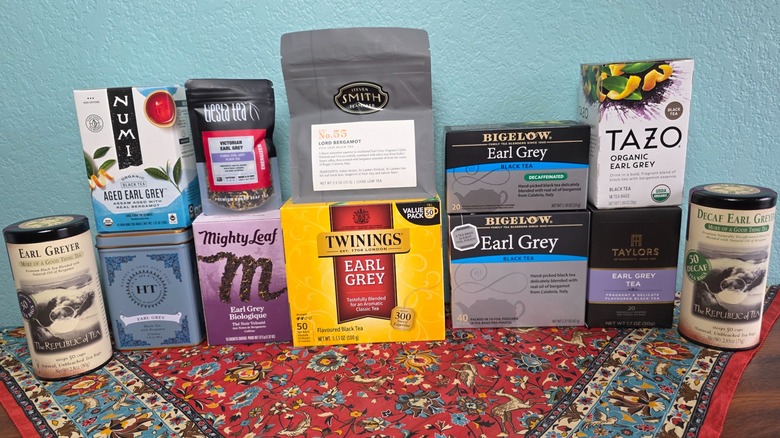
Earl Grey is a unique tea that is full of flavor and tends to have a place in many tea lovers' collections. While a bad Earl Grey can turn you off to the genre altogether, a really good one will make you a fan for life. Tastes differ, but a side-by-side taste test uncovered some of the nuances of what's available and which ones rank higher and lower based on different attributes and how well they work black or with add-ins like sugar and milk.
While the origin of Earl Grey tea is a little hazy, Twinings claims to be the first company to make it commercially. The story goes that British Prime Minister Charles Grey II gave the company the recipe in 1831. Grey had supposedly received a gift of the tea and its recipe in return for his envoys saving someone's life in China. The tea marries the flavors of black tea and bergamot. While the fruit is mostly inedible, the peel of this strong citrus fruit is prized for its flavor and delightful scent.
While Twinings supposedly has the original recipe, that doesn't mean other companies haven't improved upon it. Hopefully, my ranking of Earl Grey teas can give you an idea of what's available and which ones you might enjoy most.
12. The Republic of Tea Earl Greyer
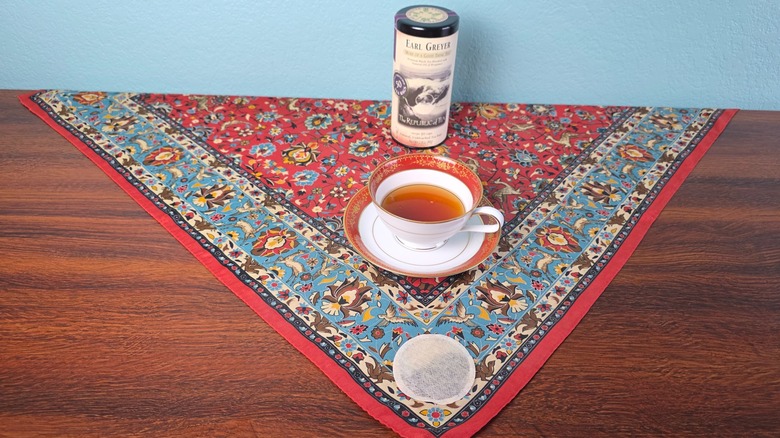
The Republic of Tea has made a lot of flavors since it was founded in 1992. The Republic of Tea Earl Greyer has two ingredients only: Chinese-grown black tea and natural bergamot oil. It's a more expensive brand, with a canister of 50 loose round tea bags costing $12.99 at Whole Foods. This brand does well with fruity flavors like ginger peach (a personal favorite). Unfortunately, the strong, bitter flavor of Earl Greyer was immediately off-putting, and I didn't like the aftertaste no matter what I added to it.
The teabags smelled very strongly of medicinal bergamot, with an intriguing greenness to the scent profile. However, that first sip was a travesty. I was hit with tannins and bitterness and nothing else, like drinking straight dark, bitter coffee. After giving my mouth a chance to recover, I noticed that it left it feeling cool and refreshing, which is the only positive thing I have to say.
Sugar helped cut the bitterness a little while I was drinking it, but then the aftertaste was even more bitter. It was finally palatable when I added milk; this milky version might satisfy someone who likes their tea super strong. However, the tannins in the aftertaste were like accidentally eating the bitter parts from a pecan, and they overtook my entire mouth.
11. Taylors of Harrogate Earl Grey Tea
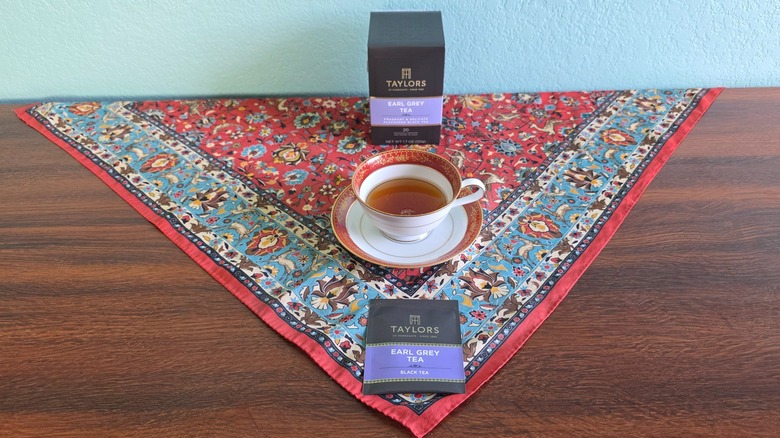
Taylors of Harrogate is a family business that has been making tea in England since 1886. So, I expected Taylors of Harrogate Earl Grey Tea to be very high quality with so much expertise behind it. The black tea leaves come from Africa and India, and there is natural bergamot and other natural flavorings. Plus, the price is right at $3.93 at Walmart for a box of 20 tea bags. Unfortunately, I ended up rating it low because I could barely tell it was Earl Grey tea until adding sugar and milk. Still, it was far more drinkable than the one from the Republic of Tea.
I wasn't too optimistic when I noticed the teabag smelled like black tea and something sweet but not at all like bergamot. After tasting it, it confirmed it didn't taste like bergamot. Consumed black, it tasted pretty much like black tea, but was extremely tannic and bitter.
Sugar seemed to bring out the bergamot a little more in this one, but it was faint. Still, the bitterness was overwhelming. Milk improved it considerably, and I'll have to remember to add milk if I drink this in the future. It makes the flavor of the black tea richer and helps bring the bergamot notes forward. However, I was still left with a lot of bitterness in my mouth afterward.
10. Harney & Sons Earl Grey Tea
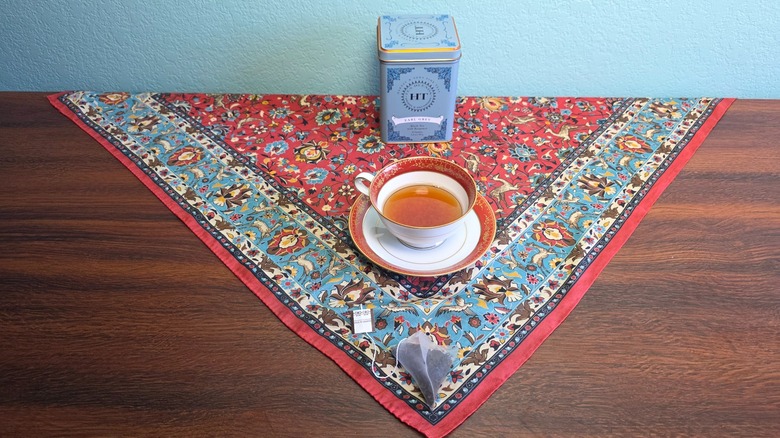
As you can probably guess from the name, Harney & Sons Earl Grey Tea is made by a family-owned company. While the family has been making tea since the 1960s, this company has only been around since 1983. I liked that the tea blend here contains both black and oolong teas. Plus, it had that all-important natural bergamot oil to attempt to get the flavor right. I found this tin of 20 tea sachets at Walmart for $5.42. The tins themselves are a work of art that I love displaying on my tea shelves. Unfortunately, the beautiful tin hides a lackluster tea inside.
Harney & Sons didn't have a strong scent beyond black tea, but the tea flavor was very strong, bitter, and tannic. However, there was very little bergamot flavor. I'd already vowed not to get it again before doing this taste test, as this tea almost turned me off to black teas and Earl Grey altogether. With sugar, it was better, tasting like generic black tea with a bitter undercurrent. Adding milk brought out the bergamot more, but it still mainly tasted like black tea with just a little something extra. At least with this one, the bitterness wasn't so pronounced with the milk, and it was overall more pleasant, allowing me to place it higher on the list than Taylors of Harrogate.
9. Mighty Leaf Organic Earl Grey
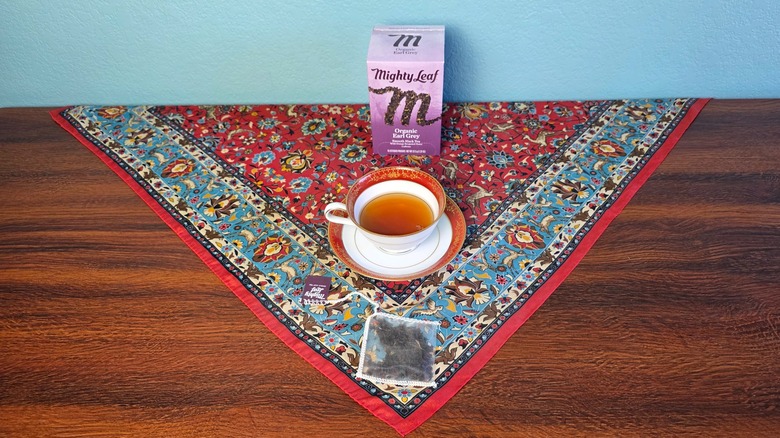
A tea house called Tea & Company created Mighty Leaf in San Francisco in 1996 and also sells tea under the Tea & Company name. There aren't too many surprises on the ingredient list for Mighty Leaf Organic Earl Grey, as it contains simply organic black tea and organic bergamot oil. At Whole Foods, you can find a box of 15 hand-stitched tea bags for $9.49. This one definitely tasted like Earl Grey all the way. However, beyond the hand-stitched tea bags, this one wasn't outstanding until I added milk.
The bags are certainly unique, with a serge stitch all around the edges and even forming the string. They smelled strongly of bergamot with a medicinal tinge. The flavor was strong and black tea-forward, with the bergamot flavor hitting mainly at the end. The good news was that, despite being strong, it was only slightly bitter. Sugar made it worse and more bitter. Milk, however, lessened the bitterness and brightened it, reminding me of the citrus nature of bergamot.
8. Bigelow Earl Grey Decaffeinated
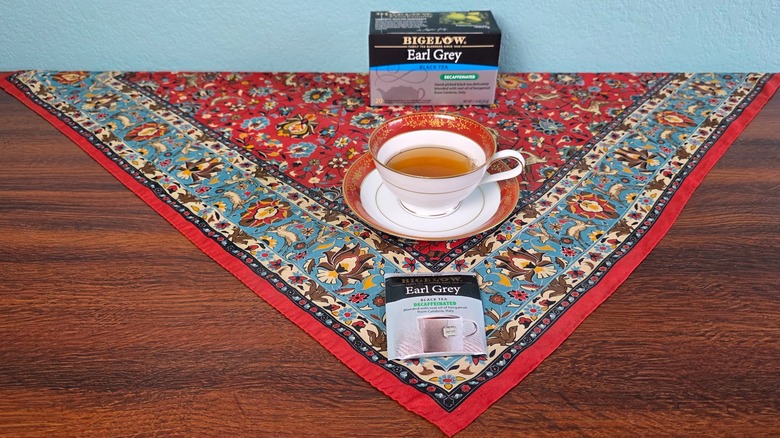
In addition to the regular Bigelow Earl Grey, I wanted to try the Bigelow Earl Grey Decaffeinated version. After all, sometimes you want to relax with a cup of Earl Grey tea after you've cut yourself off from caffeine for the day so that you can sleep well. The tea is black, hand-picked, and infused with natural bergamot oil from Calabria, Italy. It also costs a lot less than the caffeinated version at just $3.52 at Walmart. Granted, it also has half as many tea bags (just 20). The bergamot gave this tea a cooling effect, which made it the first stand-out tea on the list — quite nice for decaf.
The smell of the bergamot in the decaf Bigelow was even more prominent than the original Bigelow before brewing. But it was weaker-tasting than the original Bigelow, and the black tea left a slight bitterness as an aftertaste. However, it was not overly tannic, and the cooling effect of the bergamot was a great addition to the flavor profile, too.
I felt like sugar improved the overall flavor of this one, distracting from any bitterness. Milk made it taste even better, although the milk made the bitterness more prominent. So, it's a tradeoff.
7. The Republic of Tea Decaf Earl Greyer
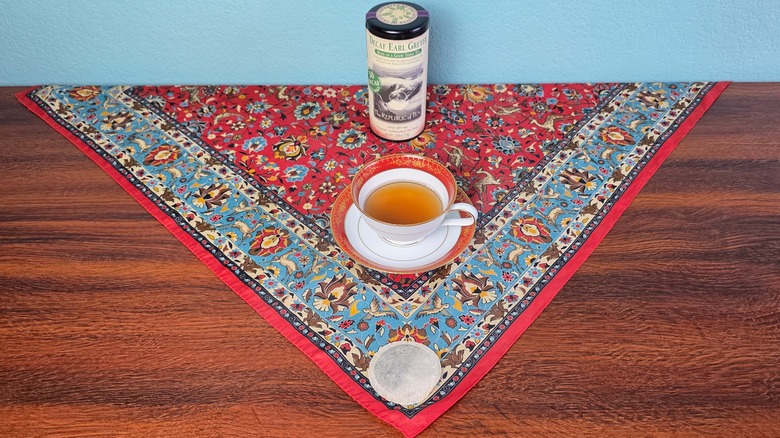
Like its caffeinated counterpart, The Republic of Tea Decaf Earl Greyer is made from simple ingredients: black tea and all-natural bergamot oil. Interestingly, it costs about twice as much, as I found it alongside the caffeinated version at Whole Foods for $14.79. It was also unexpectedly better than the full-caff version from The Republic of Tea. In fact, this was the late-night decaf I chose to relax with at the end of a day filled with testing all these Earl Greys.
When compared to the full-caff Earl Greyer, this one smelled far more medicinal and green before brewing. The flavor was highly palatable, unlike the full-caff Earl Greyer. It initially tasted a little flat, but then the bergamot flavor came in strong, leaving the mouth with a huge cooling sensation. There was a little bit of bitterness around the edges, but that cooling sensation was nice.
Adding sugar made it quite pleasant and more well-balanced, with the tea notes coming to greet the bergamot like old friends. The bitterness was still present with sugar but was subdued. I especially liked the smoothness of the first taste of it with milk. It still had that pleasant cooling aftertaste with the milk. This is an excellent contender for making decaf London fog lattes.
6. Steven Smith Teamaker Lord Bergamot Earl Grey
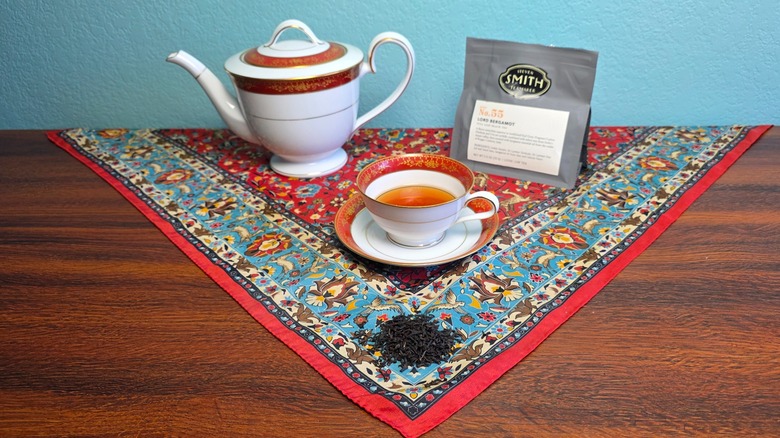
The founder of Steven Smith Teamaker co-founded Stash and then Tazo before selling the latter to Starbucks. Steven Smith Teamaker Lord Bergamot Earl Grey tea certainly has a commanding name, which is fitting for such a high-end tea. The description immediately sets you up for something different, as it contains Italian bergamot oil and three types of black tea: assam from India, dimbula from Sri Lanka, and uva from Sri Lanka. A $10.39 bag of loose-leaf tea gives you 2.5 ounces of tea. Lord Bergamot was intensely strong and smooth, and the artistry was undeniable. However, it was mainly a standout when served black.
This one smelled strongly of bergamot, with a medicinal and methylated tinge. The flavor of the tea was surprisingly dark and strong. At first, I didn't think I liked it, but then I realized that its intensity is its best attribute. Lord Bergamot was powerful and demands a tea that's as bold and tenacious as he is. The bergamot note was also extremely distinctive, and the tea was extremely smooth despite its boldness. Unfortunately, sugar made it very bitter. Milk cut the bitterness, but this tea was at its best when black.
5. Tazo Organic Earl Grey
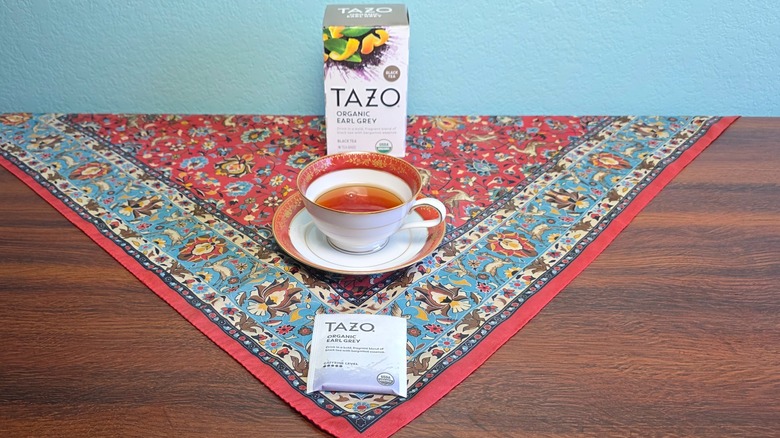
Steven Smith founded Tazo in 1994 in the U.S. after traveling the world and realizing just how interesting teas could be. Tazo Organic Earl Grey Tea has only two ingredients: organic black tea and organic bergamot oil. I found a box of 16 tea bags at Target for $4.29. This was a strong tea with a standout flavor, especially when adding sugar and milk. So, I understand why Starbucks used to carry it.
These Tazo tea bags smelled strong, medicinal, and citrusy but also like black tea. The powerful flavor of the bergamot was nice and intense, while the tea was super dark and slightly bitter.
Sugar improved the flavor quite a lot, making the tea strength a positive and cutting a lot of the bitterness. With sugar, the citrus quality of the bergamot also came through. Then, adding milk on top of that made it taste extra high-quality, smooth, and low on bitterness, making it a good contender for a London fog latte. When Sierra Winters ranked 18 Tazo tea flavors, she placed Earl Grey lower on the list because it was not nearly as good black as it was with sugar and milk, and I agree.
4. Bigelow Earl Grey
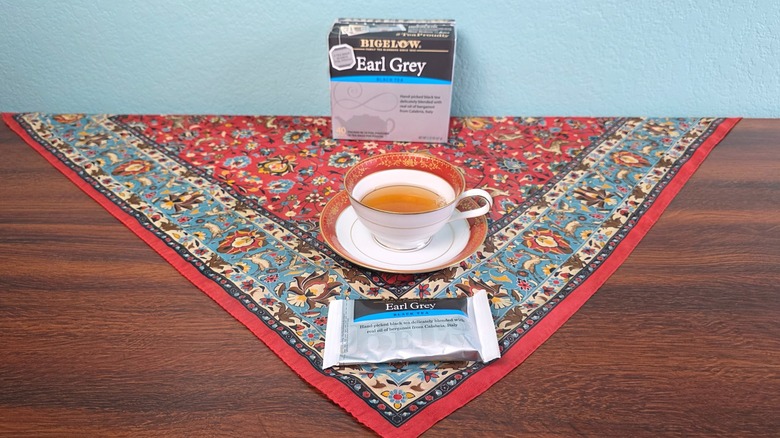
Now, we reach the top four standouts, which taste great no matter how you take your tea. Bigelow is a family company that has been making specialty teas in the U.S. since 1945. The black tea for Bigelow Earl Grey is hand-picked, while the bergamot oil is sourced from Calabria, Italy. It's an easy find at Walmart for $5.84 for a box containing 40 tea bags. Oddly enough, there are four tea bags in each foil pouch. So, if you don't drink it often, it won't stay too fresh. It was a well-rounded tea, and the cooling quality of the bergamot made this one memorable.
Fresh out of the bag, the smell of bergamot was very sharp and almost medicinal, but not in a bad way. Tasting it, the black tea and bergamot worked well together. The bergamot oil was strong enough that it left the type of cooling after-effect you get from a strong mint. It was smooth, and the tannins weren't overwhelming. However, the black tea left a temporary bitterness at the back of my tongue.
Adding sugar made it less special, as it seemed to curb the cooling effect. Interestingly, though, it took on a whole new profile when I added milk. It seemed brighter. Thus, I think this is a great candidate for a London fog latte.
3. Numi Organic Aged Earl Grey
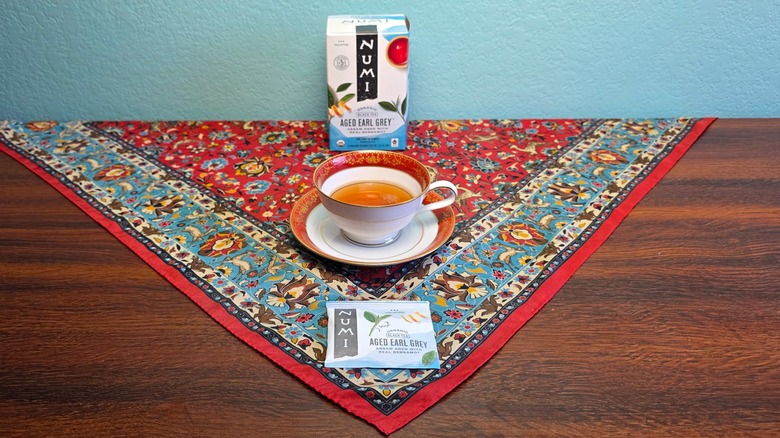
A brother and sister duo created Numi in California in 1999, and it has a lot of interesting flavors to choose from. Numi Organic Aged Earl Grey certainly had me curious, promising organic aged assam black tea as well as organic bergamot oil. I located it at Whole Foods, where it was priced at $6.29 for a box of 18 tea bags. Numi is rich and tastes great no matter how you drink it, with the smoothness being a standout quality.
The smell was strongly bergamot, with a little herbal greenery around the edges that reminded me of mint. I was not sure what I expected from aged tea, but it was strong and smooth without much bitterness. The bergamot also blended in really well, with a pleasant cool rush toward the end. It was very well-balanced and strong at the same time.
Sugar really brought out the brightness of the citrus notes and wasn't bitter at all. Milk made it even smoother, while maintaining the citrus brightness. It was a close race between Tazo and Numi, but the brightness of Numi's tea with sugar and milk edges it into a higher rating.
2. Twinings Earl Grey
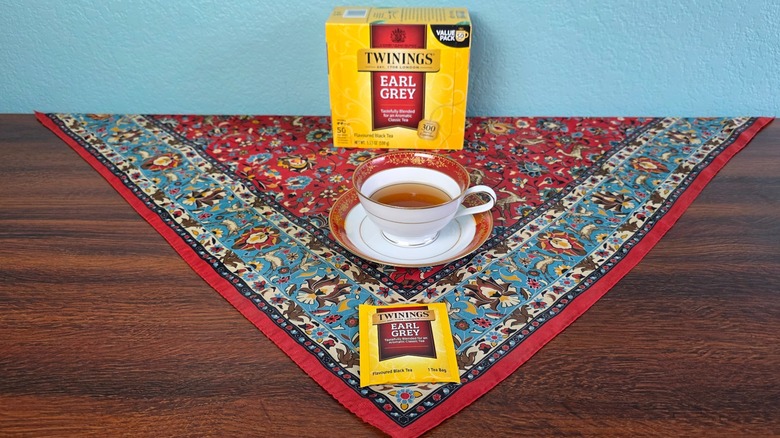
The history of Twinings goes back 300 years, which makes the company masters at what it does. As such, I used Twinings Earl Grey as my starting point for tasting. This tea combines black tea, bergamot peel, and other natural flavors, and 100 tea bags are available from Target for just $6.99. It was a standout for its classic, smooth flavor that tasted good no matter how I made it and easily won in side-by-side taste comparisons.
When I opened up the box, bergamot hit my nose front and center. The flavor was well-balanced, with both the black tea and bergamot working together seamlessly. It was not too bitter or too tannic and was overall a very smooth, mellow blend. The bergamot left behind a pleasant aftertaste of citrus oil.
Sugar didn't make it better and almost tasted the same. The same was true for adding milk, but I felt it made the aftertaste a little bitter. Honestly, I'd rather drink this one black. There's a reason this one has stood the test of time; it's great exactly as it is and tastes good with everything.
1. Tiesta Victorian Earl Grey
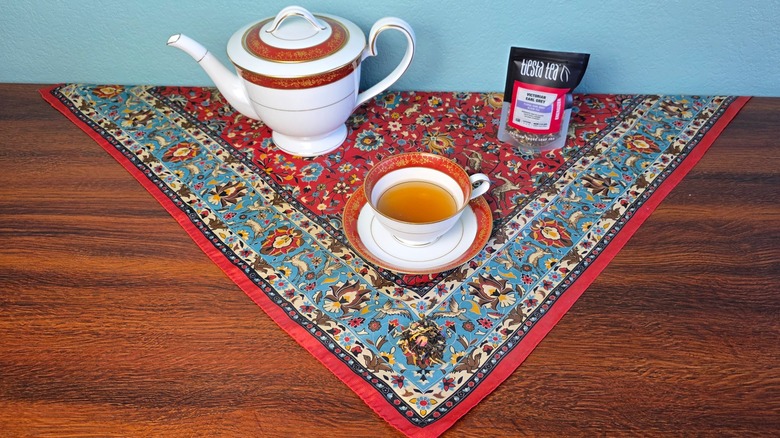
I recently discovered Tiesta and had just gotten a bag of its Victorian Earl Grey in the mail when I decided to do this taste test. Everything I've tried from this company so far has been amazing, and I got this generously sized loose tea sample that makes six to 10 cups for a mere $2.19. So, I was expecting this one to be a strong contender. I was especially intrigued with it being a floral Earl Grey. Rather than listing bergamot as a main ingredient, it lists lavender, marigolds, rose petals, and cornflowers. Bergamot is likely part of the "natural flavors" ingredients. Rather than simply using black tea, the brand also adds maté tea. This was an instant favorite the moment I tasted it, standing out in flavor, smoothness, lack of bitterness, and how well it tasted no matter what I added. The smoothness and extra floral notes pushed this one into the first place position.
The loose tea smelled mainly of lavender with only a small hint of bergamot. The flavor was also overwhelmingly lavender, but the citrus bergamot flavor comes out in the finish. It was a smooth tea overall without bitterness, and the lavender added something special. It tasted as good with sugar as without, but the sugar brought out the bergamot notes more. Then, adding milk brightened it even more. This one came out on top not only because the florals added something extra but because it was phenomenal tea.
Methodology
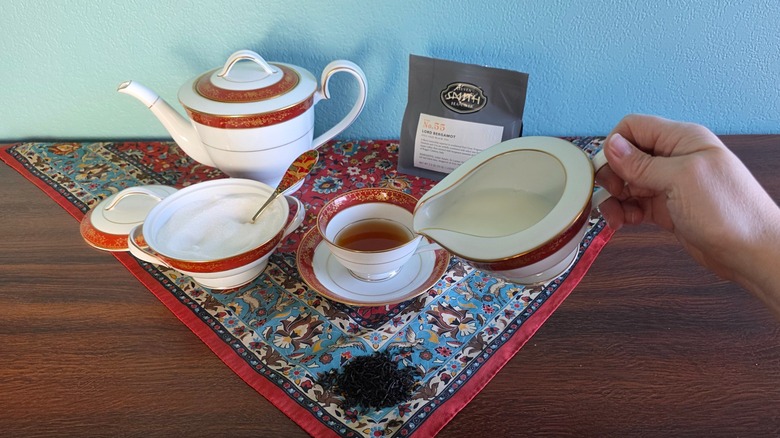
To rank Earl Grey teas, I raided my cupboard and perused local grocery stores to get a good sampling of the teas from different brands. I brewed each one and tried them all plain, then tried them with sugar and with milk. Then I tried them all side by side in a blind taste test. When ranking them, I considered smoothness, bitterness, tannin levels, bergamot flavor, the taste of the tea, and any extra flavors I detected. I also noticed whether they tasted good black, with sugar, and with milk. Deciding the ranking was challenging for all but the top four. So, I ultimately made a spreadsheet and ascribed points based on how they fell in the various taste tests and whether they tasted good black, with sugar, or with milk.