

The Ground Beef Shortcut That Makes Hearty Korean Bulgogi Bowls Ready Faster
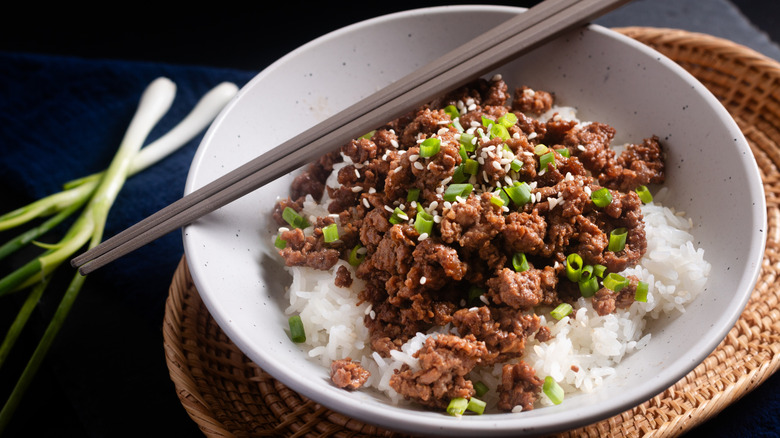
The perennial uncertainty with recipe hacks is whether they can deliver a quicker or more economical version of the dish in question without sacrificing deliciousness. This is particularly true when it comes to traditional, age-old cuisines, where any alteration may be viewed with suspicion. Fortunately, there's one ground beef shortcut that makes hearty Korean bulgogi bowls faster, yet no less appetizing.
Bulgogi, which translates as "fire meat", can trace its origins back hundreds of years, and remains a staple dish in many Korean households today. Traditionally, it is made with thinly sliced, marinated beef, so using ground beef instead is a difference bulgogi aficionados will take notice of. This should be no cause for outrage — bulgogi itself emerged from the earlier, similar dishes neobini and seoryamyeok, so culinary evolution is part of bulgogi's history.
Using ground beef for your bulgogi saves time because it does not require a lengthy marinating process, or freezing your beef so it can be thinly cut, as in some more classic versions of the recipe. However, that doesn't mean you're sacrificing any flavor. A good example of this quicker method can be seen in a video tutorial shared on TikTok by Alissa Nguyen Won. After frying up onion, garlic, and ground beef, she adds a sauce of brown sugar, mirin, soy sauce, and plum syrup to the pan and lets it reduce. The bulgogi is finished with sesame oil, then served over rice and garnished with sesame seeds, scallions, and your kimchi of choice. The results come together in less then 30 minutes.
Flavor-boosting ways to upgrade a quick ground beef bulgogi
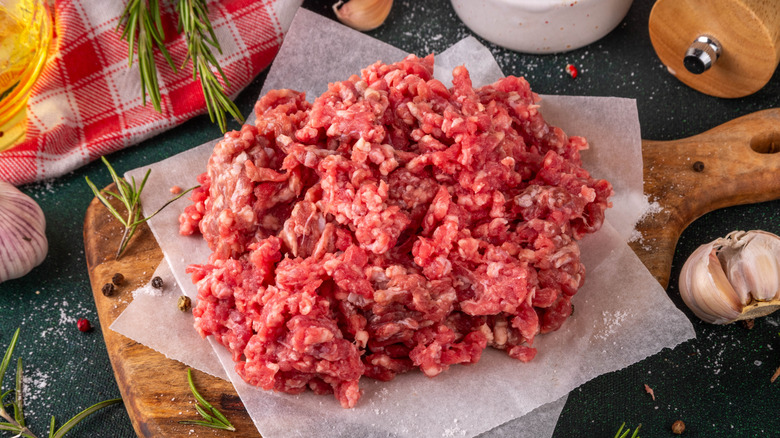
As well as being quick, delicious, and budget-friendly, ground beef bulgogi is also versatile, as the sauce can be upgraded with numerous flavorful additions. To keep things traditional, a common bulgogi ingredient is grated apple or pear. These fruits will add a welcome sweetness to play off the recipe's rich notes of umami. Alternatively, we have previously suggested kiwi as the marinade ingredient that will keep your bulgogi sweet as well as tender.
Ginger is a classic aromatic for bulgogi, while a more complex flavor can be achieved with the sweet and spicy Korean paste gochujang, which is easy to find in the Asian section of supermarkets. Finally, those who really want to turn up the heat can take inspiration from Tasting Table's Korean BBQ beef recipe for bulgogi and use Korean red pepper flakes both in the sauce and as a garnish.
Rice is the classic accompaniment, but if you'd prefer something lighter, simply eschew it in favor of bulgogi lettuce wraps. However, if you're in the mood for a heartier meal, serve the bulgogi alongside an array of the small Korean side dishes known as banchan. These could include a spicy cucumber salad, braised tofu, or yellow pickled radish.