

Ditch Expensive Chemicals And Clean Grease From Kitchen Cabinets With An Eco-Friendly Alternative
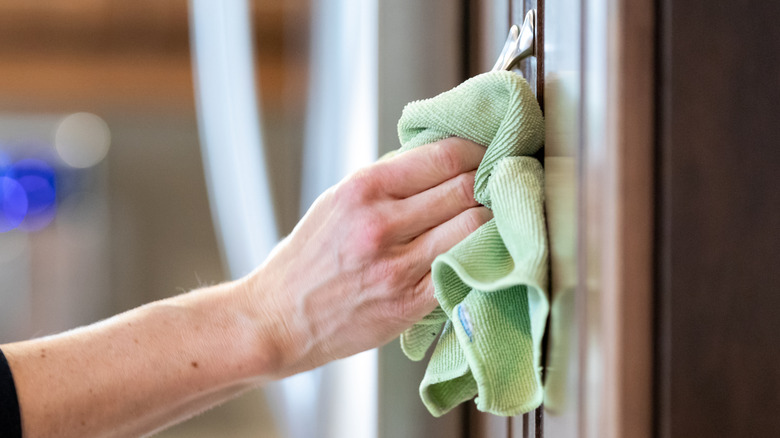
When it comes to keeping kitchens clean, grease is the word ... the dirty word. Over time, grease somehow manifests on kitchen surfaces, and it's not until you touch a tacky, slimy, or grimy kitchen cabinet that you notice. Rather than splashing out on expensive, chemically questionable, and environmentally harmful cleaning products, you can go the eco-friendly route and clean your kitchen cabinets with something that's likely already at hand. Using lemon and salt is a simple, cost-effective, hygienic, and environmentally responsible way to remove light grease build-up on your kitchen surfaces. Plus, it's one of the nicest smelling fixes.
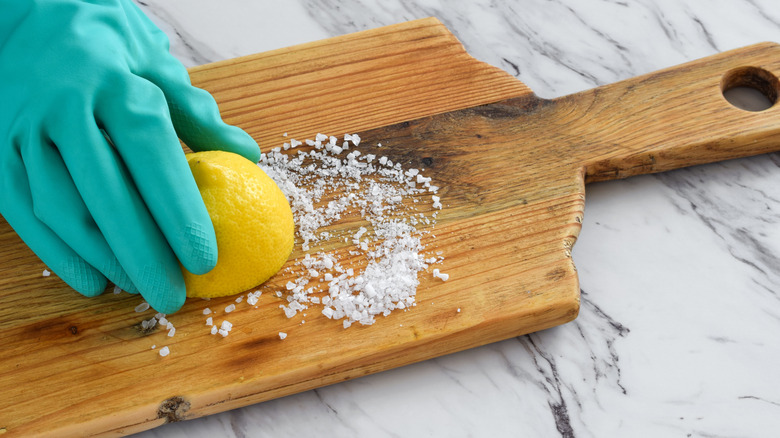
The simplest method for cleaning kitchen cabinets with lemon and salt is to slice a lemon in half, dab the cut ends in granulated salt or sprinkle it on top, and gently rub this makeshift scrubber over the surface of your cabinets. Need more juice? Just squeeze. One other approach is to squeeze lemon juice into a receptacle and wet a microfiber cloth in this before dabbing it in salt. Another is to put the lemon juice in a spray bottle with some water and lightly spray the surface before rubbing it with a salt-dabbed microfiber cloth. In all cases, remember not to rub too hard, or you might be doing more damage than good. The lemon's citric acid breaks down alkaline grease and the bond it has with surfaces, while the abrasiveness of the salt helps to scrub it away. Citric acid is also known for being antimicrobial, helping to sterilize surfaces by killing bacteria as you remove the grease from them.
Easy peasy lemon squeezy
For all of these methods, make sure you wipe the area clean with a water-only cloth before letting it dry completely, otherwise you could leave a new sticky residue or expose the material to citric acid for too long. Avoid leaving lemon juice on the surface for more than one or two minutes, or you could ruin your cabinet's finish. In general, lemon juice should be avoided on certain surfaces. The citric acid that does so much good can also ruin conversion varnishes or destroy the gloss of catalyzed lacquered finishes, as well as some painted finishes, which can lose their sheen or become discolored or marked.
Even the color and smoothness of unfinished wood can be damaged by citric acid entering the grains. Lemon juice can also harm the surface of brass, copper, or aluminum, which is probably more a concern for cabinet handles and fixtures, but worth being aware of. If you're unsure about any surfaces or materials to use the lemon and salt cleaning method with, you should perform a spot test first, applying some lemon juice for around two minutes and wiping clean before assessing.
The harshness of lemon juice can be harnessed for a deep clean of your stove grates, or, if you only have leftover peels, you can use those to make an eco-friendly kitchen cabinet cleaner. There are also approaches to making natural all-purpose cleaner using white vinegar and baking soda, so you can degrease your kitchen with whatever you have available.