

What An Expert Wants You To Know About Palm Oil
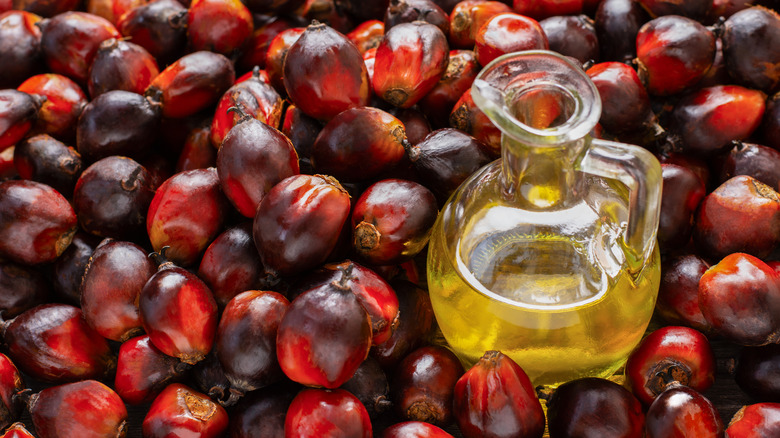
Palm oil is one of the most widely used vegetable oils in the world, and it shows up in the most random places: packaged cookies, margarine, instant noodles, and, yes, even cosmetics. But it also has a place in the kitchen, where its properties make it extremely useful for certain kinds of cooking. To get better acquainted with the oil, we spoke with Kelsey Kunik, the registered dietitian behind Graciously Nourished. Palm oil comes with some baggage, so Kunik is here to set us straight.
"Palm oil is a plant oil that's popular in African and Asian cuisines," Kunik explains. It's extracted from the fleshy fruit of the oil palm tree and is native to West Africa. It's oft compared to coconut oil, but the difference between using coconut or palm oil in cooking comes down to the smoke point. "Palm oil has a high smoke point, making it an ideal choice for high-heat cooking," Kunik adds. "If using unrefined palm oil, it adds a savory umami flavor to your food."
One reason palm oil is so popular is that it's semisolid at room temperature. This means it can give chocolates a creamier texture, help bakery products remain moist, and provide consistent cooking fat. However, palm oil is also rooted in controversy. Kunik notes: "Palm oil production is linked to deforestation and greenhouse gas emissions, so look for palm oil with clear sustainability labeling."
Red palm oil is a staple in West African cuisine
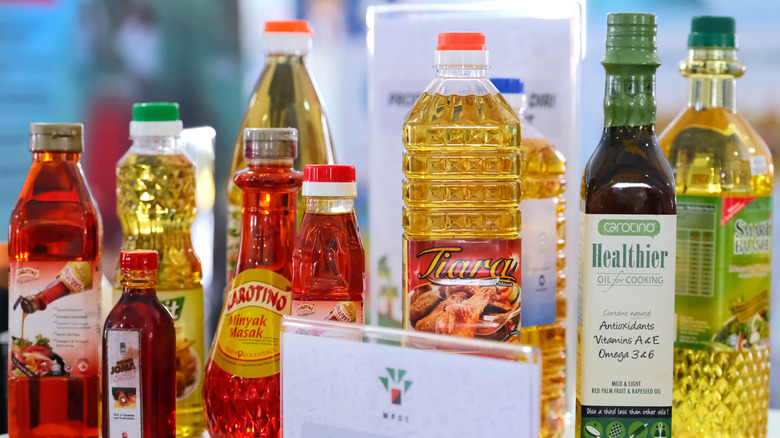
It's important to do your homework before deciding which palm oil to purchase, as palm oil plantations in countries like Indonesia and Malaysia have reportedly contributed to the destruction of orangutan and elephant habitats, directly impacting climate change. Knowing the difference between refined and unrefined palm oil can be helpful, too. Refined palm oil is processed to remove any color or flavor, which makes it useful for frying and baking. However, health-wise, Kunik notes that unrefined palm oil "contains antioxidants and vitamin E, making it a more nutritious option than refined versions."
Beyond shelf stability, palm oil has plenty of culinary uses, particularly in traditional dishes where its color and flavor are allowed to shine. Unrefined palm oil (also called red palm oil) is commonly used in West African cuisine, where its reddish-orange color and earthy flavors are highly desirable in ebbeh. Kunik notes that it contributes a "savory umami flavor to your food." In this Nigerian jollof rice recipe from former "Top Chef" contestant Kwame Onwuachi, he uses red palm oil for this iconic dish.
Palm oil typically lasts around one to two years unopened if stored in a cool, dark place. If you want to experiment with the popular vegetable oil, choose a product that's best for your recipe — and always consider how responsibly it was sourced. You'll have the best luck finding it at natural grocery stores or specialty international food markets.