

Give Cabbage Extra Flavor With This Creamy 2-Ingredient Italian Transformation (Simple And Tasty)
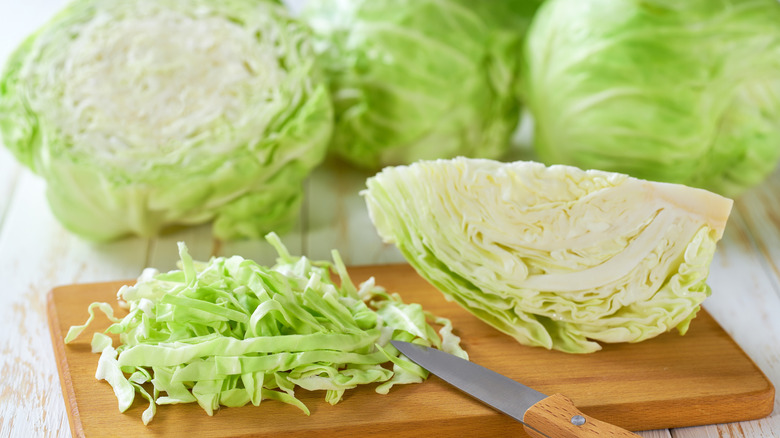
Cabbage is a humble ingredient that's just bursting with potential. There are so many wonderful varieties of cabbage waiting to be eaten, like Napa or Caraflex cabbage, both of which are a bit sweeter and softer than your everyday green cabbage. From braising and grilling to eating them raw, the possibilities for preparation are endless, and cabbage has the ability to adapt to a wide array of flavor profiles. Rather than leaning into Eastern European or Asian flavor profiles, we encourage you to look to Italy for inspiration for your next cabbage-based meal.
Consider using both fresh pesto and creamy ricotta to dress up a plain cabbage. Combining them is the best of both worlds, as rich ricotta blends perfectly with herbaceous pesto. You can simply swirl a few spoonfuls of pesto into your ricotta for a striking green-and-white look, or you can fully mix them together to form a more homogenous, light green spread. Use it as a base to spread out on a plate and nestle the cabbage on top, or you can thin out the spread with a bit of lemon juice and drizzle the sauce all over the cabbage instead.
The looser sauce will sink into the wonderful cracks and crevices between the leaves of the cabbage, so you get more flavor in every bite. One of the most delicious and satisfying ways to serve cabbage is in wedges that have charred edges and meltingly tender centers. The contrast of the smoky, crispy edges and the soft inner layers are just begging for a rich and flavorful sauce to be served alongside it.
Doctor up your ricotta if needed
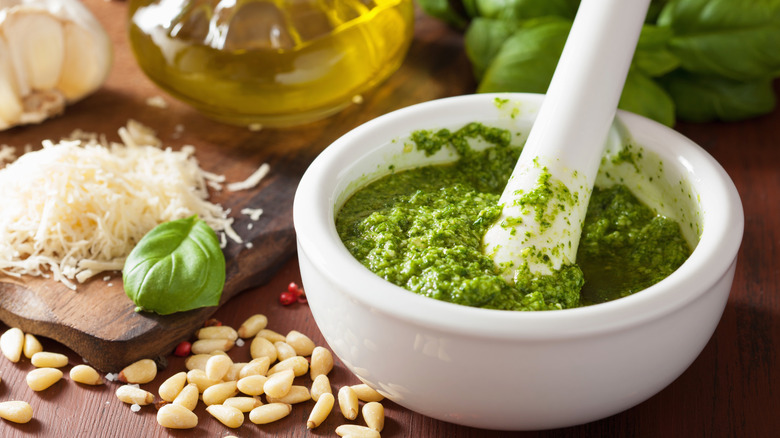
When the springtime rolls around, lean in to Mother Nature's bounty, and try making a pea pesto with ricotta, which substitutes pricey pine nuts for peas and uses a mixture of herbs for more depth of flavor and a fresh spin on traditional pesto. But before adding pesto to your ricotta, it may behoove you to drain the excess moisture out of the ricotta, depending on how watery the fresh cheese is once you open the package. If the ricotta is very thick, you likely won't need to drain it, but if your ricotta looks a bit thin and waterlogged, straining the extra liquid out helps to prevent the overall combination of pesto and ricotta from being too loose and runny.
For those feeling a bit adventurous, you can easily make your own homemade ricotta cheese with only three ingredients that you likely have at home already. Just make sure that you avoid using ultra-pasteurized or UHT milk, as that can often make it more difficult for the cheese curds to separate from the whey. If your store-bought ricotta is looking a bit sad or stodgy, as some supermarket brands unfortunately are, give the ricotta a quick spin in the food processor to whip it, which incorporates air into the fresh cheese and leaves it beautifully light and fluffy. From there, gently fold in your pesto so the cheese stays whipped and airy.