

5 Tips For Buying The Best Store-Bought Ground Beef
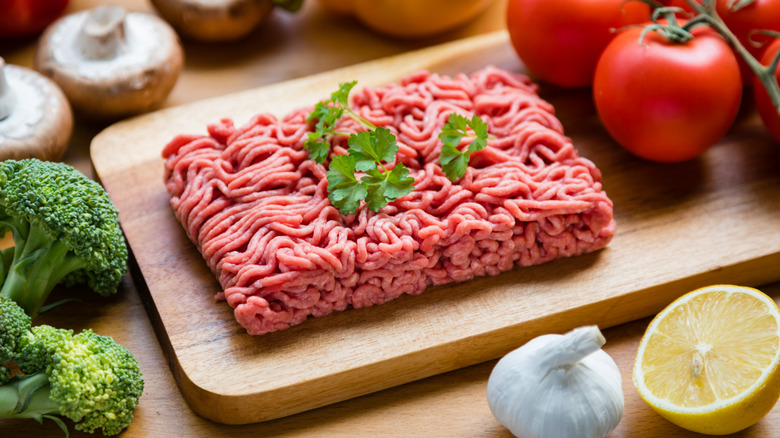
While there are plenty of common mistakes when cooking ground beef, buying it shouldn't be an issue (if you know what to look for). Sure, it sounds simple enough: Grab a package, check the price, glance for signs of freshness, and head for the checkout counter. However, a closer look at the meat case tells a more complex story. Quite a few differences can appear from one package to another, potentially impacting meals more often than you'd imagine. Knowing which details actually matter makes it easier to buy the right ground beef.
Tasting Table spoke with Christie Vanover, head cook and pitmaster for Team Girls Can Grill and a contestant on Food Network's "BBQ Brawl," for some guidance. Vanover told Tasting Table that the right choice depends partly on the dish you're making, but other details can provide useful clues. These include things like fat percentages, packaging methods, and various tidbits of label info, sometimes even specific beef cuts, cattle breeds, or feeding methods. It can also help to have a quick conversation with someone in the meat department.
Reaching for the closest ground beef package may be quick and easy, but taking a few extra minutes can be well worth your time. Whether sourcing ground beef for juicy burgers, weeknight tacos, meatballs, pasta sauces, or easy-bake casseroles, these five tips can help you choose a package with confidence.
Select the meat-to-fat ratio that's best for what you intend to cook
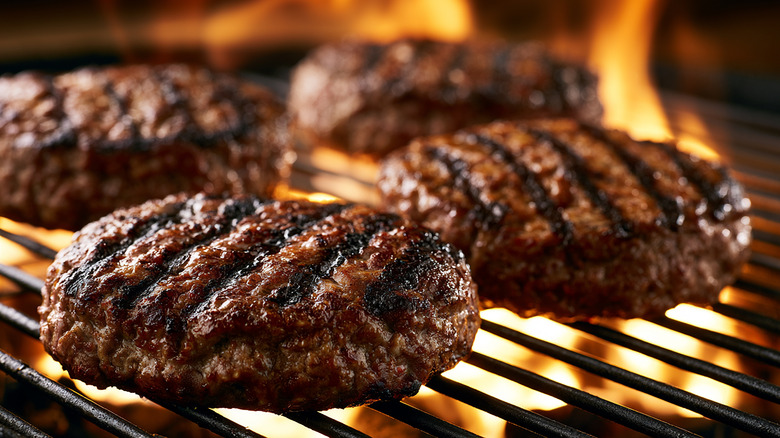
Before worrying about brands, breeds, or fancy beef brands, Christie Vanover checks one of the simplest numbers on the package: the lean-to-fat ratio. It's usually expressed as something like 90/10, 80/20, or 70/30, with the first number indicating the amount of lean meat, and the second revealing the fat content. There isn't one ratio that's automatically better than the others since the best choice depends on what you're cooking — and where the rendered fat ends up.
"When I'm making burgers or meatballs, I use a higher fat content like 80/20 or 70/30, because it yields juicier results," Vanover explained. "As these cook on the grill, a lot of fat will drip out of the patty or ball, so having more to start keeps them juicy." Using a pan, however, changes the equation. "When I'm cooking down the ground beef in a skillet for tacos or spaghetti, I tend to go with the 90/10, because the grease collects in the pan as it cooks," she clarified. You could painstakingly drain it off, but who wants to tip a hot and heavy meat-filled skillet?
In essence, that means choosing ground beef isn't as simple as assuming leaner is always the best option, or fattier is always tastier. Just keep the final dish in mind when tossing ground beef into your grocery cart. When undecided about what's for dinner, remember that 80/20 chuck is generally the most common type of ground beef.
Pick your packaging according to your plans
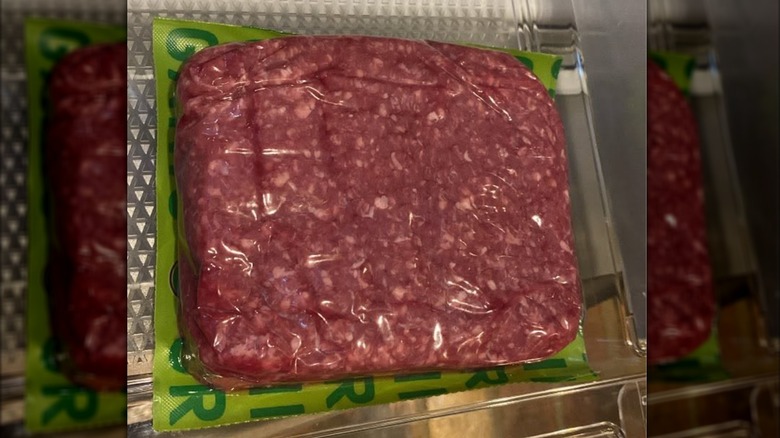
Ground beef generally comes in two very different packages at the grocery store: smaller portions sitting on foam trays with plastic wrap and larger quantities in vacuum-sealed tubes. Christie Vanover said that neither packaging style is necessarily better, but which you buy should depend on how you plan to use it. "There are a few main differences: shelf life, quantity, and source," she noted.
Vacuum-sealed ground beef typically allows more flexibility, according to Vanover, because they are airtight and can be stored longer as-is. However, you may also need to put more planning into using it. "Vacuum-sealed ground beef is usually sold in large quantities," she elaborated, "which means you need to be prepared to cook several pounds of beef once you open it. Or, you can cook some of it and portion out the rest in smaller packages to freeze for future meals. Bulk buying is a great way to save money."
Vanover pointed out that tray-packed beef generally comes in smaller one-or two-pound portions. That can be very useful when making dinner for only a few people, but there's also a downside. "Meat stored on a Styrofoam tray is not airtight," she said, "so it will need to be used or frozen sooner." Whichever package you choose, inspect it first, Vanover cautioned. "No matter how the beef is packaged, make sure the packaging is not torn."
Know what to look for on ground beef labels
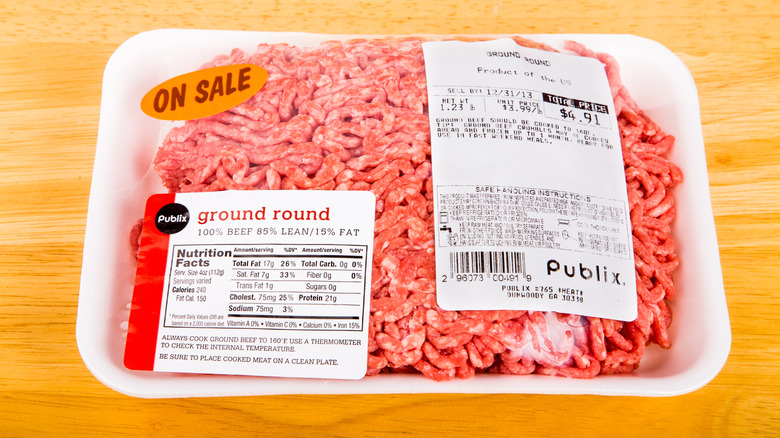
A ground beef label reveals more than just the price and weight, but not every detail is equally important. For freshness, Christie Vanover recommended looking for a package with the furthest sell-by date available. You may have to reach toward the back of the display to find these packages since stores often place those closest to expiring toward the front. Next, check the meat-to-fat ratio to be sure it fits your recipe.
Beyond those basics, the label may also identify which cuts of beef were used in the grind. Most everyday ground beef is made from cuts that wouldn't ordinarily be sold as steaks, but Vanover pointed out that it's possible to find packages specifically featuring brisket, short rib, or ribeye. "These blends are fantastic for burgers," she said. She went on to note that you'll see different breeds, notably Angus or wagyu, as well as feeding methods (grass-fed and grass-finished are two to look for).
Then there's the issue of USDA grade: Select, Choice, or Prime. Vanover cautioned against giving that information the same weight you might when buying steaks. "In steaks, select-grade beef has the least amount of intermuscular fat, while prime has more," she explained. "With ground beef[,] this grade isn't as important because fat [from the meat itself] is blended into the beef."
Consider the beef's sourcing
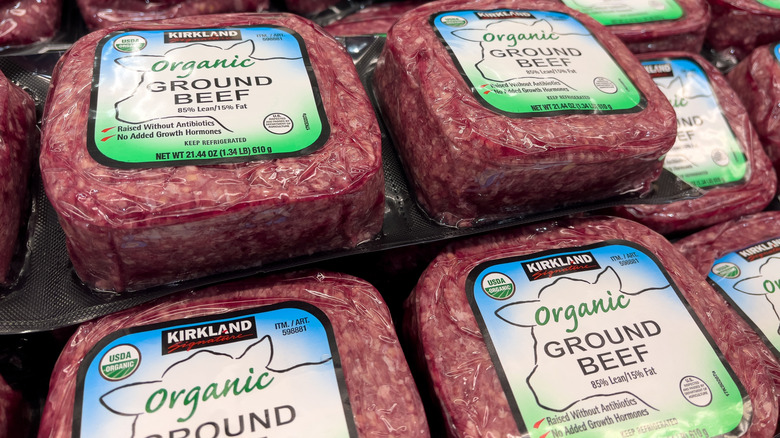
For some shoppers, knowing where the beef came from and how the animal was raised are important factors to consider. "If where your beef comes from is important, this can be tricky," Christie Vanover noted. Some packages voluntarily provide sourcing information, while others stick to basic product descriptions.
Vanover recommended paying attention to origin statements when they're included. A package labeled Product of USA, for example, may appeal to shoppers who specifically want domestically sourced beef. Other packages may highlight the ranch, breed, feeding practices, or other production details as part of their labeling. "If you want even more details about what's in your ground beef and how the animal was cared for, I recommend purchasing your meat [directly] from a ranch," Vanover explained.
"Read the print," she continued. "Beef packaged in Styrofoam is usually just ground beef and beef fat. Meat sold in vacuum-sealed logs may appear to be ground beef," but she went on to clarify that if it's labeled something like "hamburger meat," it will contain added fat — up to 30% added fat, to be specific, according to the USDA.
For the best ground beef, talk with meat department employees
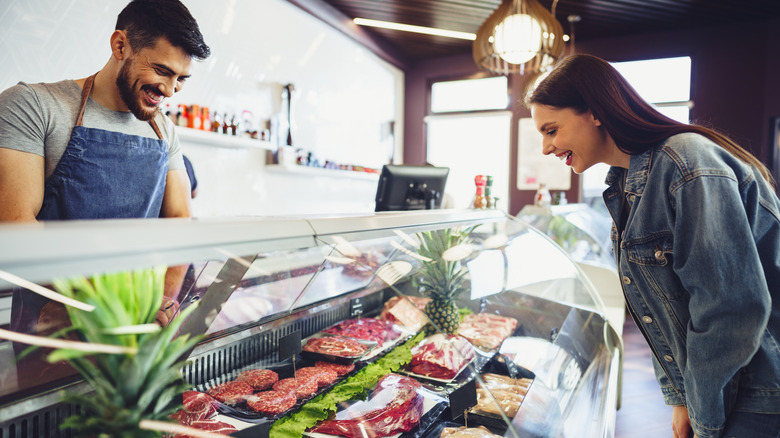
One of the most useful sources of info on ground beef may not be printed on the package at all. Christie Vanover recommended striking up a conversation with meat-department workers, especially about things like grind size. Not all grocers offer varying sizes, but if they do, it can make a difference.
"Grind size doesn't change the quality of the beef," Vanover explained. "It just changes the texture." However, having multiple grinds available can speak volumes about what the meat department is doing behind the scenes. If employees are grinding beef in-house instead of just laying out factory-packaged ground beef, Vanover sees that as an opportunity. "If they're grinding it [in-house], that means they're going above and beyond to deliver a nice variety for their customers," she said. "And best of all, if they're grinding [in-house], you can probably request a special blend with different beef cuts and your preferred meat-to-fat ratio."
Speaking with the butchers also gives you a chance to get some personal advice. The conversation doesn't have to be detailed or detract from the butcher's workday. Simply asking what's the freshest, what's ground in-store, or what they would choose for their own burgers can give you a wealth of information you'd never get from a printed label. When it's time for cooking, you can glean some insight from any tips when cooking with ground beef.