

Honeycrisp Vs Fuji: The Differences Between The Apples, And Which Is Sweeter
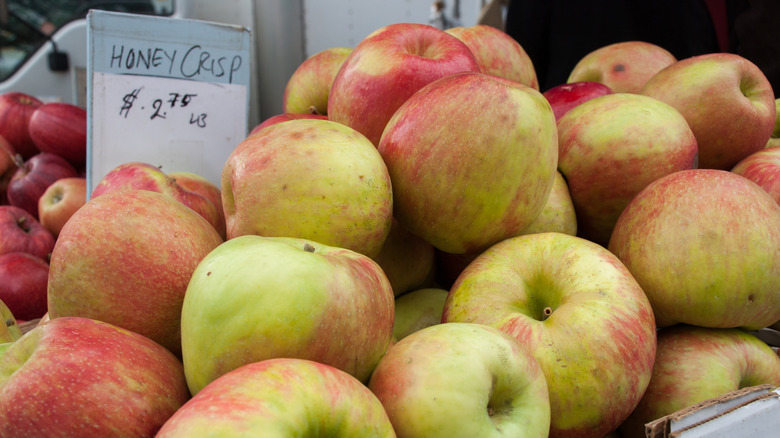
Honeycrisp and Fuji are two of the most popular apple varieties in American grocery stores, and it's easy to understand why. Both are crispy, juicy, and actually tailor-made by humans to fit consumer tastes, but they're not exactly interchangeable. If sweetness is your main priority, then you'll want to reach for the Fuji. It's considered by experts to be one of the sweetest apples in the world, and its low-acid profile reinforces that. While Honeycrisp apples certainly aren't sour, their higher acidity gives them a more sweet-tart flavor.
To be sure, sweetness doesn't automatically equal better. It simply comes down to personal preference. If you want a pure sugar rush with a denser bite, go for Fuji. But if you want explosive crunchiness and a sweetness tempered by that fresh acidity, hunt for the Honeycrisp. The choice comes down to what you prefer in an apple. Whichever you like, both are some of the best apple varieties for juicing.
Both apple varieties also look different from each other, so you'll have no trouble distinguishing them at the farmers market. Honeycrisps are on the chunkier side, with a yellow-green base covered with a mottled or striped pinkish-red blush. Fuji are generally rounder fruit with a more consistent red or pink spotted color. Of course, apple growers love nothing more than to cross-breed, so if you want the best of both worlds, there are two varieties that are a mix of both: the EverCrisp and the Rosalee.
Honeycrisp is notoriously difficult and expensive to grow
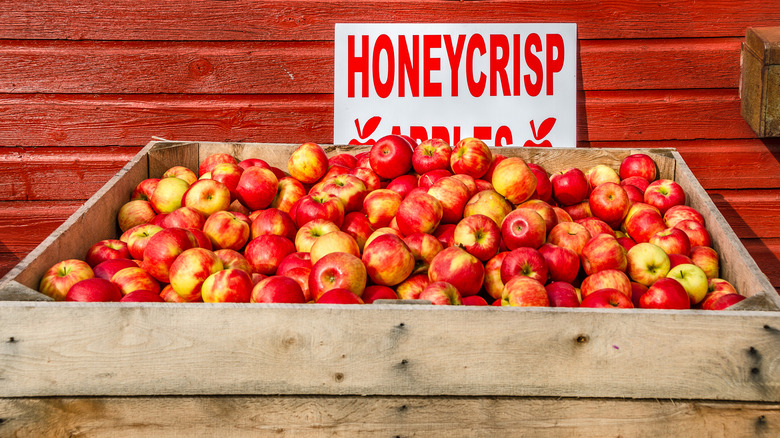
Though it has gotten lots of hype throughout the years, the Honeycrisp apple is more modern than you might expect. It was released by the University of Minnesota in 1991 after decades of breeding and research to create a cold-hardy apple that could survive the state's brutally long, intense winters. Interestingly, the apple was also developed specifically to taste good, not to travel or store particularly well.
This was great news for consumers, who immediately fell in love with its unusually crispy, juicy bite, but bad for growers, who now had to deal with a high-maintenance, low-yielding crop. The fruit is susceptible to sunburn, easily bruised, and vulnerable to storage disorders, while also being expensive to grow and harvest. That cost also travels down to consumers, which explains why Honeycrisp apples are so darn expensive. But its commercial success is impossible to avoid, which is why the apple is sometimes jokingly called "moneycrisp."
Considering all the labor, time, and research that has gone into developing such a devastatingly juicy and crunchy apple, it really should be eaten fresh, whether that's out of hand or as a crunchy addition to salads. Its flesh is also relatively slow to brown, which ensures that your make-ahead cheese board will still looking enticing for the entire length of a dinner party.
Fuji apples were developed in Japan, but have American roots
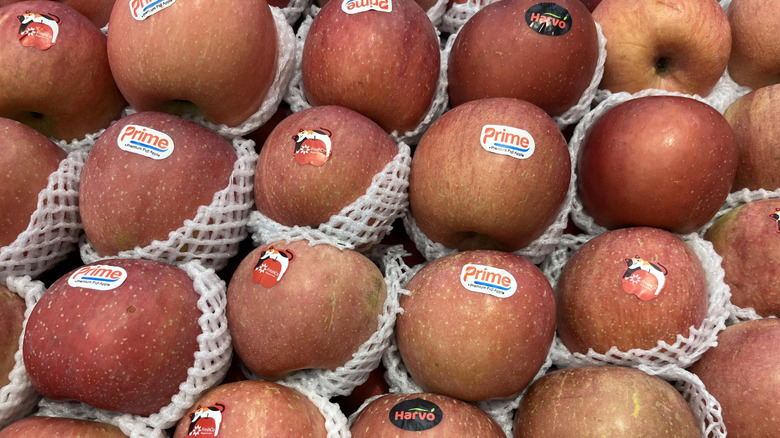
Fuji apples, on the other hand, have a different origin story and homeland that's thousands of miles away from Minnesota. Today, it's one of the most popular types of apples, but its history begins in Japan in 1939 at a horticultural research center in the town of Fujisaki. Researchers crossed two American varieties, Red Delicious with Ralls Janet, an heirloom apple variety once cultivated by Thomas Jefferson himself. Seedlings were evaluated for years before the perfect combination of sweetness, juiciness, and storage ability was found. But when the start of World War II erupted, the apple was almost lost to history.
It wasn't until 1962 that the apple was finally named and registered. Even today, people can't decide if the name came from the town in which it was developed, Fujisaki, or the active volcano, Mount Fuji, or both. Whichever it is, the new apple variety was an instant success when it was released, and by 1982, it had surpassed Red Delicious to become Japan's highest-production apple variety.
While the Fuji apple doesn't have the explosive crispiness of a Honeycrisp, the variety still has a pleasant, dense crunch. Its intense sugariness makes it delicious on its own, but the fruit also shines in salads, apple butter, and homemade baby food. Fuji's firmness also holds up well in baking, with no mushiness, which is why they're used in this classic apple cobbler recipe. But no matter which apple you choose, know that there are decades of history and science behind each of them.