

13 Rules Chefs Say Home Cooks Shouldn't Break
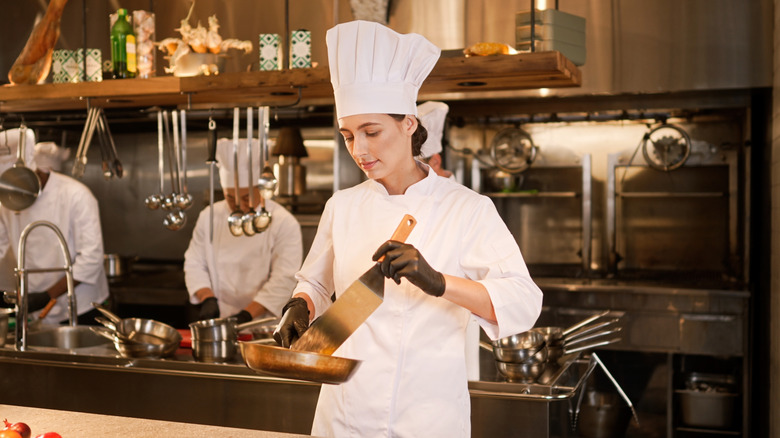
Quality food is about more than just flavor. It's about experience, sensation, and discovery. Home cooks are always searching for recipes that move them, conjure emotions like comfort or curiosity, and satisfy their cravings. Many of us go out to eat for this experience, but some of us actively work towards mastering the skill of cooking at home. If you're a home cook who wants to take one step closer to chef-quality cooking without attending culinary school, look to the greats. Chefs each have their own methods, but many can agree on the main rules that home cooks shouldn't break. We've gathered expertise from top chefs around the country so you can apply these rules to your home kitchen.
Our lineup of expert chefs gave insightful feedback, and many of them had overlapping suggestions for home cooks, indicating the importance of these particular rules. Throughout the interviews, one theme was stressed frequently: Use patience and be intentional. As it turns out, that frantic, frenzied chaos surrounding television chefs might not be our target vibe in the kitchen. Each piece of advice can move us one step closer to restaurant-quality food. Now, let's see what rules these chefs say home cooks shouldn't break.
Season as you go
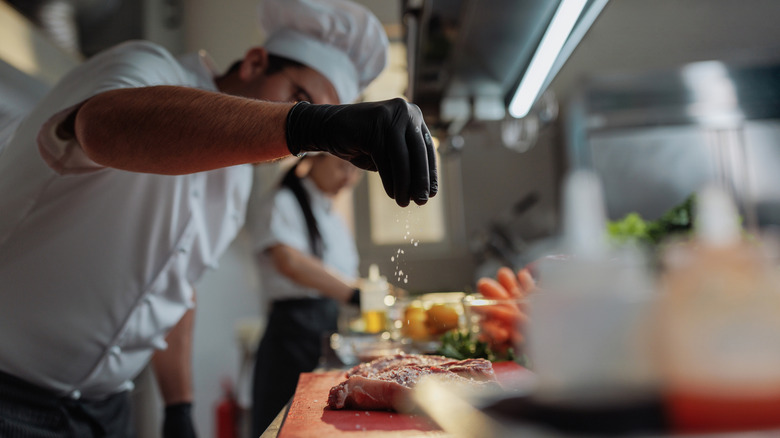
While recipes typically have you add all your seasoning all at once, our lineup of chefs has a slightly different approach. Over and over again, they mentioned "seasoning through the cooking process, not just at the end," as stated by Nicholas Miller, Executive Chef, La Concha Key West, Autograph Collection, Key West, Florida. "Seasoning in stages builds flavor into the dish rather than simply putting salt on its surface," he added. Loryn Nalic, Chef/Owner, Balkan Treat Box, Webster Groves, Missouri, couldn't agree more and suggests that we "[d]on't wait until the very end to add salt... [and] fresh herbs, too. They give something different when added in the beginning versus garnishing or adding at the end. Both are necessary."
Carmine Mottola, Corporate Executive Chef, Heritage Restaurant Group, Newport, Rhode Island, notes that the gradual process of building flavor works by tasting as you go, thus giving you "depth and balance." He encourages us to trust our taste buds to guide us, and highlights the importance of taste tests along the way. Josh Mouzakes, Executive Restaurant Chef, Gaylord Pacific Resort & Convention Center, Chula Vista, California, says that the amount you season is also important and that you can always add more if you commit to tasting as you cook.
Stop messing with your food once it hits the heat
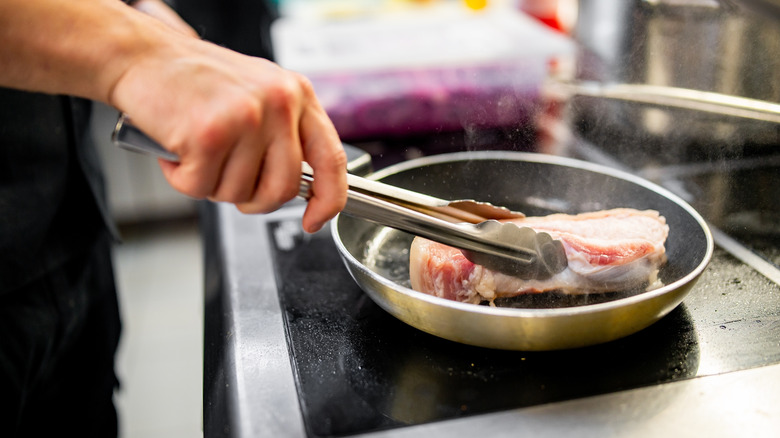
If you watch a top chef in action, you will notice that while they rarely stop moving, they aren't poking and prodding their proteins while they cook. This can be a habit that home cooks have trouble avoiding, as we want to stay busy and can get impatient. Loryn Nalic, a 2026 James Beard Best Chef awardee, says it best: "We all want to flip, poke, stir, and move things around constantly. Let it sit. Let it get some color; char on foods is one of my favorite flavor profiles. Let the heat do its job; it's a flavor builder." Those caramelized bits seared onto your steak, eggplant, or tofu create a sweet, crispy layer of flavor and texture.
So, while it's tempting to check the bottom side of your chicken breast, it's best to flip your fish a few times to be sure it's getting evenly cooked, or poke at your sizzling pork chop. Disrupting your proteins can cause them to dry out, toughen up, and, even worse, you may break the seal that's creating the crispy caramelized edge. So, enjoy the (seemingly) easiest part of cooking: waiting patiently.
Don't rush it
Oftentimes, home cooks are in a rush to get their meal prepared, just like chefs are. However, chefs know when it's important to slow things down, take their time, and follow protocol. Yes, you may be desperate to get dinner on the table, or at least that very first bite into your watering mouth. However, there are certain steps that take love and attention, and can't be rushed simply by using higher heat. "Let your pan get hot," Loryn Nalic advises. "Rest your dough. Let your onions actually caramelize or char. Let your meat rest before you cut it. Sometimes the biggest difference between something being good and really good is just giving it enough time."
These are cooking rules that most top chefs will adamantly agree with. If you're finding it difficult to wait around, then set a timer and come back later. Some cooks also enjoy multitasking in the kitchen. For instance, while you're waiting for your cast-iron pan to heat up, you can always prep your veggies, spin your salad, or give your dog the cheese tax. If you want chef-quality food, you need to use patience of one, too.
Learn the rules and read the recipe

Much like Pablo Picasso, an incredible realist who eventually developed his own breakthrough style of painting, it's important to master the basics of cooking before experimenting with recipe creativity. In fact, six of our chefs recommended that home cooks follow recipes closely and learn the basics before taking creative liberty. "I'm all for breaking rules in the kitchen, but you have to understand the rule before you break it," says Loryn Nalic. "Salt, heat, and time are three things I stay consistent with. Season your food, let it get some color, and give it the time it needs. Most great cooking isn't complicated. It's knowing when to do something and when to get out of the way."
Other chefs agree that it's an absolute must to read the entire recipe through, start to finish, before touching your stovetop or whisk. Rene Reyes, Chef de Cuisine, La Quinta Resort & Club, La Quinta, California, agrees and notes that reading the recipe "provides a foundation for understanding the intended flavors, techniques, and proportions." In short, learn to ride your bike before taking it to the skate park.
Salt is not optional
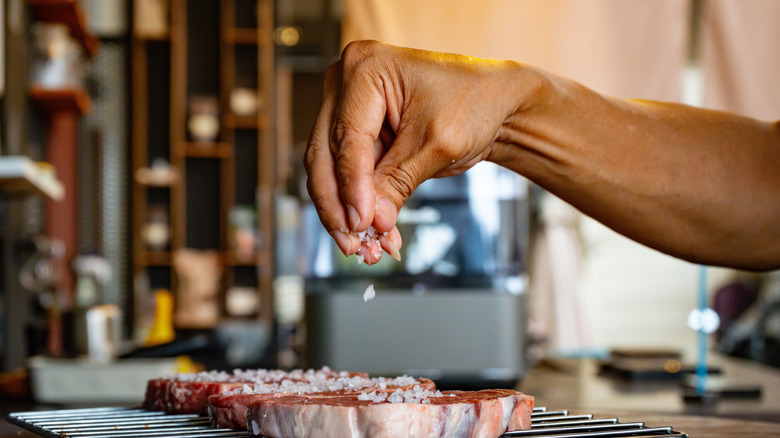
Salt does so much more than just give your dish a pop of flavor. Hannah Ryder, Executive Chef at Twelve in Portland, Maine, highlights that, health reasons aside, it's important to prioritize the seasoning in your cooking. "Salt is one of the most important ingredients used in cooking," she notes. "[It] helps enhance the flavors of your food; it mutes bitterness while boosting acidity, sweetness, and umami." Ryder then goes on to mention that when she was a home cook, she would overlook the importance of salt, especially when making sweet recipes. Oftentimes, if something is missing from your batch of cookies or brownies, it's salt (especially chocolate-based treats).
Ryder notes that it's "[o]ne of the biggest ways you can transform your cooking is by picking out a salt you like (ahem, Diamond Crystal) and learning how to use it." You may notice that when you dine out, your food is often fattier and saltier. We aren't complaining. So, if you're looking to boost your cooking game with one simple step, then it's time you used a heavier hand in the salt department, unless your doctor has advised otherwise. Remember to salt and taste as you go — so you don't overdo it!
Let your meat rest
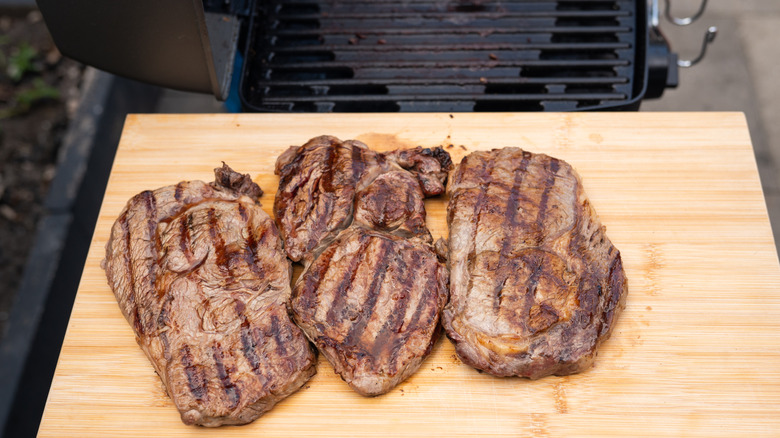
Another theme mentioned again and again by our team of chefs was the importance of letting meat rest after cooking it. For folks without professional training, it's a natural instinct to want to serve meat the second it leaves the grill or pan. This overlooked key component to cooking proteins is a top priority in professional kitchens. Hannah Ryder explains why it's important to give your meat some time to rest: "Meat pulled from an oven/grill/pan/etc. will continue to cook even though it's been removed from the heat source. It's called carryover cooking, and your dinner party can go south quickly if you're not paying attention to it."
Luckily, Ryder gives us a general time frame to follow and suggests pulling it from the heat between 5 to 15 degrees short of your targeted temperature, then allowing it to rest. Ryan Nuqui, Executive Chef, Kusa Nori, Las Vegas, Nevada, explains what might happen if we don't follow this rule. "Grilling and searing meat forces the muscle fibers to contract and squeeze their juices into the center," he says. "Cutting meat too early immediately causes those juices to spill out onto the cutting board, leaving you with dry, tough meat. Resting lets the fibers relax and reabsorb the moisture." Nicholas Miller agrees and notes that you'd much rather those juices make it to your mouth, so rest is best.
Always preheat your pan before adding food
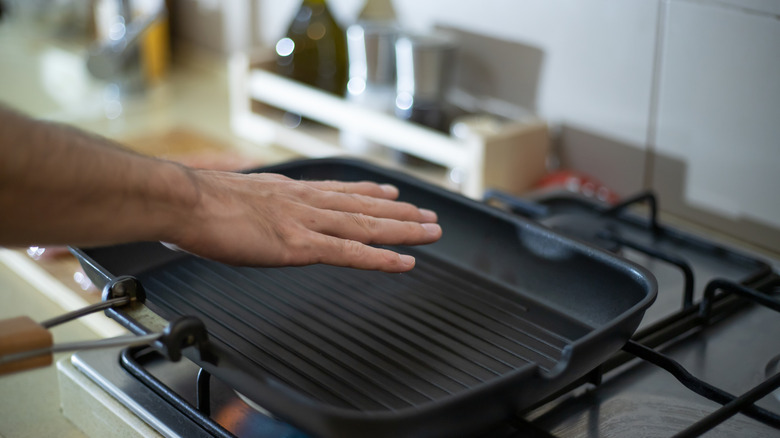
Similar to how it's essential not to poke and prod your proteins and vegetables as they sit in the pan, you'll want to exercise patience while the pan is heating up. It might be tempting to dump your fillet of wolfish right into your cold cast iron, or your stir-fry into a wok you just pulled from the cupboard, and just let the food heat up with the pan. Refrain from this temptation. It's essential to let your pan heat up fully, like you would your oven, before tossing your food in.
"Starting food in a cold pan prevents proper searing and encourages ingredients to release moisture before they can develop color," David Werly, Executive Chef, Resorts World Las Vegas, Las Vegas, Nevada, explains. A properly preheated pan creates immediate surface contact and promotes the Maillard reaction, giving meat, fish, and vegetables better caramelization, texture, and flavor." The Maillard reaction, at its most basic, is a chemical process that happens between actively reducing sugars and amino acids. Are you picking up on the theme of the bulk of the advice from our top chefs? It seems as though they are suggesting — no, begging us — to take our time, be patient, and be intentional at every step of the process.
Never overcrowd your pan
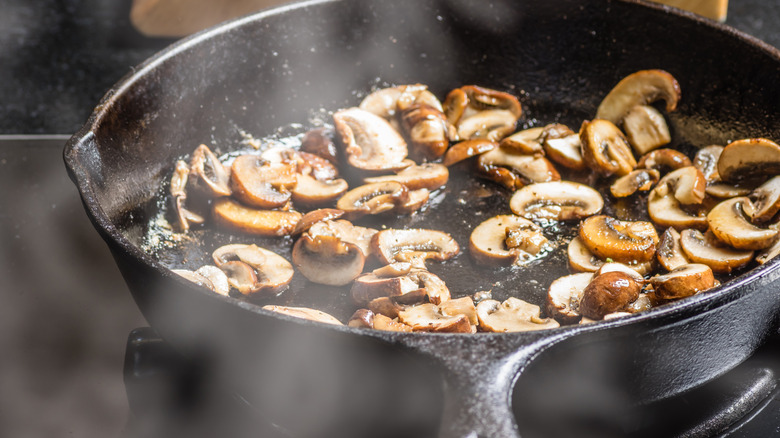
Much like a person above 30 doesn't love a crowded club, restaurant, or grocery store, meats and veggies don't enjoy a crowded pan. If you're cooking for a family or large group, it can be tempting to dump all your ingredients into a pan and let them steam each other into oblivion in the name of efficiency. David Werly notes, "Adding too much food at once drops the temperature of the pan and traps moisture. Instead of searing and caramelizing, the food begins to steam." He also suggests cooking in smaller batches.
Nicholas Miller notes that this ultimately "prevents proper browning" and also suggests cooking in batches instead of overcrowding the pan. Carmine Mottola mentions that for the sake of time, it's not worth it to sacrifice caramelization, flavor, and texture and puts out a PSA for home cooks to "[r]espect temperature." This might mean you'll have to invest in a larger pan or use a flat-top grill if you find yourself cooking in bulk often. Each element of your dish deserves space, attention, and the chance to reach its full potential.
Season your cooking water — not just the finished food
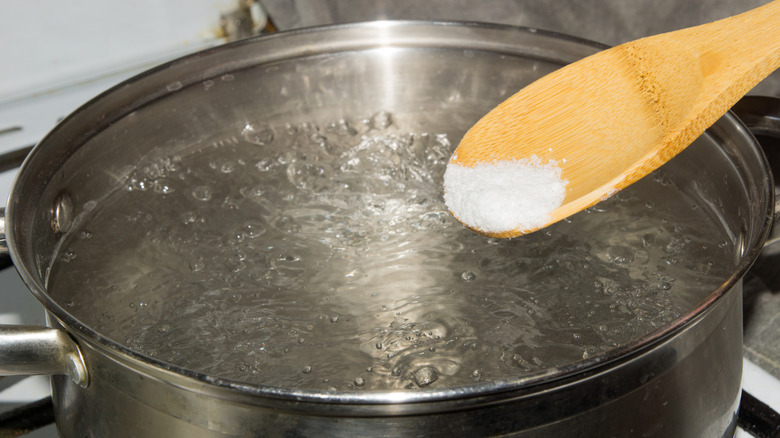
Most folks understand the importance of seasoning, even if they typically rely on their salt and pepper shakers to carry the team. It's a major reason that restaurant food has more memorable flavors; learning about herbs and spice combinations is an essential aspect of culinary school. Unfortunately, home chefs tend to overlook seasoning water. No, we aren't talking about the water you drink (phew); chefs stress the importance of seasoning the water you cook with. This is especially important for our more bland grains and produce that could use a boost of flavor.
David Werly explains just when and why it's important to season cooking water. "Pasta, potatoes, grains, and vegetables absorb water as they cook," he says. "If the cooking water is properly seasoned, flavor penetrates the ingredient instead of remaining only on the surface." He also stresses one of the other rules chefs say home cooks shouldn't break: "Seasoning afterward cannot create the same depth or even distribution of flavor." So, it's important to season, season early, and season generously, even if you're just heating up water for boiling purposes.
Always taste your food as you cook
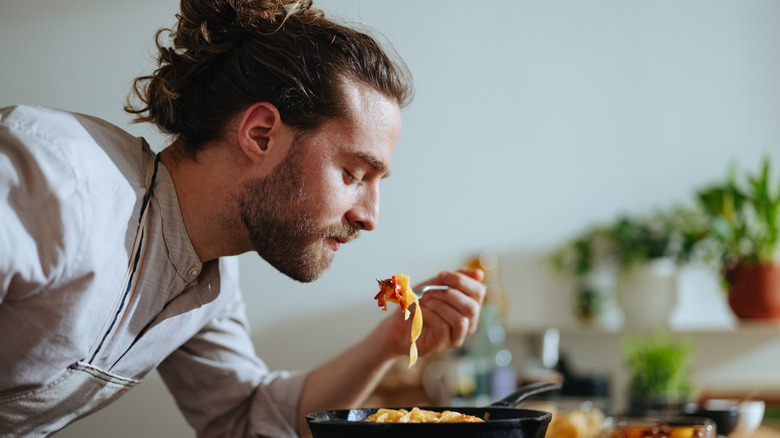
Some of these rules chefs say home cooks shouldn't break require studying, patience, and effort. This rule may be, perhaps, the home-cook favorite: Taste your food, and taste it often. Of course, if you're working with raw proteins or foods that require thorough cooking for safety reasons, you can leave this tip on the back burner. The focus here is when working with ingredients that can be eaten in their raw form without risk, like the bulk of plant-based ingredients. Ryan Nuqui explains why it's important to keep tasting your masterpiece along the way. "All ingredients vary in their salt, acid, and sugar levels; therefore, recipes cannot perfectly predict seasoning needs," he advises. "If you just taste when the dish is complete, you will miss the opportunities to properly layer, adjust, and balance flavors throughout the cooking process."
Even when following a strict recipe, Luis Rodríguez Camacho, Executive Chef at the Grove Resort & Water Park in Orlando, Florida, agrees: "A recipe can give you measurements, but it can't taste the dish for you. Ingredients vary, and flavors develop as they cook." He explains that practicing this rule is a big step towards becoming a "more confident and intuitive cook."
Furthermore, Josh Mouzakes argues that using your senses is just part of the practice: "Recipes are a guide, not a set of rules written in stone. Pay attention to how your food looks, smells, sounds, and tastes, and trust your instincts when making adjustments." So, while chefs do suggest reading the recipe through fully before cooking, they also leave room for creative liberty. The finished product is your masterpiece, after all.
Be confident
What do all of these chefs have in common? They are confident. Likely, they didn't get there overnight. Confidence takes practice, risk, disappointment, and failure. Like any new skill, you need to stay vigilant, curious, and determined during your practice. Josh Mouzakes reminds us, "Don't turn off your brain when you enter the kitchen. Cooking requires judgment, curiosity, and problem-solving. Trust yourself, learn from your mistakes, and have confidence in your ability to make something delicious."
Have you ever heard the phrase, "You can learn more from failure than success"? With that in mind, If you don't take risks, it's hard to build a skill. "Cooking is both a science and an art ... confidence allows you to make thoughtful decisions along the way," says Mouzakes. "The more you practice, the more comfortable you become trusting your instincts in the kitchen." Trust yourself, and you will eventually succeed.
Invest in quality ingredients
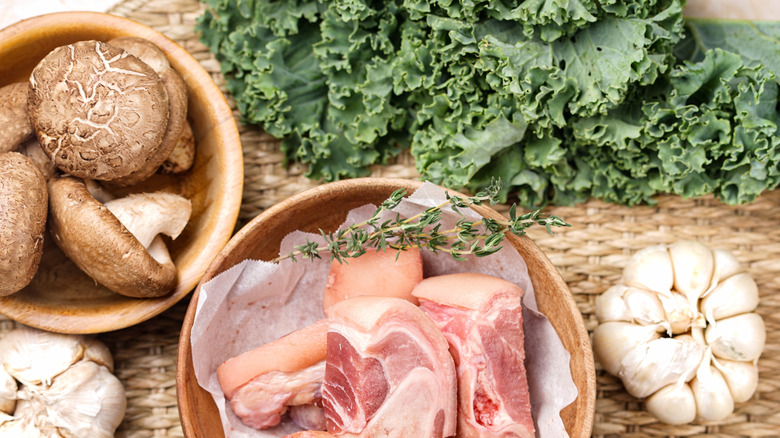
Have you ever noticed that a grocery store tomato bought in winter tastes nothing like a summer-fresh tomato from the farmer's market, or your own garden? The smell, feel, look, and certainly flavor are as different as night and day. Just imagine the advantage your recipe would have if you used fresh ingredients. Target farm stands, seasonal and local ingredients, and home-grown produce whenever possible. Keep in mind that during those off-season months, it might be harder to source these ingredients, and for folks in food deserts, this can be nearly impossible. In addition, as we know, they can sometimes be pricey (or sometimes less expensive) depending on your location. Do your best with what you have, but when possible, strive for quality ingredients.
James Cottrell, Executive Chef, Marriott Marquis San Diego Marina, San Diego, California, notes, "You don't have to buy the most expensive product, but high-quality ingredients can make a noticeable difference in flavor and the overall outcome of a dish. Starting with a better product often allows you to do less to the ingredient while still achieving a great result." It's like running a race in sneakers versus flip-flops. You might as well start with an advantage.
Play it safe
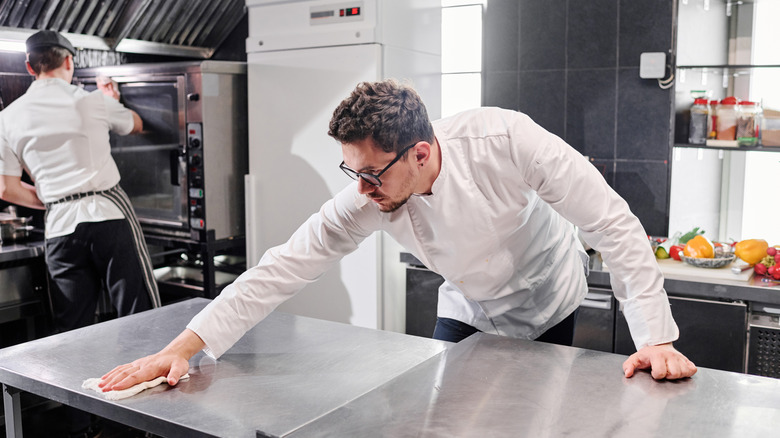
At the end of the day, you could achieve the best flavor, brown your meat to perfection, and source top-quality ingredients, but if you're not practicing safety in the kitchen, none of that matters. There are a few elements of safety that are non-negotiable to Quentin Garcia, Executive Chef at Thompson Palm Springs, California. "Never overlook sanitation," he says. "Wash your hands often, keep your workspace clean, and handle ingredients properly.
Great cooking starts with good habits, and food safety is just as important at home as it is in a professional kitchen." Keeping hands and surfaces clean from bacteria can go a long way. Hidden bacteria can also come from food that hasn't been cooked properly. Basil Dean, Executive Chef, Margaritaville Beach Resort Nassau, Nassau, Bahamas, tells us, "Proper cooking temperatures are essential for ensuring food is safe to eat."
Another focus of safety surrounds the types of tools you're using. James Cottrell suggests that we "[a]lways prioritize safety and organization. Start with a secure cutting board, a sharp knife, and a clean, uncluttered workspace." You can use veggies to test the sharpness of your knives, and general instructions on how often to sharpen your knives are a must-read.