

5 Customer Tricks For Using Third-Party Pods In Your Keurig 2.0
We may receive a commission on purchases made from links.
When recently doing consumer research to find great-tasting and highly caffeinated Keurig-compatible coffee pods, we uncovered something folks want even more — a way to make third-party coffee pods work in the Keurig 2.0. You see, Keurig decided to use digital rights management (DRM) technology in the 2.0 model that is meant to recognize and only accept Keurig-brand coffee pods. This is why even when you use a pod that has been "designed" for the Keurig 2.0, it may be prone to give you problems. While the pods may be the same shape and size as a true K-Cup, third-party pods do not contain the same technology.
Of course, hackers went to work immediately, having a field day circumventing this issue. Within a year, a bypass had been discovered. Since then, folks online have come up with more ingenious ways to use their coffee pod of choice in their Keurig, but it looks like word is not completely out to all 2.0 owners. So, after looking high and low to bring you some popular and creative ways to work around the DRM tech, here is how some have taken back that "boss" title from their Keurig. Some methods are a bit unconventional, but folks have had success.
Some of the following methods may void your Keurig warranty, so proceed at your own risk.
Try a reusable pod
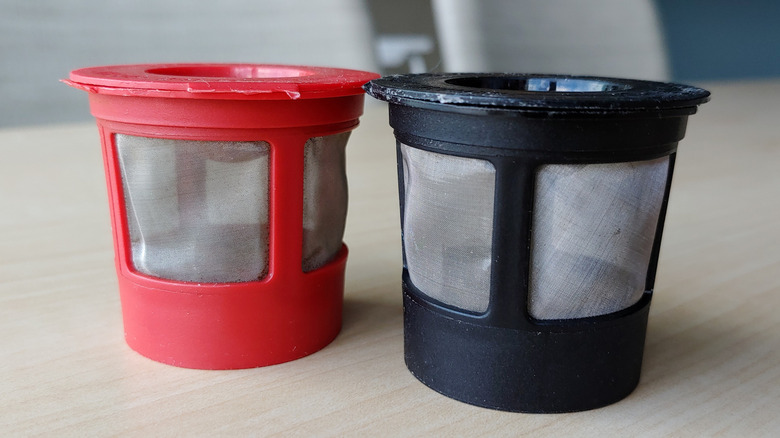
Keurig went above and beyond with the 2.0 model to keep folks from using other kinds of coffee in its system. Now, granted, there are some really underrated Keurig pods you should try. Still, around the same time the 2.0 model debuted with its DRM technology, the popular, reusable My K-Cup went away. Even worse, older K-Cups were not compatible with the new machines either. While the company couldn't fix the older pod issue, it did, thankfully, bring the My K-Cup back about a year after it was pulled. That may not make up for all the shenanigans, but it may just be the easiest way to get the coffee you want.
For just under $8 on Amazon, you can buy a My K-Cup Reusable Coffee Filter. Simply put your own grind in there or dump the contents of a third-party pod inside. It could only be easier if the 2.0 had been made to be compatible in the first place. Customers have found the reusable pod to be superior in design compared to the old cups, easier to clean, and have praised that it doesn't spill grounds into the cup. Of course, if you are one of the customers so put off by Keurig's methods that you don't want to purchase one of these, there are other things you can try.
Use a branded lid
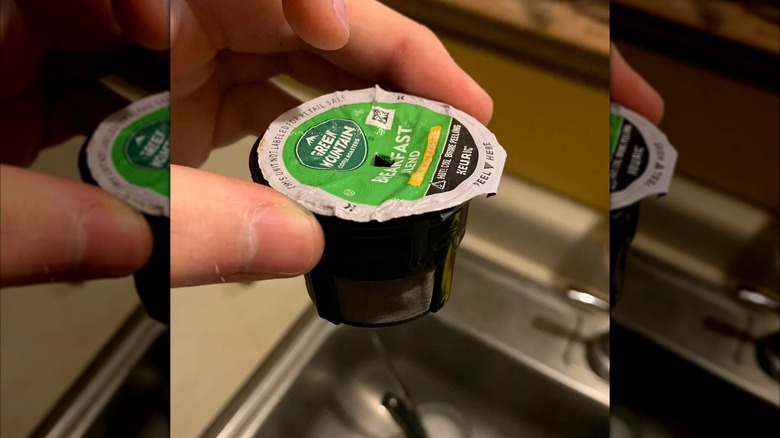
We not only know a few Keurig hacks to get the most out of your coffee pods, but we also know another simple trick to use whichever pod you choose. For this, you are going to need a proper, branded Keurig lid from a used pod. By simply putting the branded lid on top of your third-party pod lid, you can trick the machine into thinking it recognizes the pod and simply brew your chosen cup of coffee. This works because there is a sensor on the inside of the lid that looks for a special ink printed on each branded Keurig pod lid. Give the sensor what it's looking for, and you will get what you're looking for in return.
You can go one step further and make this a more permanent fix. The Keurig sensor is located on the underside of the Keurig brewer handle and reads the colored edge of the pod with an infrared sensor. By carefully detaching the branded foil from the K-pod and taping just enough of the colored edge to cover the sensor, the machine will always read ready for any pod you choose. It's not as tricky as it sounds, and there are numerous video tutorials out there to walk you through it.
You can buy clip converters
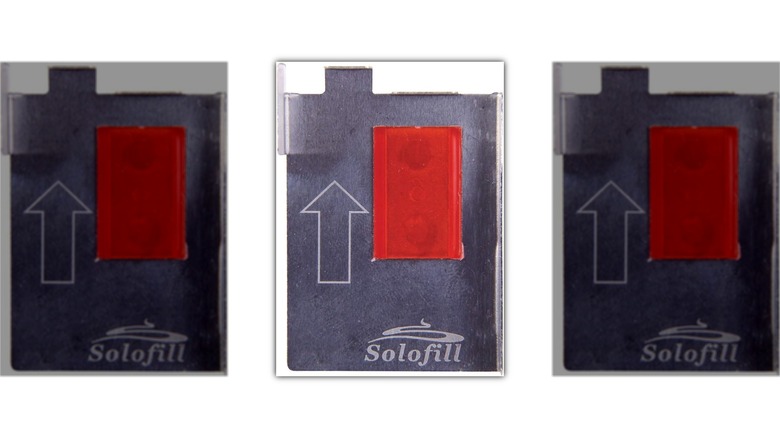
Hackers weren't the only ones who went straight to work in circumventing the new security features of the Keurig 2.0. Those in the coffee-making business got busy brainstorming too. The Rogers Family Company Coffee & Tea Market, a maker of third-party coffee pods and owner of The San Francisco Bay Coffee Company, invented something they called The Freedom Clip — which, not long after the 2.0 first dropped, was sent out freely to anyone who wanted one.
Additionally, Solofill, specialists of most things orbiting single-serve coffee, created what it called the SoloClip 2. This device works quite similarly to the Freedom Clip, and both clip-on devices bypass the DRM sensor for good. With one simple click, you are free to enjoy whatever pod you choose regardless of if you have ever bought a Keurig-branded pod.
Now, The Rogers Family Company doesn't seem to make its Freedom Clips any longer, but not to worry. You can find copycats of these clips at places like eBay, Bed Bath & Beyond, and on for around $23 on Amazon. You can simply search for the Keurig Freedom Clip, though you will find that most off brands are called "clever clips," "clever freedom clips," or something similar. However, you can purchase the SoloClip 2 on Amazon for around $9. Reviews claim that these clips are easy to install and work as advertised.
Try color coded stickers
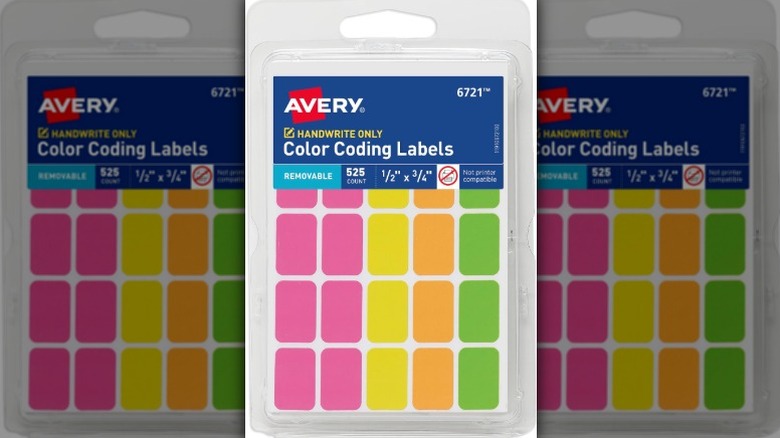
Around the same time as the clip converters became available to the public, something called "The Freedom Sticker" also hit the market as a solution to Keurig's attempts to halt the people's coffee of choice. These stickers, which you can still find on eBay, were a neon color and advertised to successfully fool the sensor and bypass the DRM when placed in the right spot — and it worked! Of course, the freedom of that sticker wasn't necessarily special.
The same Keurig freedom could be achieved by using Avery's neon color-coded labels — specifically the pink, yellow, and orange — as well. How the colors work to fool the sensor is definitely food for thought but beyond our wheelhouse. However, using this trick is about as simple as it gets.
Looking down at your coffee pod, imagine it is a clock. You want to take one of the neon stickers and place it just over the color-coded edge of the 9 o'clock position. (You won't need the whole sticker.) Make sure that the sticker stays in that position when you put it in your machine. This is where the sensor reads the pod and tells the machine whether or not to proceed. This little trick has worked wonders for folks online. If you don't mind adding a small step to your coffee-making, this may be the way to go.
Some are clipping the wire
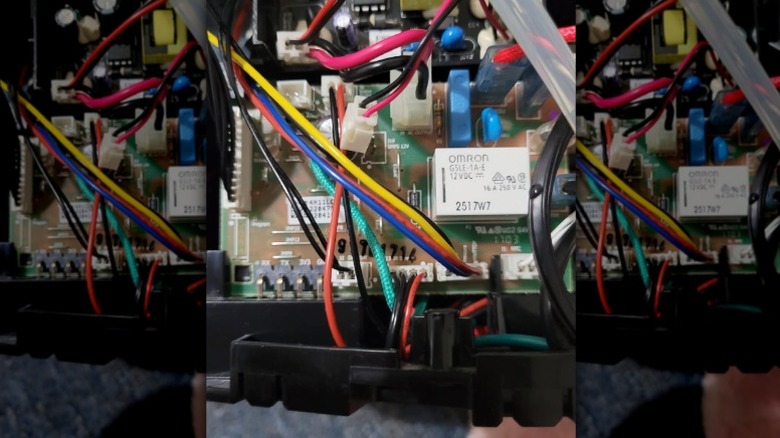
Of all the drastic measures that we uncovered Keurig customers taking, this one is absolutely the most radical. It involves literally getting into the nuts and bolts of your Keurig and cutting one of the machine's wires. Be aware that this will most definitely void your warranty and may or may not be successful. At some point, someone figured out that, purportedly, the green wire was the one in charge of the optical sensor located in the lid of the Keurig.
The complexity of this comes in, obviously, with the wire being inside the lid of the Keurig as well. To get to it, you are going to have to take your machine apart. If that's what you choose to do, cutting the wire will supposedly disable the sensor and allow the machine to simply move on with just brewing coffee. Attempt at your own risk.
In video tutorials online, viewer comments declared everything from cheers of happy coffee drinkers to huge fails and the possibility that this hack may work at first but can lead to later disaster. In response to this information going public, there are also reports that the wire colors have been changed. So, you may want to just file this under interesting information to have.