

A Pint Of Häagen-Dazs Costs 24 Cents More Than Blue Bell — So What's The Actual Difference
We may receive a commission on purchases made from links.
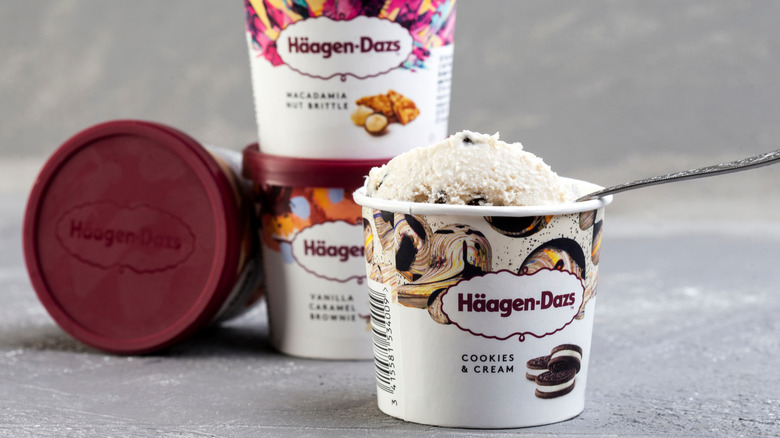
Not every ice cream is created equal, and that is perhaps why we are blessed with aisles packed with tubs aplenty and a perfect option for everyone. But what exactly makes them different? Is it worth splurging on a more premium brand? To settle the matter, we're on a mission to compare two popular and beloved brands, Häagen-Dazs and Blue Bell, which sell at slightly different price points, though exactly how much they differ may vary by supermarket. The price difference mainly reflects ingredient quality, the use of artificial flavorings and colorings, and differences in overrun: the amount of air each tub holds.
Born in New York City in the 1960s, Häagen-Dazs was the brainchild of a Polish immigrant who, after working in an ice cream shop, began experimenting with making his own, aiming to create a mix with more fat solids and less air than those then available. The result was a slightly more expensive product, but one that quickly won over the public, helping the company grow around that same ethos. Today, Häagen-Dazs has a global presence and consistently ranks among the top ice cream brands for ingredient quality.
On the other hand, we have Blue Bell, a small yet mighty creamery that got its start in Brenham, Texas, churning butter in 1907. In the late 1950s, the company pivoted to the ice cream business, but it wasn't until the 1980s that it expanded beyond Texas and gained a broader following. It now has a presence in 24 states and has created some of the most iconic flavors along the way, including these discontinued varieties that still spark nostalgia among fans.
The inside scoop
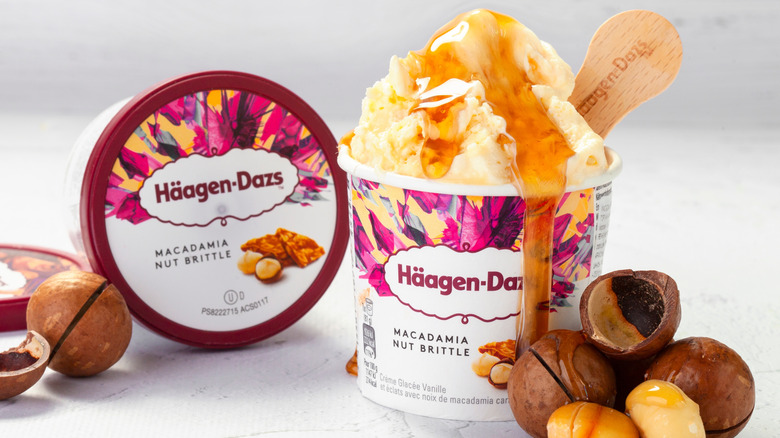
When it comes to ingredient lists, Häagen-Dazs' is pretty straightforward. According to the brand's nutritional label, a pint of vanilla ice cream contains cream, skim milk, cane sugar, egg yolks, vanilla beans, and vanilla extract. A similar look at Blue Bell's Homemade Vanilla shows that its ice cream is made with milk, cream, sugar, skim milk, high-fructose corn syrup, natural and artificial flavors, stabilizers, and colorings. While Häagen-Dazs uses Madagascan Bourbon vanilla beans, Blue Bell relies on vanilla flavoring, which can be cheaper. Blue Bell has additives and uses high-fructose corn syrup, although whether that is a worse sweetener choice remains debatable. The pattern continues across other flavors. Häagen-Dazs Pistachio Ice Cream has pistachios and pistachio paste listed, while Blue Bell's Almond and Pistachio Ice Cream includes almonds but has no pistachios among its ingredients. Instead, the label lists natural and artificial flavors along with coloring additives including Yellow 5 and Blue 1.
Another factor to consider is overrun, the percentage of air whipped into an ice cream mix. According to Science Insights, overrun is "the single biggest factor separating a dense, rich scoop from a light, fluffy one." Because lower overrun generally produces a richer mouthfeel, premium brands often emphasize density over volume. Higher overrun means more air and less ice cream, which can help brands sell it at a lower price. Although overrun figures are typically proprietary, Häagen-Dazs states on its website that it refuses "to pump our product full of air."
At the end of the day, choosing between the tubs with the golden lids and the maroon ones comes down to personal preference, budget, and how much value consumers place on natural ingredients. What is clear is that there are several reasons for the price difference beyond branding alone.